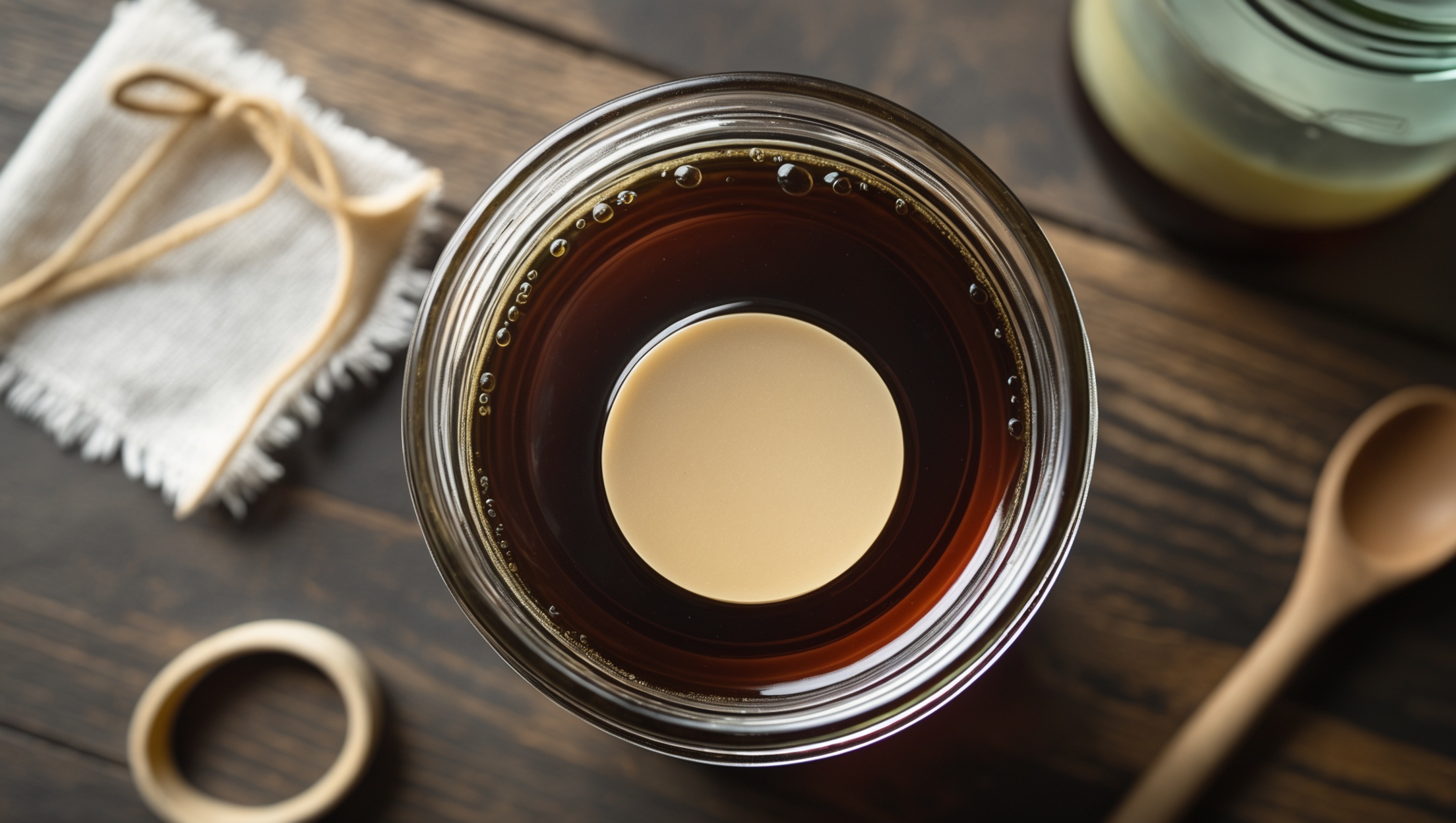
Kombucha turns vinegary mainly from extra time and warmth, not a failed batch — the same acetic acid bacteria that give kombucha its tang, mainly Acetobacter and Komagataeibacter species, keep converting alcohol into acetic acid the longer a batch ferments. A first fermentation left past 10-14 days, brewed above 80°F, or started with more than the standard 10-15% starter tea, is the most common reason a batch tastes sharp and sour instead of pleasantly tart.
A set of kombucha pH test strips (paid link) takes the guesswork out of exactly how far a batch has gone, since taste alone makes it hard to tell a pH of 3.2 from 2.6 until the difference is already sharp.
Why Does Kombucha Turn Vinegary?
Kombucha turns vinegary because the acetic acid bacteria living in the SCOBY never really stop working once the sugar is gone — they keep converting leftover alcohol into acetic acid, the same acid that defines true vinegar.
A SCOBY is a symbiotic culture of bacteria and yeast that ferments sweet tea in two overlapping stages. Yeast, mainly Saccharomyces species, convert sugar into ethanol during the first few days. Acetic acid bacteria then convert that ethanol into acetic acid, the compound responsible for both kombucha’s tang and vinegar’s bite. Kombucha and vinegar sit on the same continuum rather than being separate outcomes, so a batch left fermenting long enough will always drift from tart toward sour, then toward vinegary.
- Extra fermentation time: a first fermentation left going for 14 days or longer, well past the standard 7-10 day window, keeps building acetic acid past the point most people find pleasant.
- Warm room temperature: at 80°F or higher, fermentation runs noticeably faster than at the ideal 68-75°F range, so a batch can reach vinegar territory in the same week that would produce a milder brew in a cooler kitchen.
- Too much starter tea: starter tea should make up roughly 10-15% of a batch by volume, about 2 cups per gallon; more than that adds extra acid and active bacteria upfront, so the same brew time produces a sourer result.
Sweet tea usually starts around pH 4.9 to 5.5 before the starter tea and SCOBY go in. Within the first day or two it should drop below pH 4.6, and a properly finished batch settles between pH 2.5 and 3.5 by day 7 to 10. A reading below roughly 2.5 is where kombucha usually crosses from tart into distinctly vinegary.
The starter tea ratio is the cause most people overlook. Doubling the recommended amount “to make sure it ferments” is one of the most common beginner adjustments, and it reliably produces a sourer batch in the same timeframe as a properly ratioed one — more starter tea means more active acetic acid bacteria are already working before the sweet tea has a chance to balance them out.
How Long Should Kombucha Ferment Before It’s Too Sour?
Kombucha typically needs 7 to 10 days at 68-80°F to develop its characteristic tang without turning vinegary. A batch left fermenting past 14 days, or brewed above 80°F, usually crosses into distinctly sour or vinegary territory well before the two-week mark.
Temperature changes that timeline more than most people expect. See our guide to making kombucha at home for the full week-by-week timeline, but the short version is that a kitchen running 78-82°F can finish what would be a 10-day ferment at 70°F in as little as 5 to 6 days — so the same 7-day habit that works fine in a cooler kitchen can badly oversour a batch in a warm one. Tasting daily starting on day 5 or 6, rather than brewing on a fixed schedule, is the most reliable way to catch the right moment.
How to Fix Kombucha That’s Already Too Sour
A batch that’s already too sour is easiest to fix by diluting it, flavoring it, or repurposing it rather than trying to reverse the fermentation, which isn’t possible once the acid has built up.
- Dilute it at serving time with fresh sweet tea, plain or sparkling water, or juice. Add gradually to taste rather than following a fixed ratio, since how sour a batch is varies from one jar to the next.
- Run a flavored second fermentation with strong additions like ginger, berries, or citrus. The fruit sugar and bold flavor mask sourness far better than drinking the batch plain — see our guide to kombucha second fermentation for ratios and timing.
- Save it as starter tea for the next batch instead of drinking it. A more acidic starter lowers a new batch’s pH faster in its first, most vulnerable days.
- Let it go further and use it as a mild cooking vinegar in dressings or marinades, since that’s effectively what an over-fermented batch already is.
How to Prevent It Next Batch
Preventing an oversour batch comes down to three adjustable factors: timing, temperature, and starter ratio, in that order of impact.
- Shorten the first fermentation to 7-10 days and start tasting daily from day 5 or 6 instead of brewing on a fixed calendar date.
- Move the jar to 68-75°F if the current spot regularly runs above 80°F, which is often enough on its own to fix a pattern of oversour batches.
- Measure starter tea at 10-15% of total volume, about 2 cups per gallon, instead of adding extra “for safety.”
Is Vinegary Kombucha Safe to Drink?
A vinegary taste by itself is not a food safety problem — it just means the batch fermented longer or warmer than ideal, not that something went wrong with the culture. That’s a different situation from a ferment that’s actually spoiled.
This distinction matters because the fixes are completely different: an overly sour batch is still kombucha and can be diluted, flavored, or repurposed, while a contaminated one should be discarded outright. Fuzzy or colored mold on the SCOBY, a persistently foul or rotten smell instead of sharp sourness, or a container that’s cracked or badly swollen are separate warning signs, not just extra sourness. See our guide to kombucha mold vs. SCOBY for what those actually look like, and our full guide to telling if a ferment has gone bad if anything looks off beyond sourness.
FAQ
Can I still drink kombucha that tastes like vinegar?
Yes. A vinegary taste on its own is not a safety issue — it just means the batch fermented longer or warmer than ideal. If the smell, appearance, and texture are otherwise normal, it’s safe, just more sour than most people prefer straight.
What’s the difference between kombucha and vinegar?
Mostly a matter of degree. Both are made by acetic acid bacteria acting on alcohol, but kombucha is usually stopped around pH 2.5-3.5, while fruit or wine vinegars are left to ferment further, often finishing below pH 2.5 with a stronger, more concentrated acetic acid content.
Can I use over-fermented kombucha as starter tea for my next batch?
Yes, and it’s one of the better uses for it. A more acidic starter tea lowers a new batch’s pH faster in its first few days, which is exactly when a fresh batch is most vulnerable to mold and other contamination.
Save this guide on Pinterest for your next batch.
Related: How to Make Kombucha at Home: A Beginner’s Guide · Why Is My Kombucha Not Fizzy? Fixes for Flat Kombucha · Kombucha Mold vs. SCOBY: How to Tell the Difference