
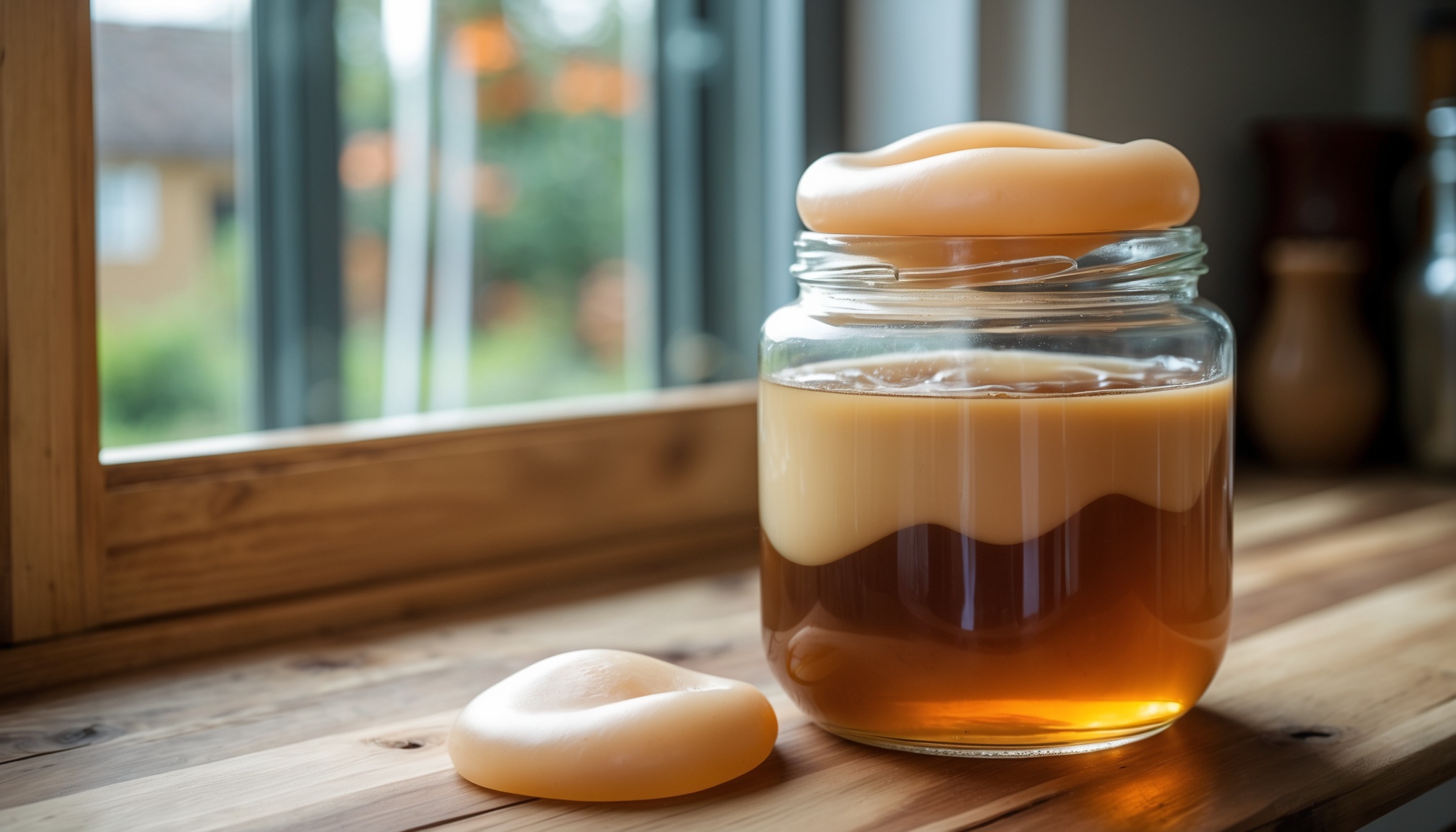
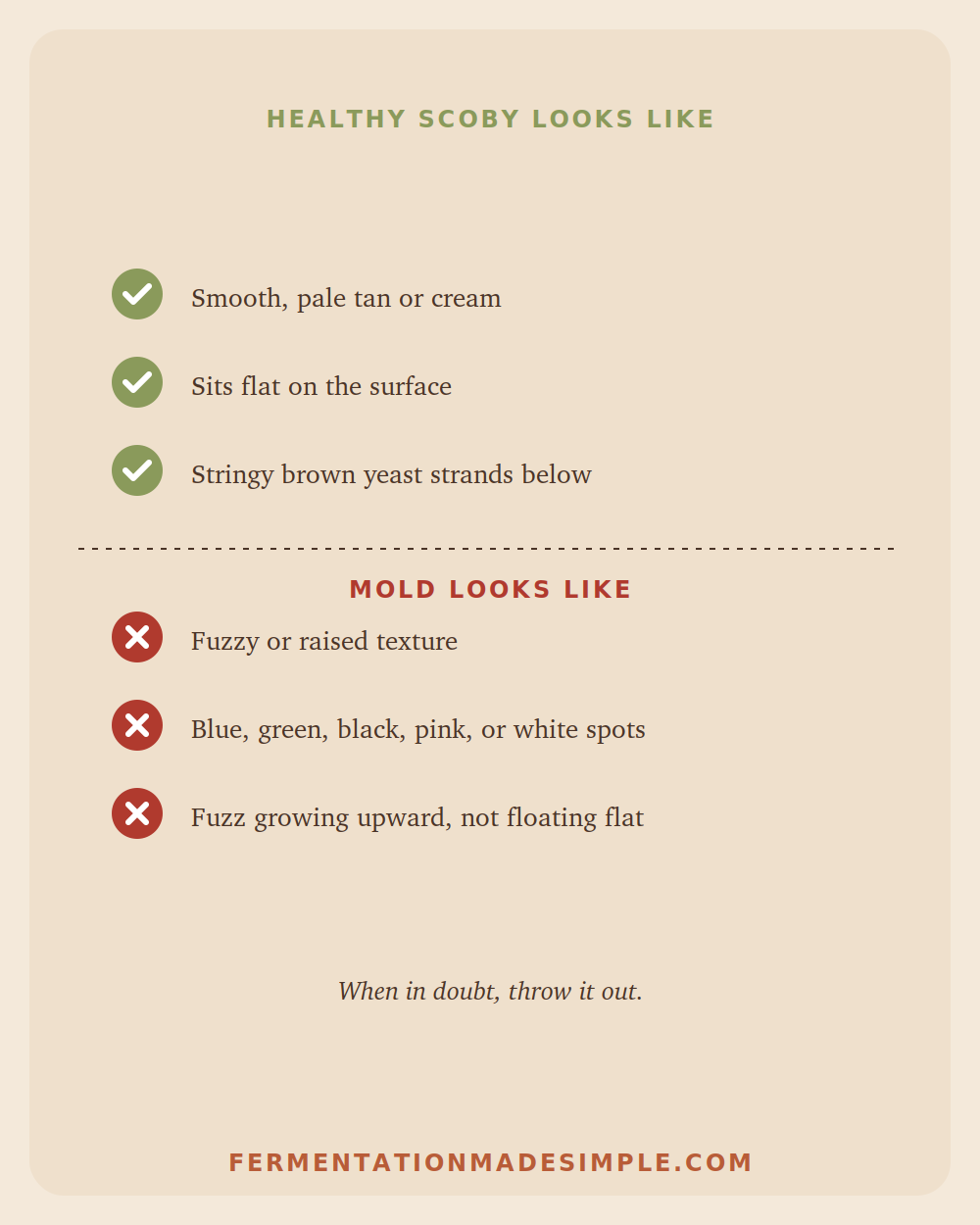
A healthy kombucha SCOBY is smooth, pale tan to cream-colored, and sits flat on the liquid’s surface. Mold looks fuzzy, sits raised above the surface, and appears in blue, green, black, pink, or white spots. Any confirmed mold means the entire batch gets discarded, not just the spot.
Kombucha SCOBYs already look unusual to first-time brewers, which makes genuine mold easy to miss or, more often, easy to mistake for a normal SCOBY. The good news: real mold on kombucha is uncommon — most of what worries new brewers turns out to be a completely normal part of a healthy SCOBY.
What a Healthy SCOBY Looks Like
A healthy SCOBY is pale tan, cream, or slightly yellow-brown, with a smooth or slightly bumpy rubbery texture. New SCOBY layers form as thin, pale films on top of the existing one, sometimes with brown, stringy yeast strands hanging underneath — these strands look alarming to new brewers but are completely normal.
What Mold Actually Looks Like
Mold on kombucha is fuzzy, dry-looking, and sits raised above the liquid’s surface rather than floating flat on it. Color is the clearest signal: mold typically appears as blue, green, black, white, or pink fuzzy spots, distinctly different from the SCOBY’s uniform tan color underneath.
Three Signs It’s Mold, Not a Normal SCOBY
- Fuzzy texture: mold has a dry, fuzzy, almost fabric-like texture; a SCOBY is smooth and rubbery even when new layers are forming.
- Color outside the tan range: blue, green, black, or bright pink spots are never a normal SCOBY color.
- Growing upward, not floating flat: mold colonies rise above the liquid; a SCOBY, including new baby layers, stays flat against the surface.
Kombucha Mold on Top: What to Do
If mold is confirmed, discard the entire batch — liquid, SCOBY, and all — since mold sends microscopic threads through liquid that aren’t visible to the eye. Wash the jar thoroughly with hot soapy water before starting a new batch, and start over with a fresh SCOBY and starter tea rather than trying to salvage any part of a moldy batch.
Most kombucha mold happens for one of three reasons: not enough starter tea (see our SCOBY buying guide for one with generous starter tea included), a lid that’s too tight and traps too much moisture, or a brewing spot with poor airflow. Fixing the underlying cause matters more than any single discarded batch.
FAQ
Can I just scoop the mold off and keep brewing?
No. Mold sends invisible threads through the entire liquid, so removing the visible spot doesn’t remove the contamination. Discard the full batch.
Why does my SCOBY have brown spots or stringy bits?
Brown spots and stringy strands are yeast, a completely normal and expected part of kombucha fermentation, not mold.
Is a thick, dark SCOBY layer a problem?
No — SCOBYs naturally thicken and can darken slightly with each batch. Thickness and mild darkening on their own aren’t signs of mold.
Save this guide on Pinterest for the next time you check your brew.
Related: Kombucha Recipe · SCOBY Care Guide · Buy a Kombucha SCOBY