
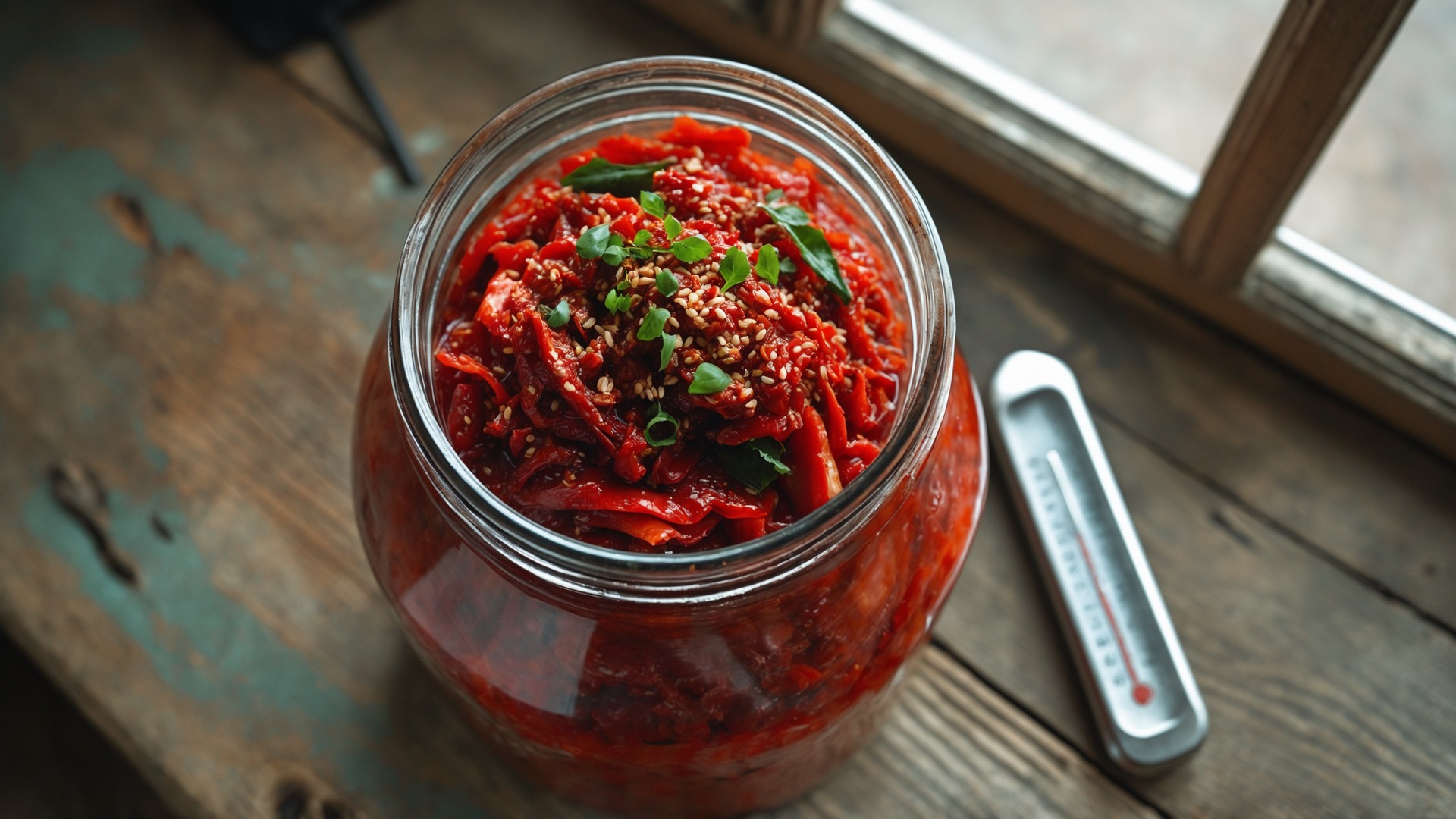
A quiet jar of kimchi usually just means it’s cold, salty, or already past its gassy stage — not that fermentation has failed. The two bacteria that cause visible fizz, Leuconostoc mesenteroides and Weissella koreensis, are most active in the first 1 to 3 days at 65–70°F (18–21°C); below that, or above roughly 3% salt, they slow down sharply and the jar can stay quiet even while fermentation is moving along normally.
Does Kimchi Have to Bubble to Be Fermenting?
No — visible fizz is a byproduct of specific bacteria in the early stage, not a requirement for fermentation to be happening. Leuconostoc mesenteroides and Weissella koreensis are heterofermentative: alongside lactic acid, they produce carbon dioxide and a little alcohol, and that gas is what turns into bubbles, foam, or a hiss when a jar is opened. Lactiplantibacillus plantarum takes over as acidity climbs, and it produces mostly lactic and acetic acid with far less gas — which is why a jar that fizzed on day two can go quiet by day five while still fermenting correctly.
Well-fermented kimchi typically settles around a pH of 4.2, and the bacteria that get it there don’t need an audience. Our Is Fizzy Kimchi Normal? guide covers the opposite question — this one is about the jar that looks like nothing is happening at all.
Why Isn’t Your Jar Bubbling?
Work down this list in order. The first three explain most quiet jars, and none of them mean anything went wrong.
| Reason | What happens | How to check |
|---|---|---|
| The kitchen is too cold | Below about 65°F (18°C), Leuconostoc and Weissella slow down sharply and gas production drops off | Thermometer next to the jar, not the room thermostat |
| It already finished its gassy stage | The heterofermentative stage typically runs 1 to 3 days at 65–70°F, then Lactiplantibacillus plantarum takes over with little gas | Count the days since you packed it |
| It never left the fridge | Refrigerating right after packing skips the room-temperature stage that gets gas production going in the first place | Check whether it ever sat out at room temperature |
| Salt is too high | Target is about 2 to 3% of the cabbage’s weight; salt well above that slows the lactic acid bacteria that produce the gas | Weigh cabbage and salt rather than eyeballing it |
| The container vents silently | A fermentation lid or airlock releases gas continuously instead of letting it build up as visible bubbles | Look for gas pockets inside the paste, not at the lid |
| It’s a low-garlic batch | Garlic pushes the bacterial mix toward more Weissella koreensis, one of the two gas producers — a milder, lighter-garlic recipe naturally fizzes less | Compare the paste’s garlic amount to a standard recipe |
Acid builds up well before gas becomes visible, and sometimes without much visible gas at all. The BC Centre for Disease Control expects a room-temperature vegetable ferment to reach pH 4.6 within 48 hours — often before a quiet jar has shown any sign of what’s going on inside it. Judge an early batch by smell and taste at the two-day mark, not by whether it hissed when you opened the lid.
What to Check Instead of Bubbles
Four signals are more reliable than gas, and they show up on a predictable schedule.
- Liquid pools at the bottom. As the cabbage releases water, a visible layer of brine collects under the paste — usually within the first day or two at room temperature.
- The color deepens. The gochugaru paste darkens slightly and the cabbage takes on a more uniform red as it sits in the brine.
- The smell shifts. Raw garlic and cabbage give way to something sharper and more tangy — that’s the lactic acid building.
- The texture softens slightly. Cabbage ribs go from stiff to pliable without turning mushy.
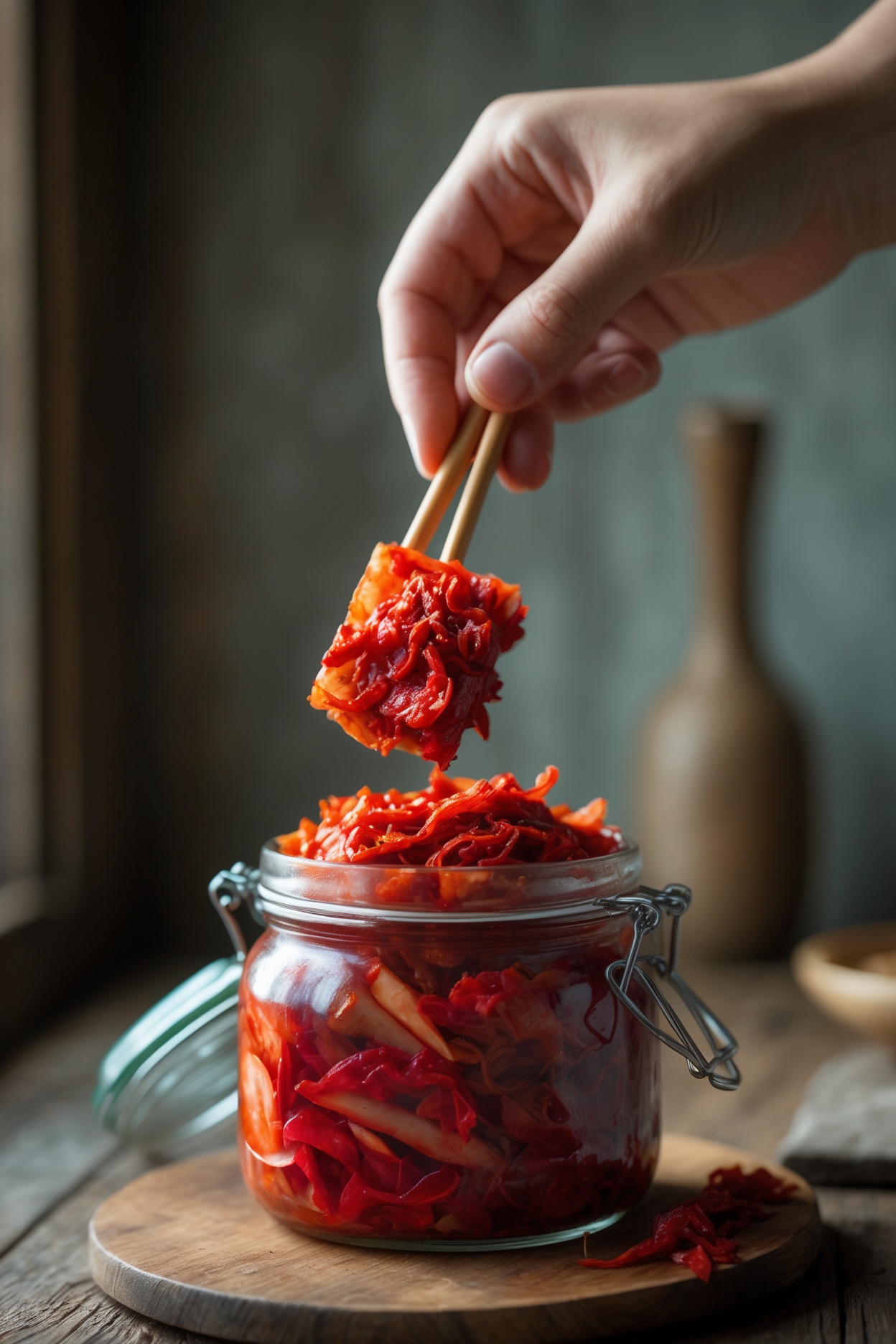
Taste is the final check: a clean spoon, a small bite, once a day for the first few days. If it’s more tangy than the day before, it’s fermenting — bubbles or not.
How Long Should It Take?
| Conditions | What to expect |
|---|---|
| Room temperature, 65–70°F (18–21°C) | Noticeably tangy in about 2 days; up to 5 days for a stronger, funkier flavor |
| Refrigerated from the start | About 3 to 4 days to reach a similar point — slower, and with far less visible gas along the way |
| Below about 65°F (18°C) at room temperature | Gas-producing bacteria slow sharply; a quiet stretch of several days is normal, not a sign of failure |
Once it tastes the way you want, move it to the fridge — fermentation continues slowly there for weeks or months, with less gas and less change day to day.
What You’ll Need to See What’s Actually Happening
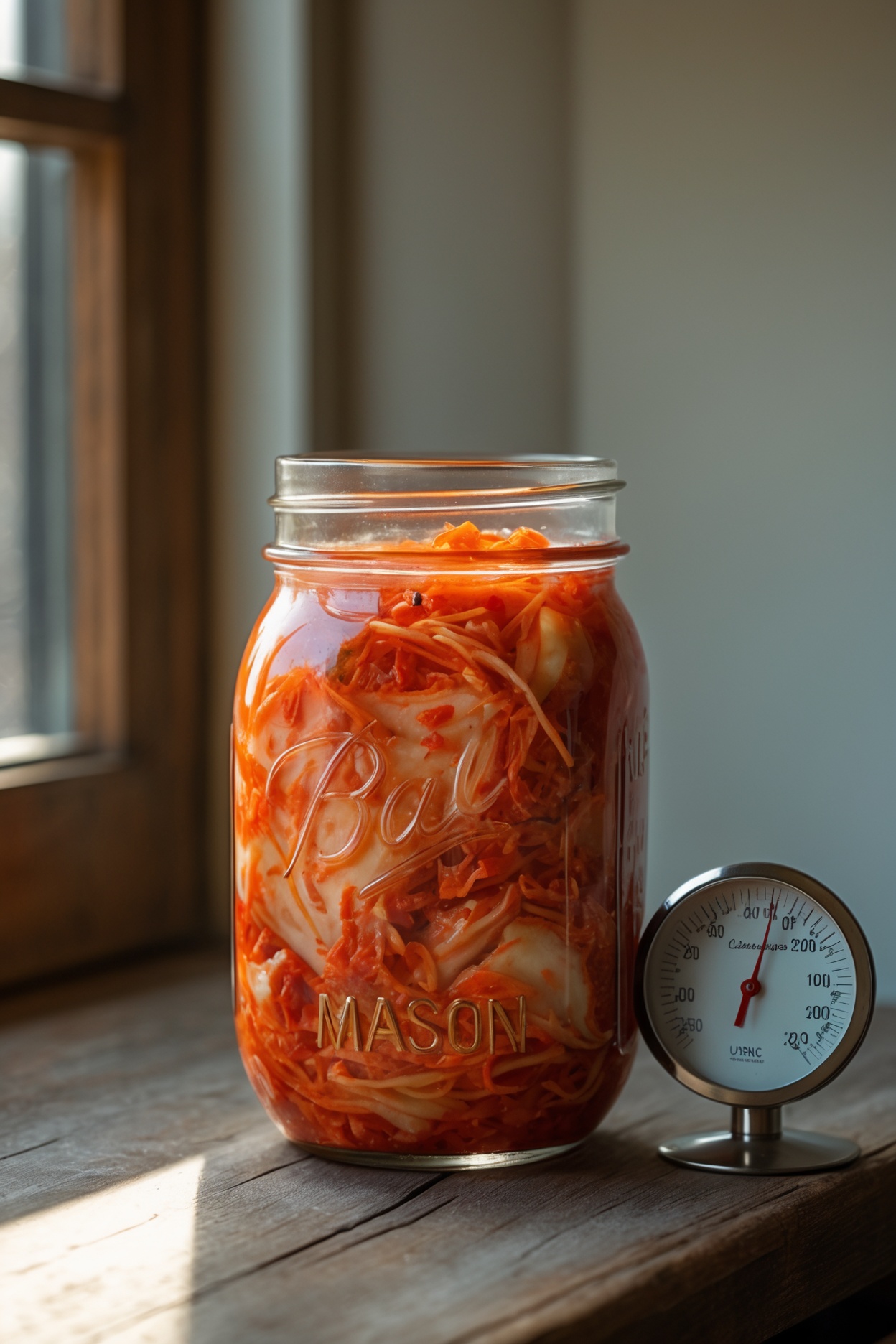
A dedicated kimchi fermentation container (paid link) makes a quiet jar easier to read, not harder — its inner lid presses the cabbage below the brine while still venting gas, so you can check for gas pockets and brine level without guessing what a sealed mason jar is hiding. A kitchen thermometer settles the temperature question faster than anything else, since a counter near an exterior wall or a drafty window often runs several degrees cooler than the rest of the kitchen.
When Is a Quiet Jar Actually a Problem?
When nothing at all has changed. If after a week at room temperature the cabbage still tastes raw and salty, no brine has pooled, and the smell hasn’t shifted, check the temperature first, then the salt, then whether it ever left the fridge. A jar that’s been refrigerated the whole time simply needs a few days on the counter to get started.
Separately: fuzzy surface mold or a smell that’s rotten or sulfurous rather than sharp and garlicky is a different situation. Our kahm yeast vs. mold guide and how to tell if your ferment has gone bad cover what to look for. When in doubt, throw it out.
This article summarizes published guidance on fermentation science and troubleshooting. It is not an assessment of any particular batch, and nothing here can tell you what is in your jar. If a ferment looks, smells, or tastes wrong to you, discard it.
FAQ
Does more garlic make kimchi bubble faster?
It tends to, since extra garlic shifts the bacterial mix toward more Weissella koreensis, one of the two main gas producers. But it’s a recipe choice, not a required fix — a milder, lighter-garlic batch like baek kimchi ferments correctly with noticeably less fizz.
How many days should I wait before I worry?
At 65–70°F, give it at least 3 to 5 days at room temperature before suspecting a real problem. A cold kitchen or a jar that went straight into the fridge needs longer, and that alone explains most quiet batches.
Can I move a jar from the fridge to the counter to kick-start it?
Yes, and it’s the usual fix. Aim for the 65–70°F (18–21°C) range and check it daily once it’s out, since it will now be fermenting faster than it was in the fridge.
Does a fermentation lid or airlock hide the bubbles?
It changes where you see them. Gas vents continuously instead of collecting under a tight lid, so there’s no hiss or burst when you open the jar. Look for small gas pockets rising through the packed cabbage instead of activity at the rim.
Sources: America’s Test Kitchen, The Science of Fermentation and Its Role in Kimchi · Oregon State University Extension, Is My Kimchi Safe to Eat? · BC Centre for Disease Control, Fermented Vegetables Guidance · NC State Extension, Lactic Acid Fermentation
Related: Is Fizzy Kimchi Normal? · Kimchi Too Sour? Why It Happens and What to Do · How to Tell If Your Ferment Has Gone Bad