
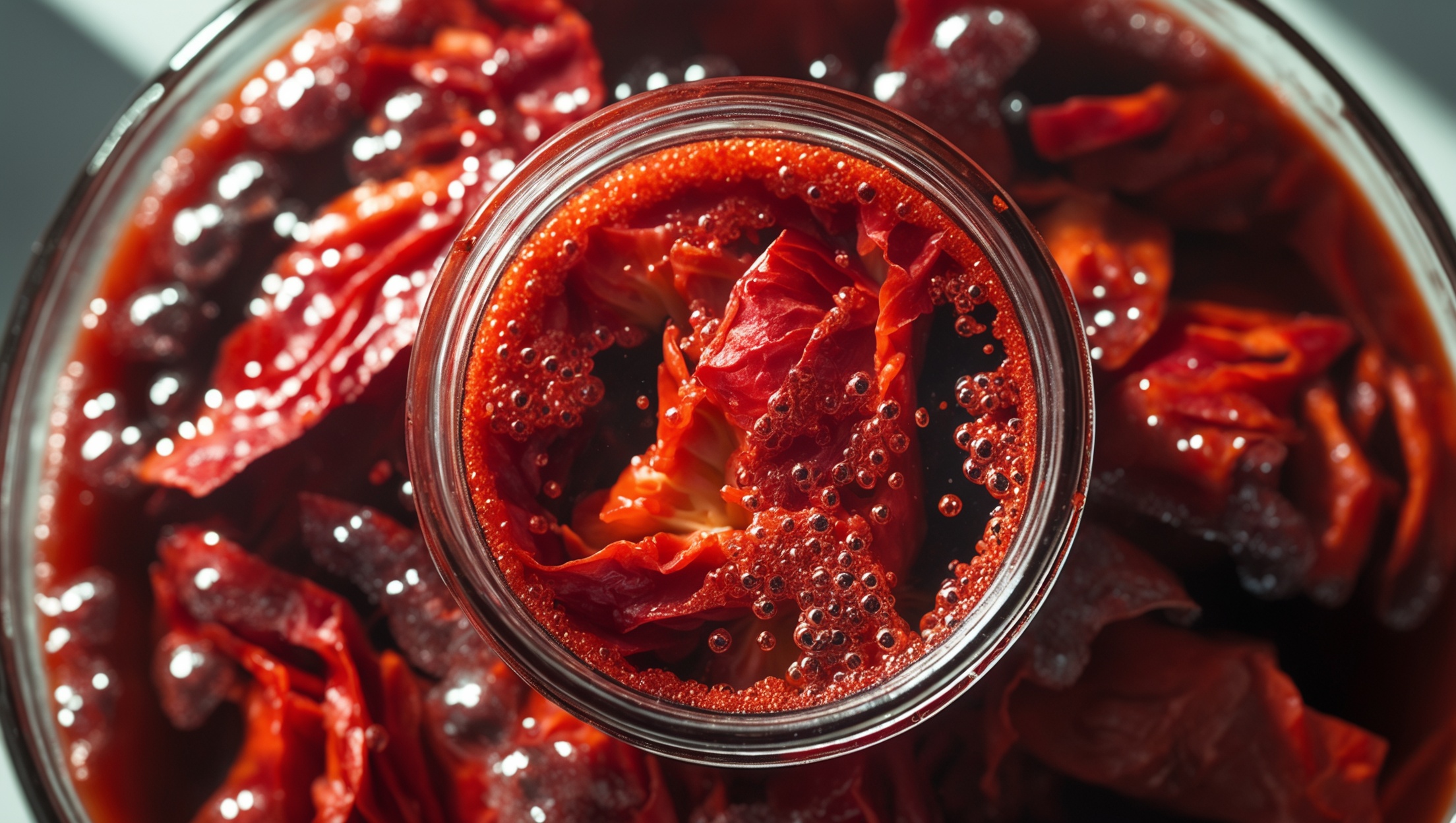
Fizzy kimchi is normal, especially in the first few days of fermentation. The bubbles come from carbon dioxide released by Leuconostoc and Weissella bacteria, the same microbes that kick off fermentation in nearly every batch. A hissing lid, a light foam on top, or bubbles that rise when the jar is opened are signs fermentation is active, not signs it has failed.
A dedicated kimchi fermentation container (paid link) makes the fizzy stage easier to manage than a sealed mason jar, since its inner lid presses the cabbage below the brine while still leaving the container able to vent instead of building up pressure underneath a tight screw-on lid.
Why Does Kimchi Get Fizzy?
Kimchi fizzes because two bacteria genera, Leuconostoc and Weissella, dominate the first days of fermentation and are heterofermentative — they produce carbon dioxide and small amounts of alcohol alongside lactic acid, rather than lactic acid alone. That gas is what turns into bubbles, foam, and the hiss heard when a jar is opened.
- Leuconostoc mesenteroides: usually the first bacterium to take over once the salted cabbage and seasoning paste are combined; it thrives in the mild, oxygen-limited conditions of a freshly packed jar.
- Weissella koreensis: a close relative that tends to increase when garlic is added in typical kimchi-paste amounts, since garlic favors Weissella over some other fermentation bacteria.
- Lactiplantibacillus plantarum: takes over in the middle and later stages as acidity rises; it produces mostly lactic and acetic acid with far less gas, which is why fizz usually fades as kimchi sours.
Well-fermented kimchi typically settles around a pH of 4.2, the acidity level that gives it its characteristic sour tang and also slows the gas-producing bacteria down in favor of the acid-producing ones.
Garlic-heavy kimchi recipes tend to fizz more, not less, in the first few days — the extra garlic pushes the bacterial mix toward more Weissella koreensis, one of the two main gas producers. A milder, lighter-garlic batch made with the same cabbage and salt often looks calmer in the same jar over the same timeframe, even though both are fermenting correctly.
How Much Fizz Is Too Much?
There isn’t a hard fizz ceiling — strong hissing, a light foam layer, or brine that visibly bubbles when the jar is tapped are all still within the normal range for active kimchi. What matters more than the amount of fizz is what comes with it.
Fizz that gets more intense every day, without slowing down after 4-5 days at room temperature, usually just means the kitchen is warm; moving the jar somewhere cooler or refrigerating it slows the gas-producing bacteria down. Fizz combined with a foul, rotten, or fecal smell — rather than the normal sharp, garlicky sourness — is a different situation and covered further down.
How to Control Kimchi Fizz
- Burp the jar once a day during the active room-temperature stage: loosen the lid briefly over a sink to release built-up gas before it pushes brine out around the seal.
- Fit a fermentation weight or the container’s own follower lid under the brine so cabbage doesn’t float up into the gas pocket at the top, where it dries out and browns.
- Move to the refrigerator once the kimchi tastes as sour as wanted, typically after 1 to 5 days at room temperature depending on how warm the kitchen is; cold temperatures slow both the souring and the fizzing.
- Use a wider jar or leave more headspace next batch if fizz has been pushing brine out over the rim, since a fuller jar leaves no room for the gas to collect without displacing liquid.
When Fizzy Kimchi Is Actually a Problem
Bubbles and hissing on their own are not a food-safety concern. A batch is worth discarding when the fizz shows up alongside different warning signs entirely:
- Fuzzy or colored mold on the surface, not to be confused with the thin white film of harmless kahm yeast.
- A putrid or rotten smell instead of the normal sharp, garlicky sourness.
- Sliminess on the cabbage itself, separate from the seasoning paste’s natural texture.
- A container that’s cracked, badly swollen, or leaking rather than lightly domed from normal gas pressure.
This is a food safety topic, not a place to guess: if sight, smell, and texture don’t all check out as normal, the safest choice is discarding the batch rather than tasting it to find out. The full three-point check is in our guide to telling if a ferment has gone bad.
FAQ
Should I burp my kimchi jar every day?
Yes, during the active room-temperature stage. A quick daily burp releases built-up carbon dioxide before it forces brine out around the lid, and takes only a few seconds over a sink.
Does fizzy kimchi taste different from flat kimchi?
Slightly. Fizzy, actively fermenting kimchi tends to taste milder and more vegetal, while kimchi that has gone flat after refrigeration has usually finished most of its souring and tastes sharper and more acidic.
Why is my kimchi more fizzy than my last batch?
Batch-to-batch differences in garlic amount, room temperature, and how tightly the cabbage is packed all shift how much gas builds up, so two batches made the same way can still fizz at noticeably different rates.
Save this guide on Pinterest for your next batch.
Related: Kimchi Too Sour? Why It Happens and What to Do · White Film on Your Ferment: Kahm Yeast vs. Mold · How to Tell If Your Ferment Has Gone Bad