
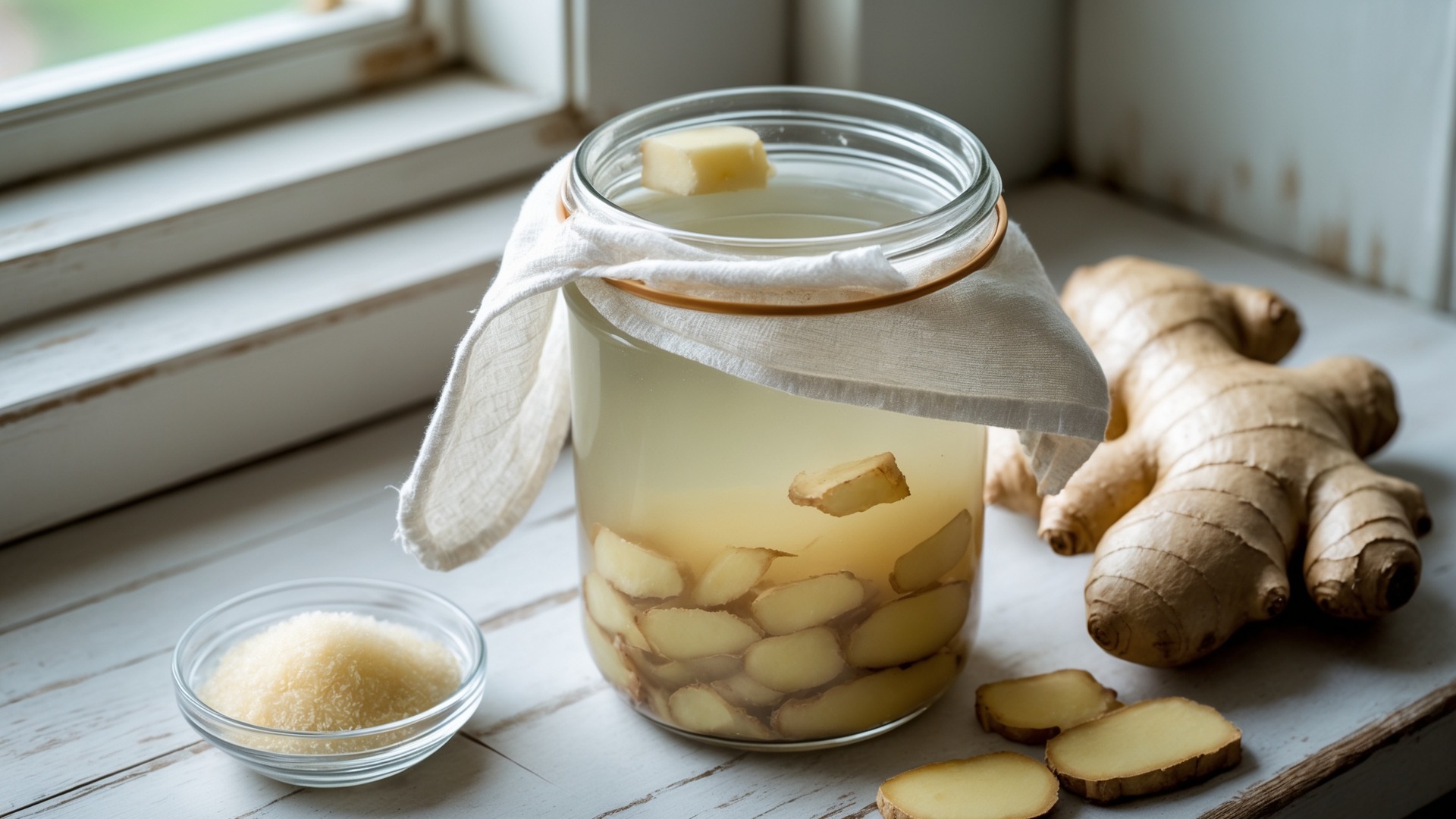
A ginger bug that isn’t bubbling is almost always too cold or made with chlorinated or chloraminated tap water — not dead. Wild yeast and lactic acid bacteria slow down sharply below about 68°F (20°C), and the EPA allows municipal water up to 4.0 mg/L of chlorine or chloramine, a level that can stall or kill a fresh culture outright. Feed it daily, move it somewhere warmer, and switch water sources before assuming it has failed.
Does a Ginger Bug Have to Bubble to Be Working?
Mostly, yes — unlike a jar of kimchi or sauerkraut that can ferment quietly on acid alone, a ginger bug’s whole job is to build a population of gas-producing wild yeast you’ll later use to carbonate a drink. Visible bubbling, a light fizz when you stir, or foam rising after a feeding are the signs that population is active. Our ginger bug guide covers how to build one from scratch; this one is about the jar that’s been fed on schedule but still looks flat.
That said, “not bubbling yet” and “dead” are different things. A bug that is cold, underfed, or sitting in treated water is usually just slow — not finished.
Why Isn’t Your Jar Bubbling?
Work down this list in order. The first two cause most quiet jars, and neither means you need to start over. The 3-to-5-day feeding schedule referenced below is the same one in our step-by-step ginger bug guide.
| Reason | What happens | How to check |
|---|---|---|
| The kitchen is too cold | Published ranges for comparable sugar-water cultures sit between 68–77°F (20–25°C); below that, wild yeast and lactic acid bacteria slow down sharply and gas production drops off | Thermometer next to the jar, not the room thermostat |
| The water is chlorinated or chloraminated | The EPA caps both chlorine and chloramine in tap water at 4.0 mg/L — well within that legal limit, either one can still suppress the wild yeast and lactic acid bacteria a ginger bug depends on | Smell/taste the tap water, or check your utility’s annual water quality report |
| It’s only been 1–2 days | The published schedule for a ginger bug is 3 to 5 days of daily feeding before it reliably bubbles on its own; expecting activity on day one is the single most common false alarm | Count the days since you started, not since you last fed it |
| A feeding or two got skipped | Each feeding both feeds and partially replaces the microbe population; missing a day slows the culture down without killing it | Check your feeding log or jar notes |
| Sugar or ginger is under-measured | Eyeballing “a tablespoon” of grated ginger or sugar instead of measuring it can starve the culture below the ratio the published schedule assumes | Weigh or measure with an actual tablespoon, not a kitchen spoon |
| The jar is sealed airtight | A ginger bug starter is covered loosely with a cloth specifically so gas escapes continuously; an airtight lid traps it invisibly instead of letting it show as bubbles, and can build pressure | Check the lid — it should be a cloth or coffee filter with a rubber band, not a sealed cap |
The temperature range above matches the published numbers for comparable sugar-water cultures from Washington State University’s fermentation science program. On the water side, the EPA’s National Primary Drinking Water Regulations set the maximum residual disinfectant level for both chlorine and chloramine at 4.0 mg/L — legal and safe to drink, but still enough residual disinfectant in some systems to work against a young culture.
Letting tap water sit out overnight or boiling it for a minute removes chlorine — but not chloramine. A Cooperative Extension expert Q&A on the topic states plainly: "there are many reports/anecdotes of residual chloramine causing stalls or killing various fermentations", and that it takes boiling for a full 60 minutes, or a carbon filter, reverse-osmosis, or UV treatment system, to actually remove it. If you’re not sure which one your utility uses, bottled or filtered water for the first week removes the question entirely — starters are most sensitive early on.
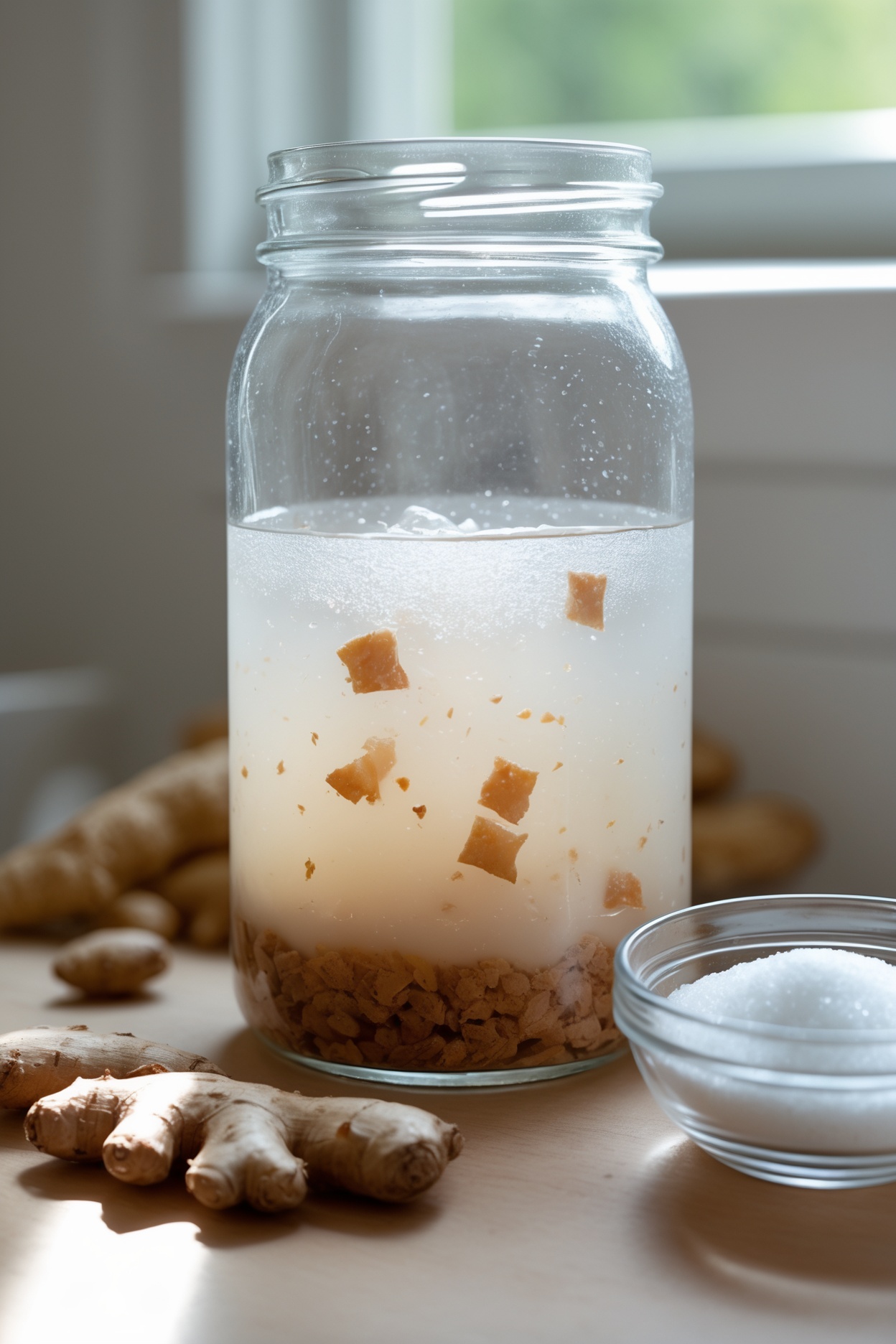
What to Check Instead of Bubbles
Three signals show up before visible fizz does, and they’re more reliable this early:
- The smell shifts. Raw ginger and plain sugar water give way to something sharper and slightly yeasty or bready — that’s the culture waking up.
- Tiny bubbles cling to the ginger pieces. Before the liquid bubbles on its own, you’ll often see small bubbles clinging to the grated ginger when you look closely, or rising briefly when you stir.
- The liquid clouds slightly. A faint haze is the microbe population building, distinct from the clear look of a brand-new jar.
Stir and smell once a day. If any of these three are present, keep feeding on schedule — it’s working, just not loud about it yet.
How Long Should It Take?
| Conditions | What to expect |
|---|---|
| Room temperature, 68–77°F (20–25°C), fed daily | Bubbling on its own within 3 to 5 days |
| Cooler kitchen, below about 68°F (20°C) | Everything slows; several extra days is normal, not a sign of failure |
| Refrigerated between feedings | Fermentation nearly stops — a bug needs to be at room temperature to build an active population in the first place |
If you’re past a full week of daily feeding at room temperature with zero change in smell, cloudiness, or bubbles, move on to the water and sugar checks above before starting over.
What You’ll Need to Rule Out the Easy Causes
A kitchen scale (paid link) settles the “under-measured” question fast — weighing your ginger and sugar instead of eyeballing a tablespoon makes it obvious whether you’re actually hitting the published feeding ratio. A kitchen thermometer placed right next to the jar (not the room thermostat) does the same for temperature, since a counter near an exterior wall or window often runs several degrees cooler than the rest of the room.
When Is a Quiet Jar Actually a Problem?
When nothing at all has changed after a full week of daily feeding at room temperature: no smell shift, no cloudiness, no bubbles clinging to the ginger. At that point, check the water source and temperature first, then consider starting a fresh jar with bottled water and freshly grated ginger.
Separately: fuzzy colored patches, a slimy texture, or a smell that’s rotten rather than sharp and yeasty is a different situation from “slow.” Our kahm yeast vs. mold guide and how to tell if your ferment has gone bad cover what to look for.
This article summarizes published guidance on fermentation science and water treatment. It is not an assessment of any particular jar, and nothing here can tell you what is in yours. If a ferment looks, smells, or tastes wrong to you, discard it rather than taste it.
FAQ
Why isn’t my ginger bug bubbling after 3 days?
Three days is the early end of the published 3-to-5-day window, so a quiet jar at that point is usually normal rather than a failure. Check for the earlier signs — a yeasty smell shift, slight cloudiness, or tiny bubbles clinging to the ginger — before assuming anything is wrong, and keep feeding it daily.
Can I use bottled or filtered water instead of tap water?
Yes, and it’s the simplest fix if you’re not sure whether your tap water carries chlorine or chloramine. A university extension FAQ on the topic specifically recommends bottled water for at least the first week of a new culture, since starters are most sensitive to residual disinfectant early on; later feedings can usually tolerate tap water once the population is established.
Is my ginger bug dead if it’s been quiet for a week?
Not necessarily. Check the temperature next to the jar, confirm you’ve measured rather than eyeballed the sugar and ginger, and smell it — sharp and yeasty means it’s still alive, just slow. A bug is only dead if it smells rotten or sulfurous, or grows fuzzy colored patches; at that point, start a fresh jar instead.
Does sealing the jar tightly stop it from bubbling?
It can hide the bubbling rather than stop the fermentation itself — an airtight lid traps the gas instead of letting it vent continuously, which is why the starter stage uses a loose cloth cover, not a sealed cap. That’s different from the later bottling stage, where a sealed, pressure-rated bottle is exactly what you want once the bug is active.
Sources: EPA — National Primary Drinking Water Regulations (MRDL for chlorine & chloramines) · Ask Extension — Chloramine & Fermentation Starters FAQ · Washington State University — Naturally Carbonated Soda
Related: How to Make a Ginger Bug · Why Is My Kombucha Not Fizzy? · Water Kefir: A Beginner’s Guide · Is Fermented Food Safe?