
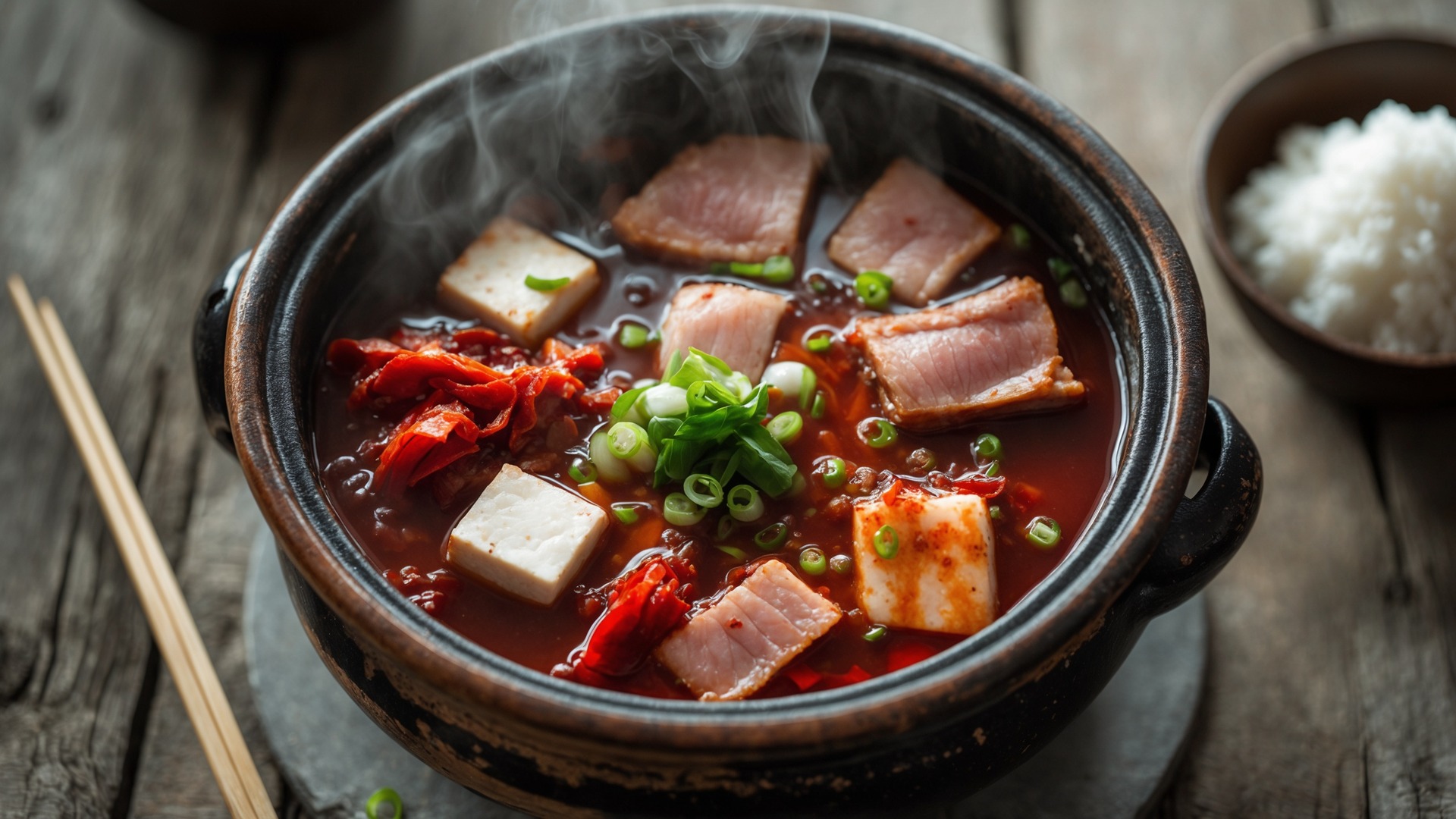
Kimchi jjigae turns well-fermented, sour kimchi into a warming Korean stew by simmering it with pork, tofu, and broth for about 15 to 20 minutes. The more sour your kimchi has gotten, the better this dish tastes — it is the classic way to use up a jar that got too tangy to enjoy as a side.
Kimchi jjigae works best with old, well-fermented kimchi rather than fresh — about 1 pound (2 cups), simmered with 4 to 8 ounces of pork belly or shoulder, 2 cups of broth, and 2 to 4 tablespoons of the kimchi’s own brine for extra tang. Total active cooking runs about 15 to 20 minutes: a quick sear of the pork, a short simmer with the kimchi and broth, then sliced tofu added for the last 5 minutes. Pork, canned tuna, chicken, beef, or a tofu-only vegetarian version all work with the same base method.
Ingredients
- 1 lb (about 2 cups) well-fermented, sour kimchi, cut into bite-size pieces, plus 2 to 4 tablespoons of its brine
- 4 to 8 oz pork belly or pork shoulder, thinly sliced (or sub canned tuna, chicken, or beef)
- ½ block (about 7 oz) medium-firm tofu, sliced into ½-inch pieces (optional)
- 2 cups broth — anchovy stock, chicken broth, or water
- 1 small onion, sliced
- 2 to 3 scallions, cut into 2-inch pieces
- 1 to 2 teaspoons gochugaru (Korean red pepper flakes) (paid link)
- 1 tablespoon gochujang (optional, for more heat and body)
- 1 teaspoon sugar
- 1 teaspoon toasted sesame oil, to finish
Step-by-Step
- In a pot or shallow earthenware pot, cook the pork over medium-high heat for 2 to 3 minutes, until it’s no longer pink.
- Add the kimchi and stir-fry together with the pork for 2 to 3 minutes, until the kimchi softens slightly and smells fragrant.
- Pour in the broth and kimchi brine, then stir in the gochugaru, gochujang, and sugar.
- Bring to a boil, then cover and simmer over medium heat for 10 minutes.
- Add the onion and tofu (if using), and simmer uncovered for another 5 minutes.
- Stir in the scallions, drizzle with sesame oil, and serve hot straight from the pot with a bowl of rice.
What Kind of Kimchi Works Best for Kimchi Jjigae?
Old, well-fermented, sour kimchi makes the best kimchi jjigae — the stronger and more sour the kimchi, the more flavor it brings to the stew. Fresh, mild kimchi that hasn’t fully fermented yet produces a noticeably flatter-tasting broth.
This is the opposite of how most people treat an aging jar of kimchi. As kimchi ferments longer, lactic acid builds up and the flavor turns sharply sour and funky — too strong for many people to enjoy straight as a side dish, but exactly what a long-simmered stew needs. The acidity mellows and rounds out during cooking, so a kimchi that tastes unpleasantly sharp on its own can taste balanced and deep once it’s simmered into jjigae. If your kimchi hasn’t reached that point yet, our guide to overly sour kimchi explains why it happens and roughly how long it takes.
If your kimchi is still fresh and you don’t want to wait weeks for it to sour naturally, you can speed things up by leaving it at room temperature for about 2 days before cooking with it. That won’t fully replicate months of fridge fermentation, but it pushes the flavor far enough toward “sour” to make a noticeable difference in the finished stew, instead of starting from a mild, just-made batch.
What Protein Can You Use in Kimchi Jjigae?
Kimchi jjigae traditionally uses pork belly or pork shoulder, but canned tuna, chicken, beef, or a tofu-only vegetarian version all work with the same cooking method. The kimchi and broth carry most of the flavor, so the protein is flexible.
Pork belly’s fat renders into the broth as it cooks, adding richness that leaner proteins don’t provide on their own — a drizzle of sesame oil at the end helps make up some of that difference with leaner choices. Canned tuna is a common shortcut: skip the initial sear and stir it in with the broth instead, since it’s already cooked. For a fully vegetarian version, leave out the meat, use a kelp or vegetable broth instead of anchovy stock, and lean on a larger amount of tofu, about a full block, for substance.
How Long Do You Simmer Kimchi Jjigae?
Kimchi jjigae simmers for about 15 to 20 minutes total, start to finish: a covered 10-minute simmer once the kimchi and broth are combined, followed by another 5 minutes, uncovered, after the tofu goes in. The pork or other protein cooks through in the first 2 to 3 minutes, before the kimchi and liquid are even added.
That timeline assumes you’re using a broth that’s already made — water, store-bought stock, or a quick anchovy stock steeped while you prep the other ingredients. A fully from-scratch anchovy stock, simmered on its own for 20 to 30 minutes first, adds more depth but also adds that much more time before the stew itself even starts. Either way, jjigae comes together fast enough for a weeknight dinner once the kimchi is already fermented and ready to go.
Cooking kimchi jjigae is a great way to use up kimchi that has simply gotten too sour to enjoy as a side, but it is not a way to make unsafe kimchi safe. A sour smell or strong tang is normal over-fermentation; a soft, slimy texture or fuzzy, colored mold is not, and heat does not reverse that. If your kimchi shows those signs, discard the batch rather than cooking with it — see How to Tell If Your Ferment Has Gone Bad for the full checklist. This is general food-safety guidance, not medical advice.
Can You Make Kimchi Jjigae With Just the Kimchi Brine?
Yes — adding 2 to 4 tablespoons of the kimchi’s own brine on top of the chopped kimchi itself is standard practice, not an optional extra. The brine carries dissolved lactic acid and seasoning that the solid kimchi pieces alone don’t fully provide.
If you’re scraping the bottom of a nearly empty jar with more brine than solid kimchi left, that liquid is still worth using — it won’t replace the body that chopped cabbage adds to the stew, but it boosts the sour, savory base notably compared to using only a splash. Save any leftover brine from future batches in a sealed jar in the fridge for the next time you make jjigae, rather than pouring it out.
💬 My Take
Most beginner ferment guides frame an overly sour jar of kimchi as a problem to solve or a batch gone slightly wrong. It usually isn’t either — it’s an ingredient for a different dish than the one you originally had in mind. I’ve never once managed to eat a full jar of napa kimchi before the last third turned sharply sour, and jjigae is the reason that never feels like a loss. Instead of trying to time kimchi-making so nothing ever over-ferments, it’s simpler to just plan on the back of every jar becoming a pot of stew.
- Use old, well-fermented, sour kimchi — it tastes better here than fresh kimchi does
- Base ratio: 1 lb kimchi, 4 to 8 oz pork, 2 cups broth, 2 to 4 tbsp kimchi brine
- Total simmer time: about 15 to 20 minutes once everything is in the pot
- Pork belly, pork shoulder, canned tuna, chicken, beef, or tofu-only all work
- Discard kimchi that’s slimy or moldy — a sour smell or sharp taste alone is normal, not a safety issue
Frequently Asked Questions About Kimchi Jjigae
Can I use fresh kimchi if that’s all I have?
Yes, but the flavor will be noticeably milder and flatter than with well-fermented kimchi. Letting fresh kimchi sit at room temperature for about 2 days before cooking with it helps close some of that gap.
Is kimchi jjigae the same as sundubu jjigae?
They’re closely related but not identical. Kimchi jjigae is built around kimchi as the main flavor base, while sundubu jjigae centers on silky soft tofu, often with less kimchi and a different, usually less sour, broth.
Can I make kimchi jjigae vegetarian?
Yes. Skip the meat, use a vegetable or kelp broth instead of anchovy stock, and use a full block of tofu instead of half. Make sure your kimchi itself is also fish-sauce-free if you want it fully vegetarian.
Why does my kimchi jjigae taste flat?
The most common cause is kimchi that isn’t fermented enough yet. Using older, sourer kimchi, and not skimping on the kimchi brine, are the two biggest flavor levers in this dish.
Can I freeze leftover kimchi jjigae?
Yes, though the tofu’s texture suffers somewhat after freezing and thawing. If you’re planning to freeze leftovers, it helps to leave the tofu out of the portion you intend to freeze and add fresh tofu when reheating.
Sources and Further Reading
- Maangchi · maangchi.com · Traditional kimchi jjigae method and ingredient ratios, including the recommendation to use well-fermented, aged kimchi over fresh.
- Just One Cookbook · justonecookbook.com · Timing breakdown for pork, kimchi, and tofu stages, and guidance on kimchi brine as a flavor component.
- Korean Bapsang · koreanbapsang.com · Sundubu-style kimchi stew method and the distinction between kimchi jjigae and soft-tofu-centered variations.