
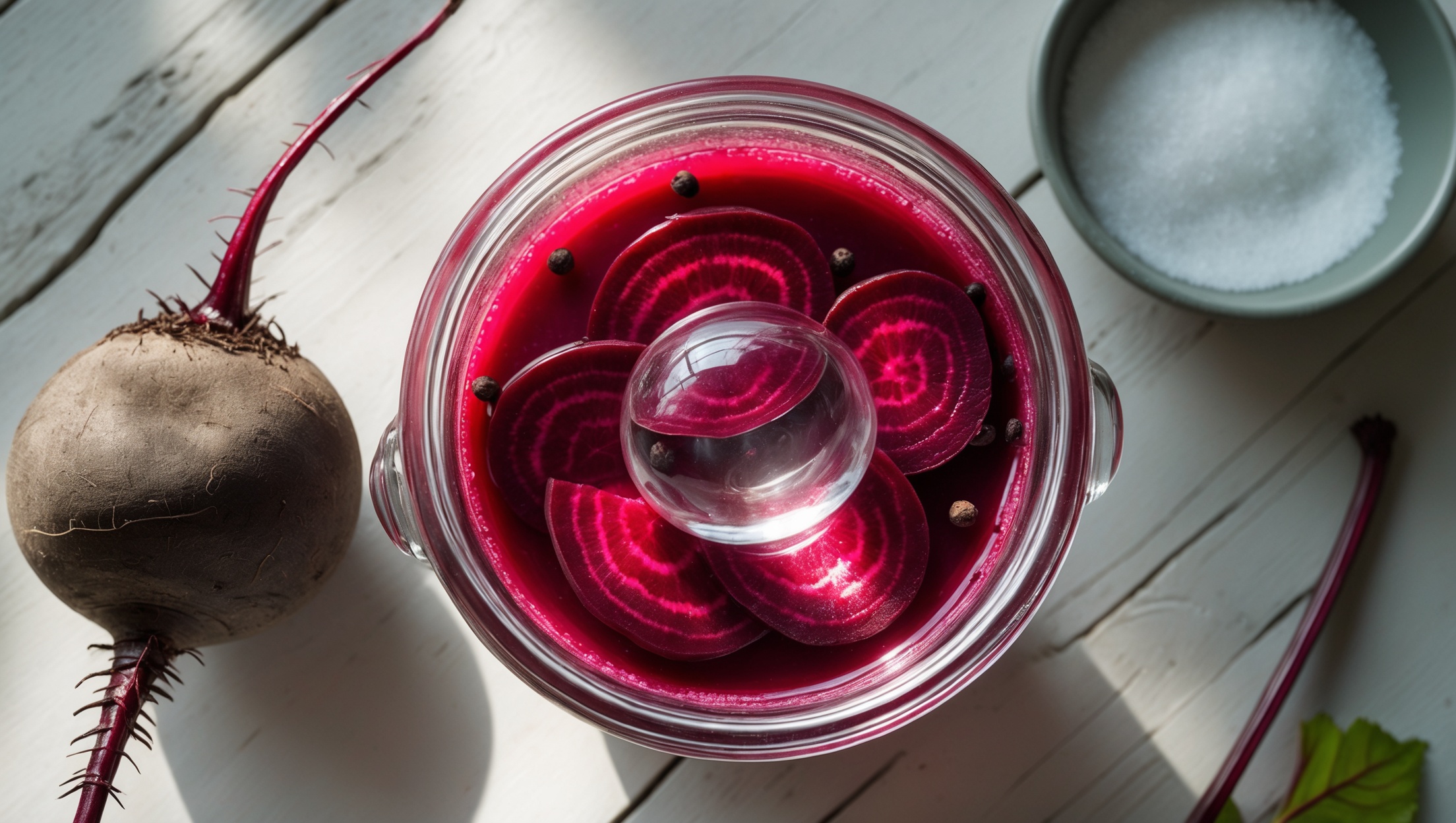
Fermented beets use a 2.5% to 3% salt brine by weight and turn pleasantly sour in 7 to 14 days at 65–75°F. Raw beets, sliced thin and kept fully submerged under a weight, ferment faster and more evenly than whole roots.
Fermented beets need a brine at 2.5% to 3% of the combined weight of beets and water, 7 to 14 days at 65–75°F, and a weight to stay submerged, since beets float once fermentation starts. Use raw beets only — cooking kills the bacteria that make fermentation work. Red beets hold their color best; golden and Chioggia varieties fade or bleed. The brine often turns thick and syrupy, since beets are naturally high in sugar. A safe ferment reaches a pH of 4.6 or below within about 48 hours; white kahm yeast is harmless, but colored or fuzzy mold means the batch should be discarded.
Ingredients
- 2-3 medium beets (about 1 lb / 450g), scrubbed and peeled
- 1 garlic clove, peeled (optional)
- A few black peppercorns or 1 bay leaf (optional)
- Filtered or dechlorinated water
- Fine, non-iodized sea salt — 2.5% to 3% of the combined weight of beets + water (see the Fermentation Salt & Brine Calculator for exact grams)
Step-by-Step
- Scrub the beets and peel them. Trim the stem and root ends.
- Slice the beets about 1/8 inch thick with a knife or a mandoline slicer (paid link), or cut into matchsticks. Thin, even pieces ferment faster and more consistently than thick chunks.
- Pack the beet slices into a clean quart-size jar with the garlic and any spices, leaving about 1 inch of headspace.
- Weigh the jar’s beets and water together, then dissolve fine sea salt at 2.5% to 3% of that combined weight into room-temperature filtered water. Pour the brine over the beets until fully covered.
- Weigh the beets down with a fermentation glass weight (paid link) — beets tend to float once fermentation produces gas — and cover loosely with an airlock lid or a cloth secured with a band.
- Ferment at 65–75°F for 7 to 14 days, tasting starting around day 7. Skim off any white kahm yeast that forms. Discard the batch if colored or fuzzy mold appears.
- Once the beets taste pleasantly sour, move the jar to the refrigerator. They keep for several months refrigerated.
How Much Salt Do You Need for Fermented Beets?
Fermented beets need a brine at 2.5% to 3% of the combined weight of beets and water. Below about 2%, mold becomes more likely, so beginners should lean toward the higher end of that range.
Weighing salt against the combined weight of the jar’s contents is more reliable than measuring by tablespoons, since beet size and jar fill level vary. Tare an empty jar on a kitchen scale, add the beets and water, subtract the tare weight, then multiply the result by 0.025 to 0.03 for the salt amount in grams. This percentage sits below the 5% used for fermented carrots on this site and above the 2% used for fermented salsa — salt ratios are vegetable-specific, not a single universal number. Non-iodized salt and dechlorinated or filtered water both matter: iodine and chlorine can slow or distort the fermentation.
A 2% brine works for some home fermenters, but it’s the riskier edge of the range — a weak brine is the most common reason mold shows up on beets specifically, more so than on cabbage or cucumbers. If a batch ever grows mold at 2%, the fix for the next batch is simple: raise the salt to 3%, not add preservatives or vinegar. If the beet brine turns noticeably thick or syrupy (beets are high in natural sugar), mixing in a few slices of turnip, radish, or jicama in the same jar helps balance the texture without changing the salt ratio.
How Long Do Fermented Beets Take to Ferment?
Fermented beets typically take 7 to 14 days at 65–75°F room temperature. Start tasting at day 7; many batches reach a fuller, rounder sour flavor between day 10 and day 14 before they go into the fridge.
Days on the counter are a guideline — compare the How Long to Ferment Vegetables chart for other vegetables — not the actual safety marker. According to NC State Extension’s fermentation guidance, a properly salted ferment should drop below pH 5.2 within the first 24 hours to prevent toxin-forming bacteria from getting a foothold, then reach pH 4.6 or below within 48 hours for full safety. Warmer rooms speed up both the souring and that pH drop; colder rooms (below roughly 65°F) slow fermentation down and may push the timeline past 14 days. Once the beets taste right, refrigeration slows the lactic-acid bacteria dramatically — refrigerated fermented beets keep for several months.
Fermented Beets vs. Pickled Beets: What’s the Difference?
Fermented beets rely on a salt brine and the beets’ own naturally occurring lactic-acid bacteria, with no vinegar added, and they stay refrigerated with live cultures intact. Pickled beets use vinegar, often with added sugar, for their acidity, and can be processed into shelf-stable jars through canning.
The two methods taste different because they work differently. Fermentation is a days-long process: salt suppresses unwanted microbes while lactic-acid bacteria multiply and produce the acid that preserves the beets, which is why fermented beets taste tangy, slightly funky, and less sweet. Pickling is a direct-acid process: vinegar supplies the acidity immediately, so pickled beets can be ready the same day and are usually sweeter, since classic recipes add sugar to balance the vinegar’s sharpness. Shelf life differs too — fermented beets are a fridge product, while vinegar-pickled beets processed with a tested canning recipe can sit at room temperature for a year or more. The two are not interchangeable in a canning jar: fermented beets should never be canned afterward, since canning’s heat destroys the live bacteria and defeats the point of fermenting them in the first place.
Why Does Beet Brine Turn Thick or Syrupy?
Beet brine often turns thick or syrupy because beets carry more natural sugar than most fermentation vegetables, and that extra sugar feeds more vigorous bacterial activity. This texture change is normal, not a sign of spoilage, as long as there’s no foul smell or mold alongside it.
A related, equally normal sight is brownish or grayish scum on the brine’s surface. That discoloration usually comes from the beets’ own pigments oxidizing where they meet the air, not from microbial growth. It can be skimmed off for appearance, but it doesn’t signal a failed batch the way mold does.
How Do You Know If Fermented Beets Have Gone Bad?
Fermented beets have gone bad if they smell putrid, turn visibly slimy, or grow fuzzy, colored mold rather than a thin white film. A properly fermented batch should test at pH 4.6 or below — see how to tell if your ferment has gone bad for signs that apply across other vegetables too.
White, flat kahm yeast is harmless, if unappetizing — skim it off and keep going. Fuzzy mold in any color (white, green, black, pink, or orange) is different and means the batch should be discarded, not scraped off and eaten around. If you’re unsure, a home pH strip is a cheap way to confirm the brine has reached 4.6 or below; cloudy brine and a strong, sour-earthy smell are both normal and not a sign of spoilage on their own. This is general food-safety guidance, not medical advice — when in doubt, throw it out.
Which Beet Varieties Work Best for Fermenting?
Red beets hold their deep color best through fermentation, while golden beets fade to a duller yellow and striped Chioggia beets lose their ring pattern and bleed color into the brine. All three varieties ferment safely using the same salt ratio and timeline.
Beyond color, pick beets that are firm, heavy for their size, and smooth-skinned. Soft, shriveled, or overly fibrous roots give a mushier, less crisp ferment regardless of variety.
💬 My Take
Most fermentation guides treat beets as a garnish for something else — a few pink slices dropped into a jar of cauliflower or cabbage for color, the way our own fermented cauliflower recipe uses them. Treated as the main ingredient, beets actually behave less like cabbage and more like a high-sugar fruit ferment: faster to turn syrupy, more prone to mold at low salt, and more forgiving of a longer fermentation window once the salt ratio is right. The common assumption that “vegetables all ferment the same way” breaks down fastest with beets.
- Use a 2.5% to 3% salt brine by weight; below 2% raises the risk of mold
- Ferment 7 to 14 days at 65–75°F, tasting starting around day 7
- A safe ferment reaches pH 4.6 or below within about 48 hours
- Use raw, thinly sliced beets and weigh them down — they float once fermentation starts
- Fermented beets use no vinegar and stay refrigerated; pickled beets use vinegar and can be canned shelf-stable
- Red beets keep their color best; refrigerated fermented beets last several months
Frequently Asked Questions About Fermented Beets
Can you ferment whole beets instead of slicing them?
Small beets can ferment whole, but slicing or cutting into matchsticks is faster and more even, since brine reaches the center of the root sooner. Large whole beets can take noticeably longer than the 7-to-14-day range and may ferment unevenly between the outer layer and the core.
Do you need to peel beets before fermenting?
Peeling is recommended for a cleaner flavor and texture, since beet skin can taste earthy and slightly bitter. Well-scrubbed, unpeeled beets will still ferment safely; the skin just changes the final taste and mouthfeel.
Can you use golden or Chioggia beets instead of red beets?
Yes. All beet varieties ferment the same way with the same salt ratio and timeline — only the color outcome changes, with golden beets fading and Chioggia beets losing their striped pattern.
Is cloudy or pink-red brine normal?
Yes. Cloudy brine and a strong red or pink color are both normal effects of fermenting beets and are not signs of spoilage on their own. Only discard the batch if a foul smell, slime, or colored mold shows up alongside it.
Can you can fermented beets to make them shelf-stable?
No. Fermented beets are a refrigerator product, not a canning project — canning’s heat kills the live bacteria that fermentation built up and changes the texture. Shelf-stable beets in a jar are made by pickling with vinegar through a tested canning recipe, not by fermenting first and canning after.
Sources and Further Reading
- Virginia Tech Cooperative Extension (FST-435) — fermentation salt percentages and the pH 4.6 safety threshold for fermented vegetables.
- NC State Extension (Fermentation Troubleshooting Quick Guide, NCSU) — the pH 5.2-within-24-hours and pH 4.6-within-48-hours safety timeline, and how to read surface mold, slime, and off odors.
- MakeSauerkraut — weight-based salt percentage method for beets and guidance on syrupy brine from beets’ natural sugar content.
- Homestead and Chill — practical brine ratios, kahm yeast behavior, and submersion/weighting tips specific to beets.