
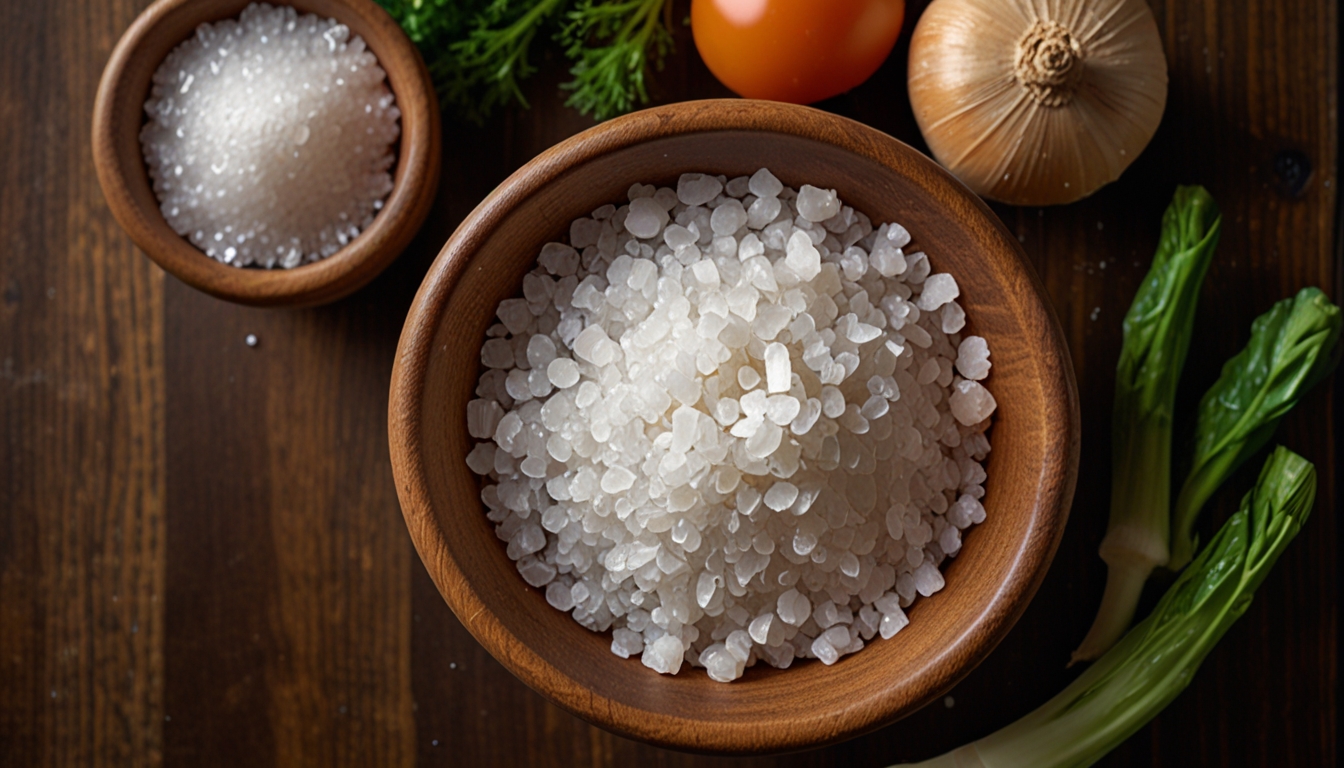
How much salt to use is the one question almost every new fermenter gets stuck on — too little and vegetables can go soft or moldy, too much and fermentation stalls. Instead of memorizing a ratio, use the calculator below: pick dry salting (rubbing salt into shredded vegetables, like sauerkraut) or a brine (pouring a salted water solution over whole or cut vegetables, like pickles), enter your amount, and get a precise weight plus a spoon measurement for your salt type.
Fermentation Salt & Brine Calculator
Figure out how much salt to use for lacto-fermentation — either salting vegetables directly or mixing a brine to pour over them.
Weighing salt is more reliable than measuring by spoon — salt crystals pack differently by brand, so the spoon figures above are approximate. This is a starting point, not a substitute for a tested recipe; adjust within the ranges here based on your kitchen’s temperature and how tangy you like the result.
Frequently asked questions
How much salt should I use for fermenting vegetables?
For dry salting (shredded vegetables like sauerkraut or kimchi), 2–3% of the vegetable’s weight is the standard range. For a brine (whole or cut vegetables covered in salted water, like pickles), 3–5% of the water’s weight is typical. The calculator above handles the math either way.
Can I use regular table salt for fermenting?
Yes. Plain fine sea salt or table salt works fine — just avoid brands with added iodine or anti-caking agents where possible, since they can cloud a brine or slightly slow things down. It’s not a dealbreaker, just a minor cosmetic and speed difference.
Should I measure salt by weight or by spoon?
By weight, when you can. A teaspoon of salt can weigh anywhere from about 2.8g to 6g depending on the brand and crystal size, so “1 tsp of salt” isn’t a fixed amount. That’s why the calculator gives you grams first, with a spoon measurement as a backup based on the salt type you select.
What happens if I use too little or too much salt?
Too little salt (below roughly 2% in a brine, or 1.5% dry) raises the risk of mold and off textures, since salt is what keeps unwanted bacteria in check while the fermentation gets going. Too much salt slows fermentation down or can stop it altogether. Staying within the ranges above keeps things moving safely.
Do I need a kitchen scale for this?
It helps, especially for vegetable weight, but isn’t required. A basic digital kitchen scale is inexpensive and makes the whole process far more consistent batch to batch — worth it if you plan to ferment regularly.
What container should I use for dry salting or brining?
A wide-mouth glass jar is the easiest starting point for both methods — it’s easy to pack, easy to see, and easy to clean between batches. For dry salting, you’ll want something you can pack tightly to keep vegetables submerged in their own juices; for brine, a jar with enough headspace to fully cover whatever you’re fermenting. A set of glass fermentation weights (paid link) (or a smaller jar filled with water) helps keep everything under the liquid, which matters more for keeping things safe than the container itself does.
How precisely do I need to weigh my salt?
Closer than a standard kitchen scale usually allows. Most digital scales round to the nearest gram, which is fine for larger batches but can be a meaningful swing on a small jar where a couple of grams shifts the percentage noticeably. If you ferment small batches often, a scale that reads to 0.1g makes the numbers from this calculator line up with what actually ends up in the jar.
Is there a version of this just for sauerkraut?
Yes — our sauerkraut salt calculator is the same tool set up with sauerkraut’s own defaults (2.25% optimum, cabbage-weight labeling) if that’s the only thing you’re making.
Is there a version for kimchi or pickles specifically?
Yes. The kimchi salt calculator is set up around the 2–3% retained-salt target kimchi methods aim for after salting and rinsing, and the pickles brine calculator defaults to brine mode with the 2–5% range fermented pickles typically use.