
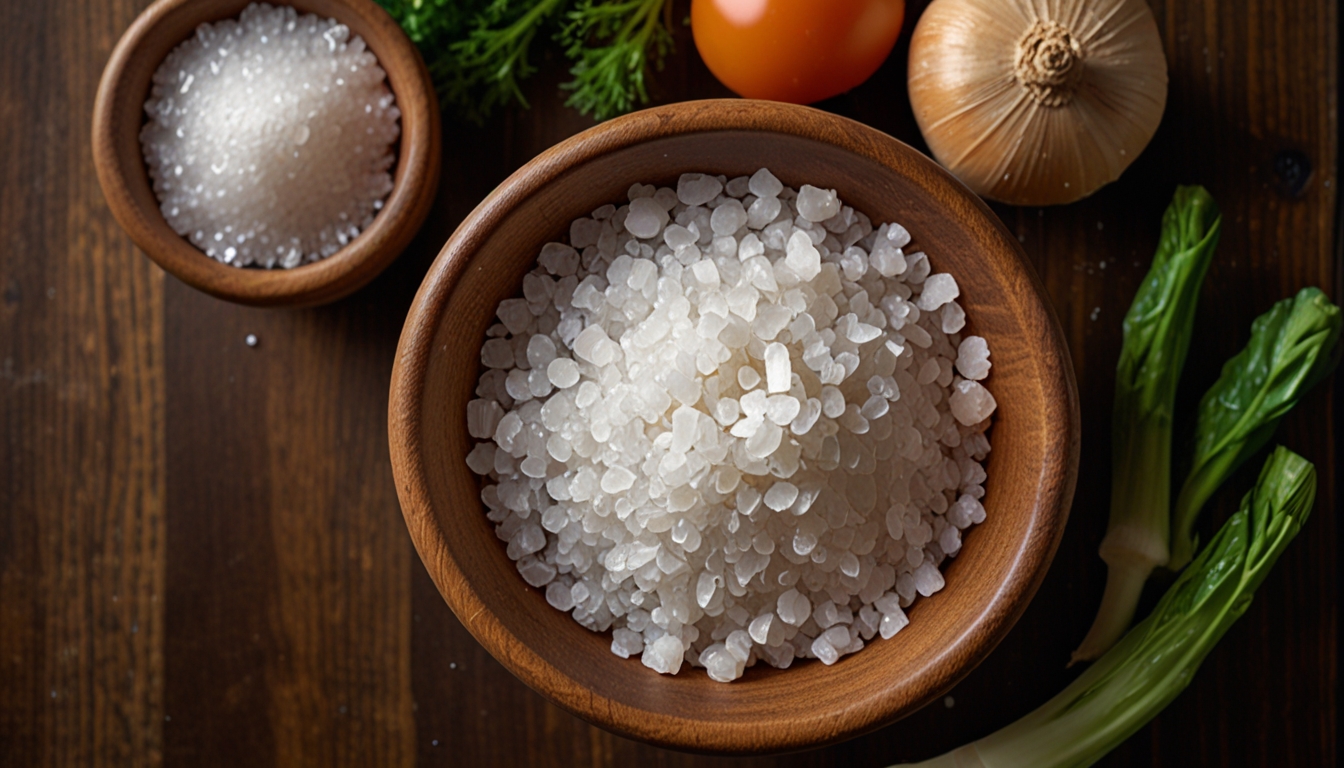
The published range for sauerkraut is 1 to 3 percent salt by weight of the shredded cabbage, with 2.25 percent given as the optimum — the standard recipe works out to 3 tablespoons of canning or pickling salt per 5 pounds of cabbage. Instead of scaling that by hand, use the calculator below: enter your cabbage weight and it gives you the exact gram weight, plus a spoon measurement for your salt type.
Sauerkraut Salt Calculator
Scale the salt to your own batch of cabbage — dry salting is the default below since that’s how sauerkraut is made, but the brine tab is here too in case you’re salting a whole head instead of shredding it.
Weighing salt is more reliable than measuring by spoon — salt crystals pack differently by brand, so the spoon figures above are approximate. 2.25% is the published optimum for sauerkraut; this is a starting point within the tested 1–3% range, not a substitute for weighing your own batch.
Frequently Asked Questions
How much salt do I need for a 5-pound head of cabbage?
About 3 tablespoons of canning or pickling salt, which is the standard dry-salting ratio published for sauerkraut. By weight that works out to roughly 2.25%, the optimum within the published 1–3% range — enter 2,268 g (5 lb) into the calculator above to see the exact gram figure for your own cabbage.
Does the calculator change if I add carrots, caraway, or other extras?
Base the percentage on the combined weight of everything going in the jar, not just the cabbage. A handful of shredded carrot or a spoon of caraway seed adds very little weight, so it rarely shifts the salt figure by more than a gram or two on a typical batch — but if you are adding a significant amount of another vegetable, weigh the mix together first.
My cabbage isn’t releasing enough liquid to cover itself — what now?
Give it more time and a firmer pack first; salted cabbage usually releases enough of its own brine within a few hours once it’s pressed down and weighted. If it genuinely falls short, top it up with a small amount of 2% brine (20 g salt per liter of water) rather than adding dry salt directly, and keep everything submerged. Our Not Enough Brine in Your Sauerkraut? guide walks through this in more detail.
Is it safe to just eyeball the salt instead of using a calculator?
NCHFP’s guidance is explicit that you should not cut back on the salt a recipe calls for, since the percentage is what determines which organisms dominate the jar, not just the taste. Eyeballing makes it easy to drift below the range that keeps a batch safe and predictable, which is the reason to weigh rather than guess.
Is this the same calculator as your general Salt & Brine Calculator?
Yes, same tool, set up with sauerkraut’s own defaults and ranges. If you’re fermenting something other than cabbage — pickles, kimchi, carrots — our general Salt & Brine Calculator covers those too.
Sources: NCHFP, Sauerkraut · Illinois Extension, Fermenting · Minnesota Extension, Fermentation
Related: How to Make Sauerkraut for Beginners · Fermentation Salt & Brine Calculator · Not Enough Brine in Your Sauerkraut? · Fermentation for Beginners: The Complete Guide