
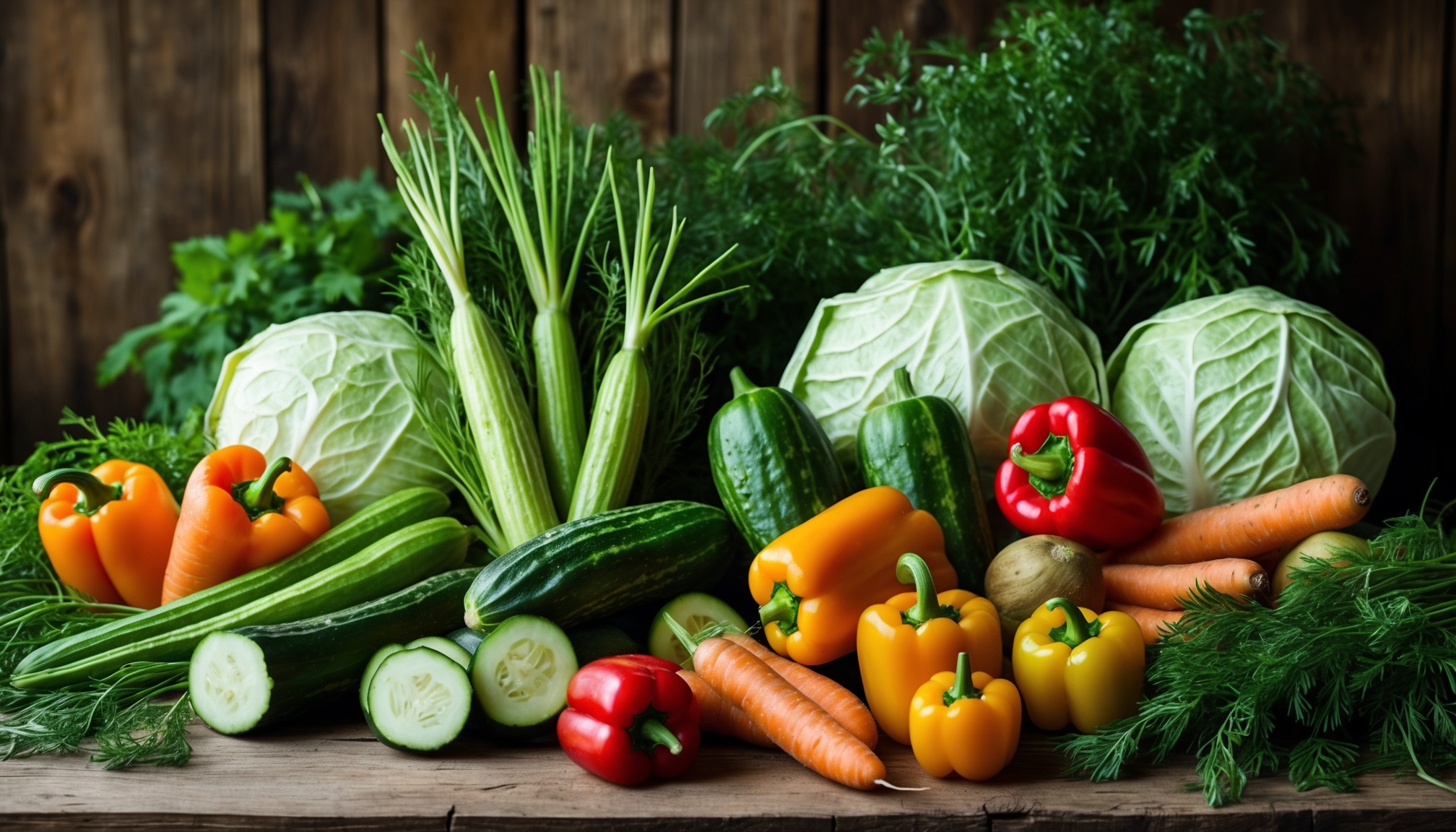
Most vegetables ferment in 1 to 4 weeks at 20–22°C (68–72°F). Thin-cut, high-surface vegetables like sliced carrots and radishes move fastest, at roughly 3 to 10 days. Cabbage ferments take 3 to 4 weeks to finish fully. Whole cucumbers are the slowest of the common ones, at 3 to 4 weeks. Temperature and salt concentration change these numbers more than the vegetable itself does.
Fermentation Time by Vegetable
The times below assume room temperature in the 20–22°C band typical for vegetable fermentation, with everything submerged in brine.
| Vegetable | Typical time | Salt reference | Ready when |
|---|---|---|---|
| Radishes, sliced | 3–7 days | 2–3% | Sharp bite softens, brine cloudy |
| Carrots, sticks or coins | 5–10 days | 5% | Tangy through to the centre |
| Cauliflower florets | 7–14 days | 2–3% | Stems still firm, flavour sour |
| Green beans | 7–14 days | 3–3.5% | Squeaky texture gives way |
| Peppers for hot sauce | 1–2 weeks | 3–5% | Brine cloudy, heat mellowed |
| Cabbage (sauerkraut) | 3–4 weeks | 1–3%, 2.25% optimal | Bubbling stops, brine clears |
| Kimchi | 3 days–2 weeks | 2–3% after brining | To taste; then chilled |
| Cucumbers, whole | 3–4 weeks | 3–15% by variety | Opaque through the middle when cut |
Two of those salt figures are worth pausing on, because they surprise people. BCCDC lists 5 percent for carrots and a range of 3 to 15 percent for cucumbers depending on variety, considerably above the 2 to 2.5 percent that most general fermentation advice quotes. The cabbage figure, 1 to 3 percent with 2.25 percent noted as optimal, is the one that matches the common rule of thumb.
Why the Same Vegetable Takes Different Times
Four variables account for nearly all the spread, roughly in order of impact.
- Temperature. The dominant factor. Sauerkraut takes 3 to 4 weeks at 70–75°F but 5 to 6 weeks at 60–65°F, and may not ferment below 60°F. BCCDC warns that above 25°C, spoilage becomes more likely.
- Surface area. Shredded cabbage releases its sugars immediately; a whole cucumber has to let brine work inward through its skin. This is why cut size shifts the timeline by days.
- Salt concentration. More salt slows fermentation and firms texture; less speeds it and softens. It is a brake, not an on-off switch.
- Sugar content of the vegetable. Bacteria need fermentable sugar. Carrots and cabbage carry plenty; leafy greens carry little, which is why they ferment poorly on their own.
How to Tell a Batch Is Ready
Taste beats any timetable, but three physical markers tell you the active phase has run its course:
- Bubbling has stopped. No new gas when you tap the jar.
- The brine has cleared. Brine starts cloudy and typically clears by around week four.
- Flavour has stabilised. When this week tastes like last week, the batch has arrived.
Chilling at that point slows further change considerably without stopping it. A jar you liked at week three will keep drifting sourer in the fridge, just very slowly.
Which Vegetables Ferment Badly
Worth knowing before you commit a jar. Soft, starchy, or high-fat vegetables tend to disappoint: lettuce and leafy greens collapse, potatoes contribute starch rather than sugar, avocado and other fatty produce go rancid rather than sour. Our list of which vegetables can you ferment goes through this in more detail.
This article summarises published home-fermentation guidance on timing and salt concentration. It is not an assessment of any particular batch. If a ferment looks, smells, or tastes wrong to you, discard it.
FAQ
Can I ferment vegetables for less time than the table says?
Yes. Many people prefer a shorter ferment for a milder result and firmer texture. The times listed describe a fully developed flavour, not a threshold you have to cross.
Do all vegetables ferment at the same rate?
No, and the spread is wide. Thin-cut carrots or radishes can be ready in under a week while whole cucumbers take three to four. Cut size, sugar content and salt concentration all pull the timeline.
What happens if I ferment for too long?
Flavour keeps sharpening and texture keeps softening. The change is gradual rather than a cliff. Judge a long ferment by how it looks, smells and tastes.
Does a bigger jar ferment more slowly?
Marginally. Volume affects how quickly the centre reaches room temperature, but the published timelines track ambient temperature and salt concentration, not jar size.
Sources: BC Centre for Disease Control, Fermented Vegetables Guidance · National Center for Home Food Preservation, Sauerkraut
Related: Salt & Brine Calculator · Which Vegetables Can You Ferment? · Fermentation Temperature Guide · Fermented Pickles Recipe