
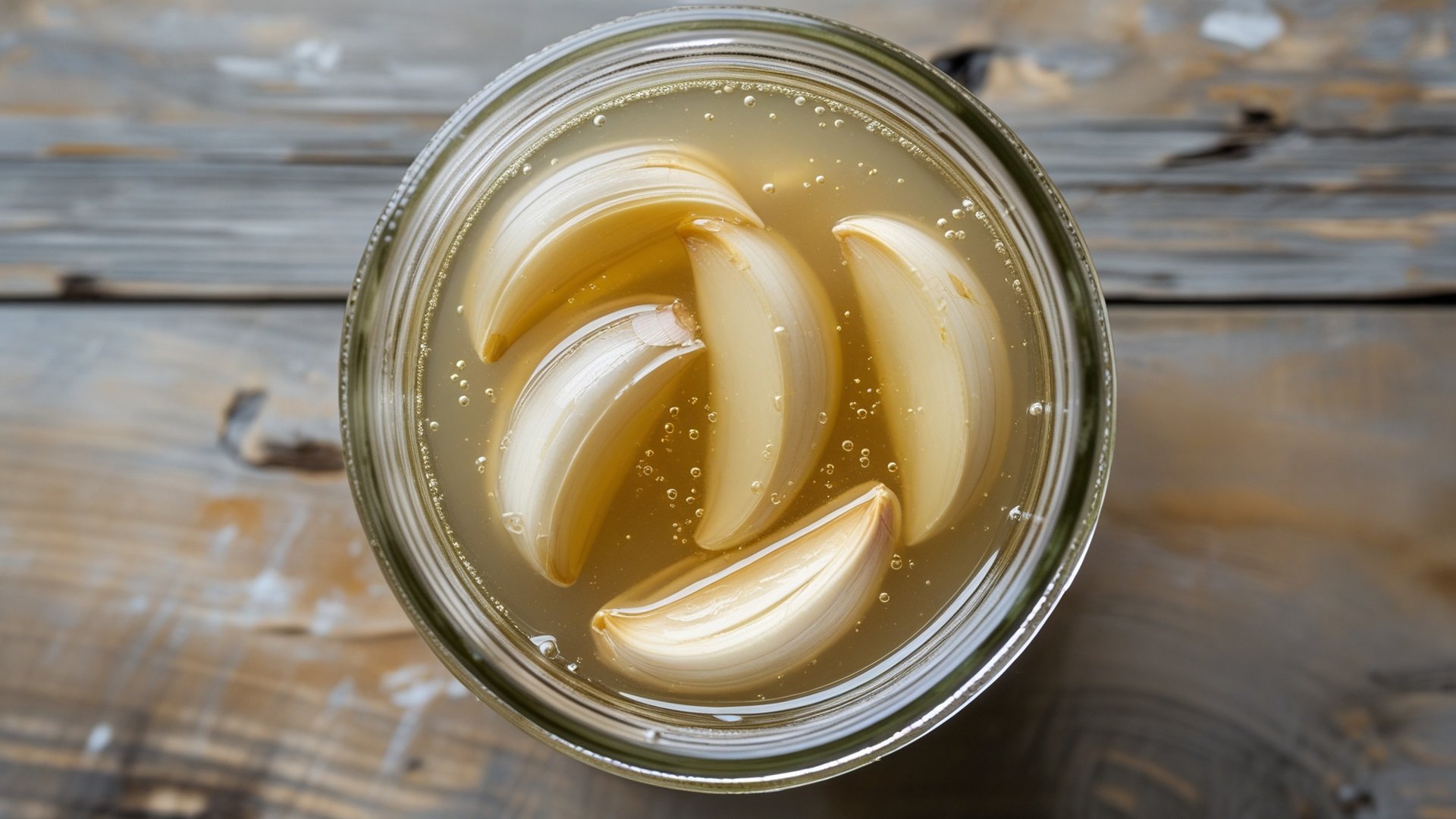
Salt-brine fermented garlic that stays fully submerged in its brine and refrigerated keeps for several weeks to several months — the same general range the BC Centre for Disease Control gives for fermented vegetables overall, since “product shelf life is several weeks to several months, depending on packaging and post-fermentation processing.” There’s an important caveat, though: unlike cabbage, cucumbers, or kimchi, extension food-safety offices don’t currently publish a lab-tested, validated recipe for salt-brine fermented garlic specifically. An Ask Extension answer from 2026 states it plainly — “Fermentation is not an approved, safe method of preserving garlic.” That doesn’t mean a careful home batch is dangerous; it means the range below comes from general vegetable-fermentation science and established home practice, not a dedicated garlic study.
How Long Does Fermented Garlic Last in the Fridge?
The answer depends on which “fermented garlic” you actually made — the term covers a few different products with different tested shelf lives.
| Type | Typical fridge life | What limits it |
|---|---|---|
| Salt-brine fermented garlic, submerged (our jar method) | Several weeks to several months | Pungency and texture fade, not spoilage |
| Salt-brine fermented garlic, brine dropped below cloves | Days to a couple of weeks | Exposed surface grows mold fast |
| Garlic pickled in vinegar or wine (different method) | About 4 months | UC Davis-published figure for this specific product |
| Fermented honey garlic | No published tested duration | Two low-acid ingredients combined; treat cautiously |
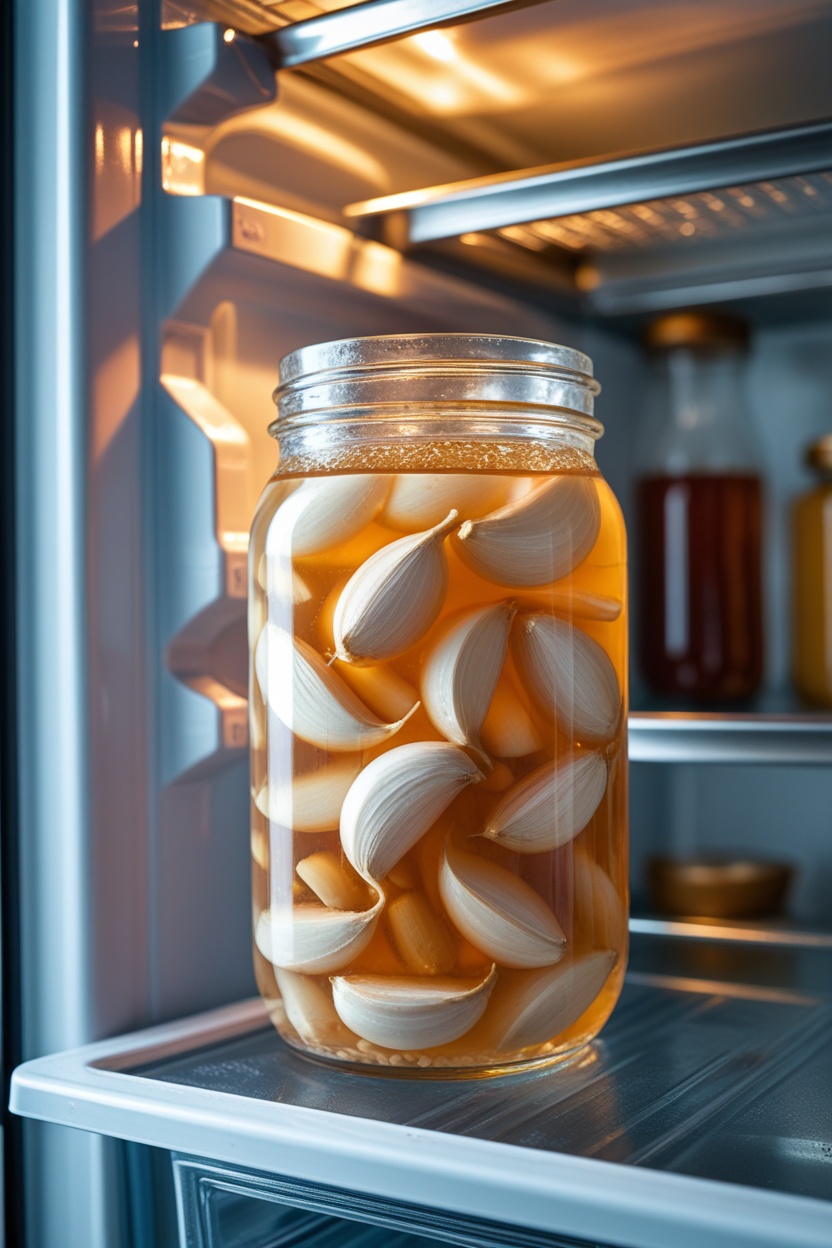
Garlic itself is a low-acid food — a clove typically sits at pH 5.3 to 6.3, well above the 4.6 threshold that stops Clostridium botulinum from growing. That single fact is why garlic preservation methods get more scrutiny than, say, cucumbers. An Ask Extension expert fielding a home fermenter’s question in 2026 put it directly: “Fermentation is not an approved, safe method of preserving garlic,” adding that “there are currently no validated recipes for fermenting garlic” the way there are for sauerkraut or dill pickles. The nearest figure with an actual tested number comes from a different product entirely — UC Davis’s Garlic: Safe Methods to Store, Preserve, and Enjoy puts refrigerated garlic submerged in wine or vinegar at roughly 4 months, discarded at the first sign of surface mold or yeast.
Why Is Garlic Treated More Cautiously Than Cabbage or Cucumbers?
It’s not actually a starting-acidity problem — cucumbers start in a similar range. The BC Centre for Disease Control’s fermented-vegetable guidance (hosted via Manitoba Agriculture) puts cucumbers’ initial pH at 5 to 6.4, acidifying to a final pH of 3.2 to 3.6 once fermentation finishes; sauerkraut finishes around 3.2 to 3.4. Garlic’s starting pH of 5.3 to 6.3 sits in roughly the same range. The more likely difference is shape, not chemistry: shredded cabbage and cut or whole cucumbers release juice quickly and expose a lot of surface area to the brine, while a dense, intact garlic clove under its skin doesn’t. Brine and acid simply penetrate more slowly and less predictably, which is probably why the commercial process that guidance lists for pickled garlic adds a step cucumbers and cabbage don’t need — a quick blanch specifically to inactivate the clove’s own enzymes before fermentation even starts.
That same BC CDC guidance also lists a commercial process for pickled garlic: an 8% salt brine, a quick blanch to inactivate enzymes, a starter culture, a seven-day ferment, and a final pasteurization step. That is a considerably more controlled process than a home jar of garlic, water, and salt — one more sign that “fermented garlic” covers a range of methods with very different safety margins, not one standard product.
What Changes Over Those Months
- Weeks 1–4 in the fridge: Flavor holds close to where it was when the ferment finished; this is peak mellow-garlic flavor.
- Months 2–3: Noticeably tangier, and cloves may deepen in color or show a blue or green tint — a harmless pigment reaction, not spoilage.
- Months 4 and beyond: Softer texture and a sharper tang. This is past the “several weeks to several months” window the BC CDC guidance describes as typical, so judge the jar on its own merits (see the discard checklist below) rather than assuming it is automatically fine or automatically spoiled.
How to Make a Jar Last Toward the Long End
- Keep every clove under the brine. This is the single biggest factor. A set of glass fermentation weights (paid link) stops cloves from floating once the jar goes in the fridge, too.
- Use the full 2% brine, not a weaker one. Our salt & brine calculator scales the ratio to whatever jar size you’re using.
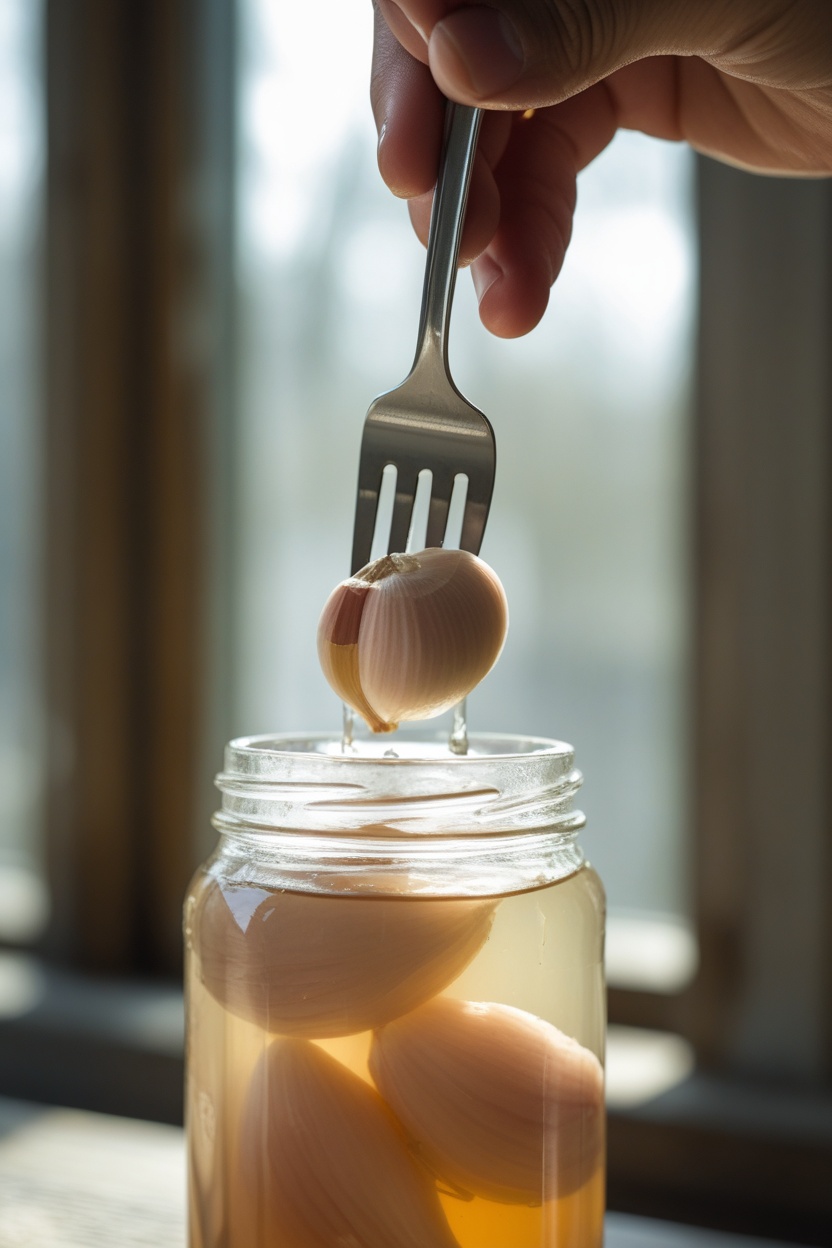
- Use a clean utensil every time — not one that has touched your mouth or raw meat.
- Keep the fridge genuinely cold and away from the door, where temperature swings more over months of storage.
- Top up with fresh brine, not plain water, if the level drops, so the salt percentage around the exposed cloves doesn’t fall.
“Validated Recipe” vs. Home Practice — What That Actually Means for You
This matters most for anyone who skipped the fermentation step shown in our own recipe (room-temperature ferment for 2 to 4 weeks until the garlic turns tangy and slightly translucent) and moved straight to the fridge. A jar that never fully fermented is just raw garlic sitting in salt water, and it does not get the months of fridge life described above.
When to Discard a Jar
Softening and extra sourness over many months are not spoilage on their own. These signs are:
- Fuzzy growth of any color, raised above the surface of the brine or the cloves.
- Sliminess on the cloves or in the brine.
- A putrid or rotten smell, as opposed to the sharp, tangy smell a healthy garlic ferment has throughout.
- Anything that simply looks or smells wrong to you. Given garlic’s low-acid starting point, there’s no reason to taste-test a doubtful jar to find out.
This article summarizes published extension guidance and general vegetable-fermentation safety principles. It is not a food-safety assessment of any specific jar, and it is not medical advice. If a ferment looks, smells, or tastes wrong, throw it out rather than tasting it to find out. Our guide on how to tell if your ferment has gone bad covers the broader checklist across all vegetable ferments, and a blue or green tint on garlic specifically is covered separately in why is my fermented garlic turning blue or green, since it’s a harmless pigment reaction rather than a discard sign.
FAQ
How long does fermented garlic last after opening?
The same months-long range applies after opening as before, as long as the cloves stay submerged in their brine and refrigerated. Opening the jar doesn’t start a new countdown; keeping everything covered by liquid does the work either way.
Does fermented garlic need to be refrigerated?
Yes, once it’s fully fermented. It ferments at room temperature for 2 to 4 weeks first, then moves to the fridge to slow things down and extend its usable life for months.
Can fermented garlic go bad?
Yes, mainly when cloves are no longer fully submerged in brine and are exposed to air. Fuzzy growth, sliminess, or a putrid smell mean it’s time to discard the jar — see the checklist above.
Is fermented honey garlic the same shelf life as plain fermented garlic?
No, and there isn’t a published tested duration for that combination either. Honey and garlic are both low-acid ingredients on their own, so our fermented honey garlic guide leans more cautious than the salt-brine method on this page.
Sources: Ask Extension, Loretta Sweeney (Franklin County, Ohio), May 2026 · UC Davis ANR, Garlic: Safe Methods to Store, Preserve, and Enjoy · BC Centre for Disease Control, Safety of Fermented Foods (Fermented Vegetables)
Related: Fermented Garlic: The Simple Jar Method · Fermented Honey Garlic · Black Garlic · Why Is My Fermented Garlic Turning Blue or Green? · How to Tell If Your Ferment Has Gone Bad