
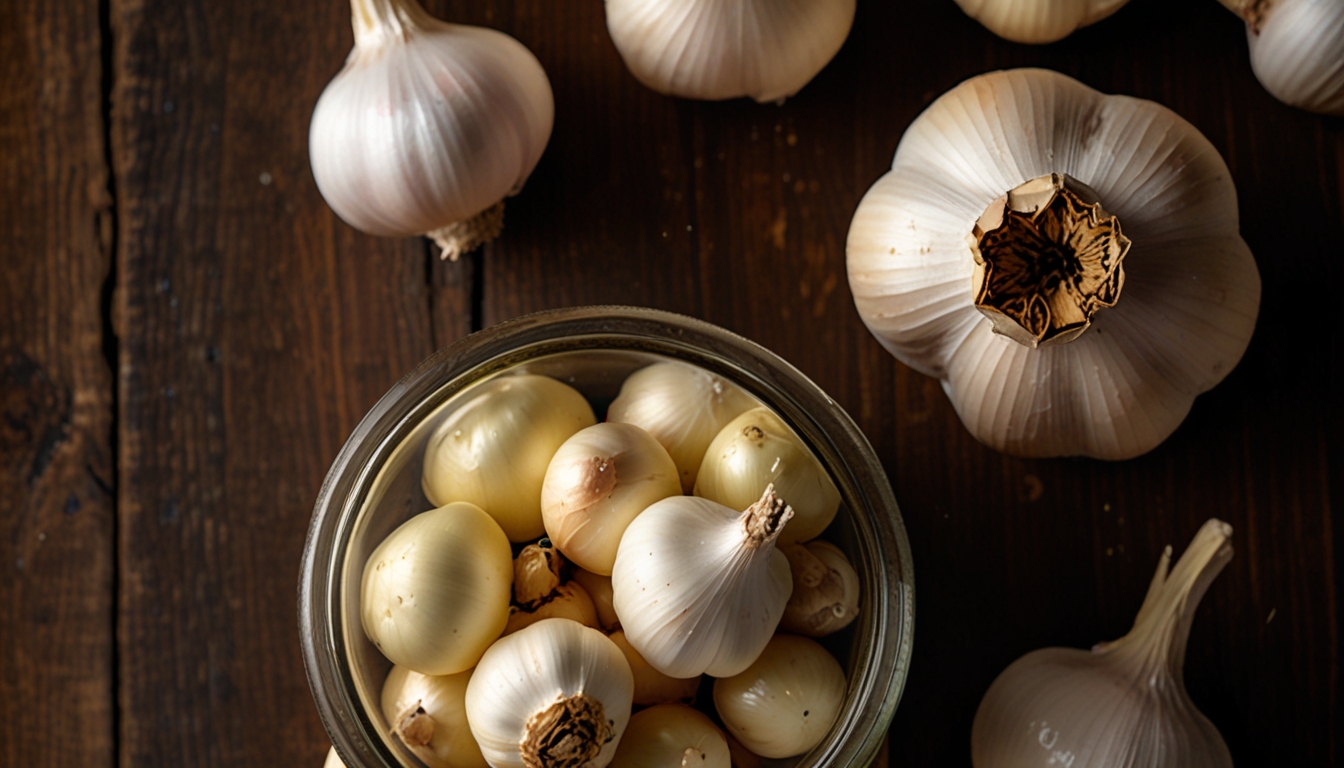
Not every garlic ferment needs honey. This version is just garlic, salt and water — mellower and less sharp than raw garlic, with a pleasant tang, and it keeps for months in the fridge.
Looking for the honey version instead? See our fermented honey garlic recipe.
Not sure how much salt to use? Try our salt & brine calculator — enter your amount and get the exact measurement in grams, ounces, or teaspoons.
Ingredients & Equipment
- 2 cups peeled garlic cloves (whole)
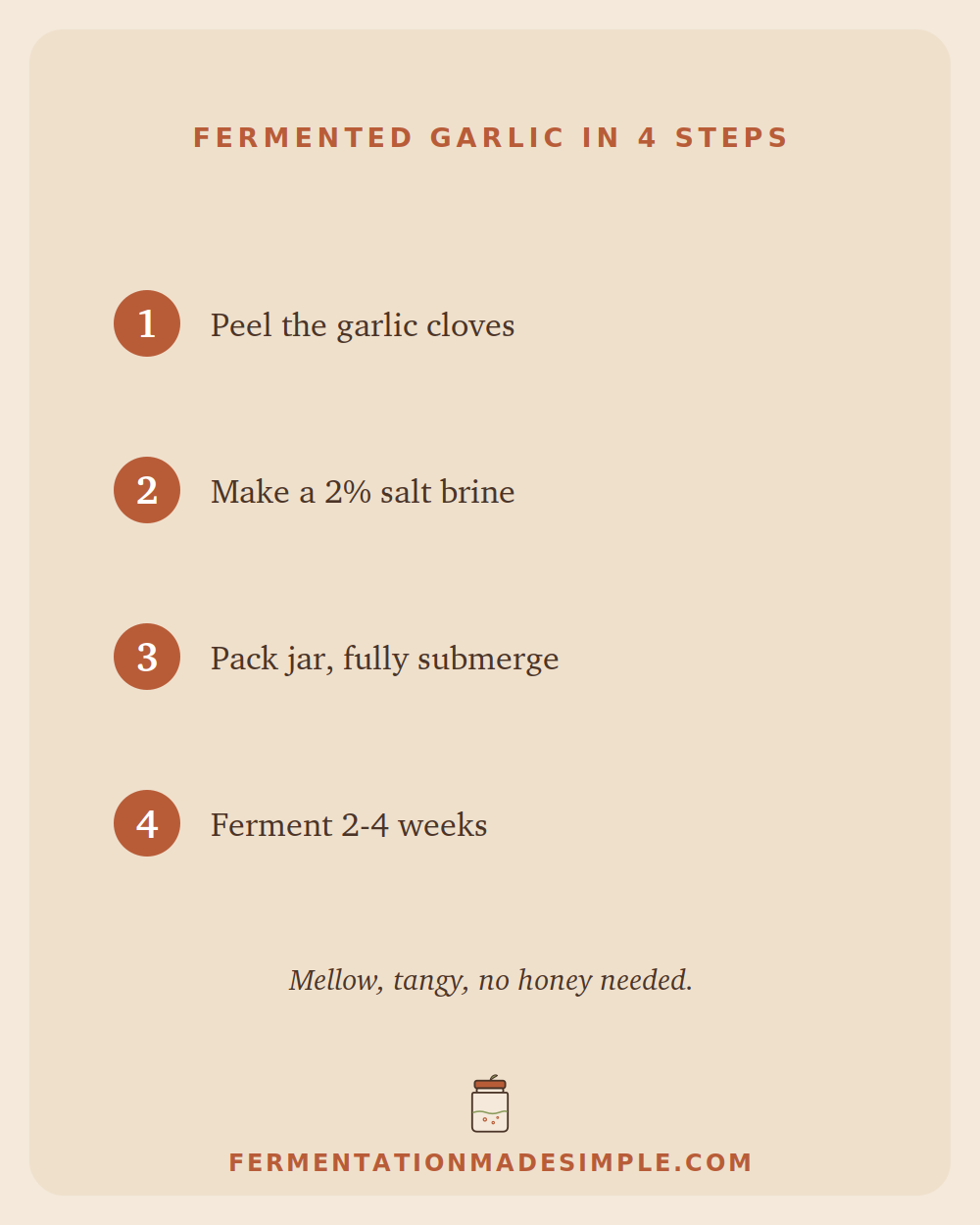
- 2 cups water + 1 tbsp fine sea salt (a 2% brine)
- Optional: a bay leaf or a few peppercorns
- A clean wide-mouth glass jar (paid link)
- A fermentation weight (paid link) to keep the garlic submerged
Step-by-Step
- Peel the garlic. Whole cloves work best — no need to chop.
- Make the brine. Dissolve the salt completely in the water.
- Pack the jar. Add the garlic (and bay leaf or peppercorns if using), then pour in the brine to cover completely.
- Weigh it down. Keep every clove fully submerged under the brine.
- Cover loosely and set aside at room temperature, out of direct sunlight.
How Long It Takes
Ferment for 2 to 4 weeks at room temperature. The garlic will mellow and turn slightly translucent as it ferments — taste a clove starting around week 2 to check progress.
Storage
Once it tastes right, move the jar to the fridge. Fully fermented garlic keeps for many months submerged in its brine.
Common Mistakes
- Cloves floating above the brine — always weigh them down.
- Using pre-peeled, older garlic — fresher bulbs ferment more reliably.
Notice the garlic turning blue or green? That’s a harmless pigment reaction, not spoilage — see our troubleshooting guides for details.
FAQ
Is fermented garlic less strong than raw garlic?
Yes — fermentation mellows the sharp bite of raw garlic into something tangier and rounder, similar to roasted garlic in mildness.
Can I use the leftover brine?
Yes — it makes a great garlicky addition to salad dressings or marinades.
Save this recipe on Pinterest for later.
Related: Fermented Honey Garlic · Fermentation for Beginners · Troubleshooting