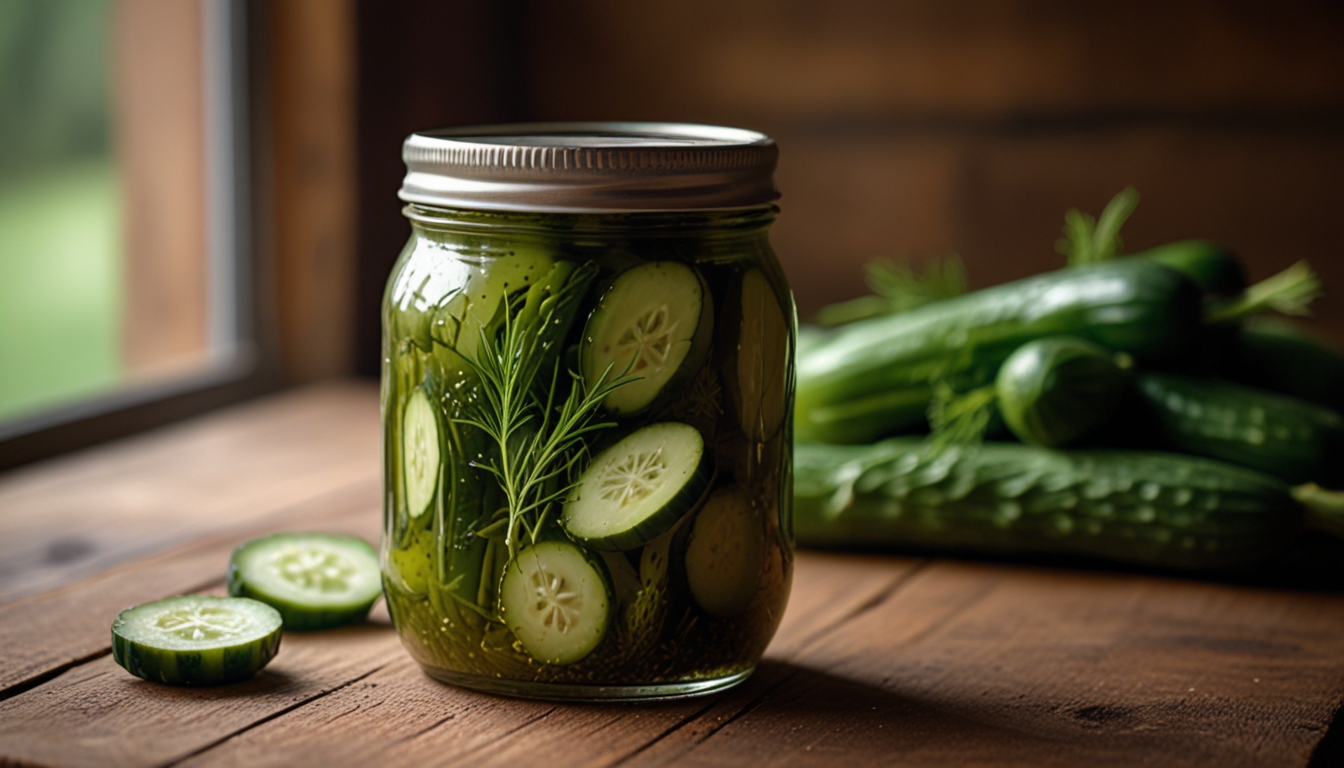
Fermented pickles cure in a salt brine, not vinegar. Full fermentation takes about 3 to 4 weeks at 70–75°F (21–24°C), or 5 to 6 weeks at 55–65°F (13–18°C), and temperatures above 80°F (27°C) are the ones to avoid, where cucumbers turn too soft during fermentation.
How Much Salt Does a Pickle Brine Need?
The tested dill pickle recipe works by container capacity rather than by percentage: for each gallon of container, 4 pounds of 4-inch pickling cucumbers, 2 tablespoons dill seed (or 4 to 5 heads of fresh dill), 1/2 cup canning or pickling salt, 1/4 cup vinegar at 5 percent acidity, and 8 cups water. The same half-cup-per-gallon figure turns up in the other published recipes for fermented pickles.
Other sources describe brine by percentage, which is handier for a single jar. Two working strengths are published, and cucumber ferments in the wider literature run anywhere from 3 to 15 percent salt depending on the variety and style.
| Brine strength | Salt per quart (1 L) of water |
|---|---|
| 3 percent | 2 tablespoons (1 oz / 27 g) |
| 5 percent | 3 tablespoons (1.6 oz / 45 g) |
| Cucumber range in the literature | 3 to 15 percent, by variety |
Use canning or pickling salt: anti-caking material in other salts can cloud the brine, and flake salt is not recommended for pickled and fermented foods. Our pickles brine calculator scales any of these to your jar.
What You’ll Need
- 1 lb small pickling cucumbers (Kirby or similar)
- 2 cups water + 1 tbsp fine sea salt (a 2% brine)
- 2-3 garlic cloves, smashed
- A few sprigs of fresh dill
- Optional: 1 tsp mustard seeds, a few peppercorns
- A clean 1-quart jar (paid link)and a fermentation weight (paid link)
Cucumber choice matters more than equipment. Use cucumbers no more than 2 inches in diameter, brined within 24 hours of harvest; a long gap between picking and brining is a listed cause of hollow and shrivelled pickles.
Step-by-Step
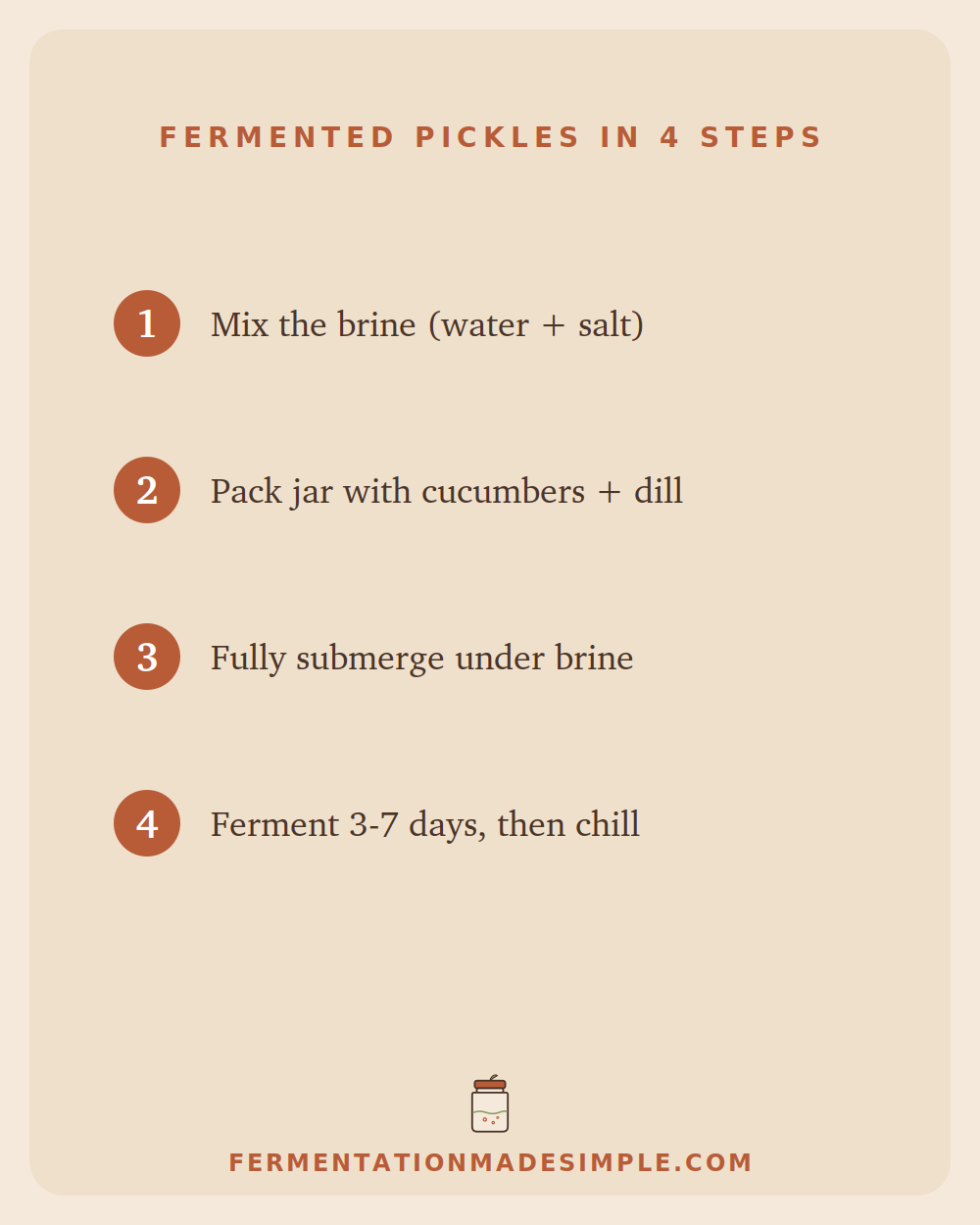
- Make the brine. Dissolve the salt in the water completely.
- Pack the jar. Trim the blossom end off each cucumber (it has enzymes that cause softening), then pack them into the jar with garlic and dill.
- Pour and submerge. Cover completely with brine, weighing the cucumbers down so nothing floats above the liquid.
- Cover loosely and set on a small plate to catch overflow.
- Wait and taste. Ferment 3-7 days at room temperature, tasting from day 3.
Two details in the tested procedure are easy to skip and worth keeping. Cut a slice at least 1/16 inch off the blossom end and discard it, leaving about 1/4 inch of stem attached — the blossom end carries enzymes that soften pickles. And keep everything under the brine: at least 3 cm (a little over an inch) of liquid above the vegetables, with a weight to stop anything floating.
How Long Do Fermented Pickles Take?
Temperature sets the clock far more than jar size does. The published bands overlap, and the warm end is the one that costs you texture: fermentation is slow to start below 50°F (10°C), a batch may spoil above 77°F (25°C), and above 80°F (27°C) pickles become too soft.
| Temperature | Time to ferment |
|---|---|
| Below 50°F (10°C) | — |
| 55–65°F (13–18°C) | 5 to 6 weeks |
| 70–75°F (21–24°C) | 3 to 4 weeks |
| Above 77°F (25°C) | Faster |
| Above 80°F (27°C) | Faster |
Small-batch ferments cure more quickly than a crock, so taste yours rather than counting days. A finished cucumber ferment lands at a final pH of 3.2 to 3.6.
Why Do Fermented Pickles Turn Soft?
There is a published list of causes for problems with fermented pickles, and soft or slippery pickles have a short set of usual suspects:
- Brine too weak. Salt concentration is part of what shapes which organisms dominate the jar, which is why NCHFP says not to cut back the salt a recipe calls for.
- Too warm. Storage above the 70–75°F band.
- Not enough brine to keep the cucumbers submerged.
- Blossom ends left on. Slice at least 1/16 inch off.
Hollow pickles usually mean cucumbers too big for brining or too long a wait after harvest; shrivelled ones point to a brine that was too concentrated. Our guide to soft pickles goes through each in turn, and cloudy brine covers the look of a jar mid-ferment.
How Do You Store Them?
NCHFP states that fully fermented pickles may be kept in their original container for about 4 to 6 months, provided they are refrigerated and surface scum and moulds are removed regularly. The same four-to-six-month figure is published elsewhere, and canning is named as the other route for longer storage, using the published process times.
This article reports what the published extension and public-health guidance says about fermenting cucumbers. It is not an assessment of any particular jar. NCHFP’s own instruction is plain: if pickles become soft, slimy, or develop a disagreeable odour, discard them. If anything about your batch looks, smells, or tastes wrong to you, throw it out.
FAQ
How long do fermented pickles take at room temperature?
Published guidance puts it at about 3 to 4 weeks at 70–75°F (21–24°C). At 55–65°F (13–18°C) the same recipe takes 5 to 6 weeks. Small single-jar batches cure faster than a full crock, so start tasting early.
Do I have to trim the blossom end?
The tested procedure says to cut a slice at least 1/16 inch off the blossom end and discard it, because the enzymes concentrated there cause softening. Leave about 1/4 inch of stem on the other end. It takes seconds and it is the single most-cited fix for mushy pickles.
Can I use table salt instead of pickling salt?
Canning or pickling salt is the recommendation. Anti-caking additives in other salts can cloud the brine, iodised salt is listed among the causes of dark or discoloured pickles, and flake salt is not recommended because its volume-to-weight ratio is unreliable.
Why is my brine cloudy?
Cloudiness during active fermentation comes with the process as lactic acid bacteria multiply. Hard water and non-pickling salts are separately listed as causes of a cloudy brine. Cloudiness together with softness, sliminess or an off odour is the combination NCHFP says to discard.
Sources: NCHFP, Dill Pickles · NCHFP, Problems with Fermented Pickles · Penn State Extension, Let’s Preserve: Fermentation · Illinois Extension, Fermenting
Related: Salt & Brine Calculator · Half-Sour Pickles · Fermentation Temperature Guide · How to Make Sauerkraut