
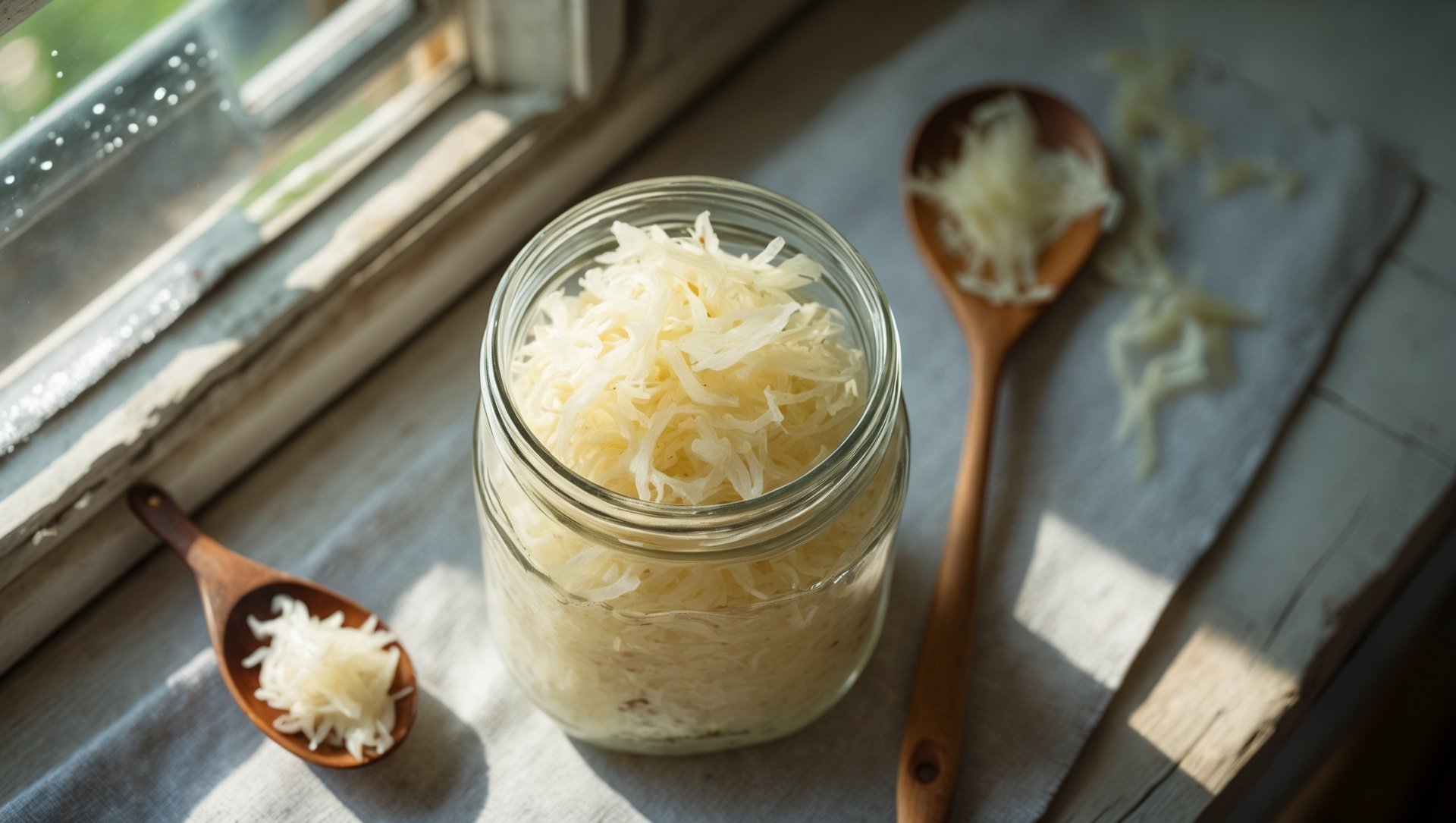
Sauerkraut usually isn’t sour yet because it hasn’t fermented long enough or the room it’s in is too cold — most batches need 2 to 4 weeks at 65-72°F to develop real tang, and anything below 65°F can stretch that to 6-8 weeks. Too much salt (above roughly 2.5% by weight) or refrigerating the jar too early are the other common culprits, since cold essentially stops fermentation rather than just slowing it.
A basic digital kitchen scale (paid link) takes the guesswork out of the 2% salt ratio, which is the fastest way to rule out salt as the reason a batch is staying bland.
The Four Most Common Reasons Sauerkraut Stays Bland
- Not enough time: the lactic acid bacteria that produce sourness, mainly Leuconostoc mesenteroides early on and Lactobacillus plantarum later, need weeks, not days, to build up noticeable acid.
- Room too cold: below about 65°F, those bacteria multiply more slowly; below 60°F, fermentation can nearly stall.
- Too much salt: salt above roughly 2.5% of the cabbage’s weight suppresses bacterial activity and delays acid production, on top of making the kraut taste salty rather than sour.
- Refrigerated too soon: the fridge doesn’t just slow fermentation down, it essentially stops it, so a jar moved to the fridge after a few days stays at whatever sourness it had reached.
How Long Should It Actually Take?
At the ideal 65-72°F range, sauerkraut typically needs 2 to 4 weeks to develop noticeable tang, with deeper, more complex sourness often taking 4 to 6 weeks. Below 65°F, that timeline can run 6 to 8 weeks instead. See our full sauerkraut fermentation timeline for a week-by-week breakdown of what to expect at each stage.
Fixing a Batch That Won’t Sour
If the jar hasn’t been refrigerated yet, the fix is usually just patience and warmth: move it somewhere in the high 60s to low 70s Fahrenheit — away from a cold window or an unheated pantry — and keep tasting it every few days. If it’s been less than 2 weeks, it likely just needs more time. If it’s already been sitting for a month at room temperature and still tastes flat, check the salt ratio against the standard 2% by weight — a batch that’s noticeably over that percentage will sour more slowly even with extra time. Also confirm the cabbage has stayed fully submerged under the brine the whole time, since shreds exposed to air don’t ferment the same way as submerged ones.
Can You Still Fix It After Refrigerating?
Moving a jar back to room temperature restarts fermentation, since the bacteria aren’t dead — just dormant in the cold. A kraut that went into the fridge after only a few days at room temperature can usually pick up more sourness if it sits out again for another 1 to 2 weeks, though the flavor may develop slightly differently than an uninterrupted ferment.
FAQ
Does more salt make sauerkraut more sour?
No — it’s the opposite. Salt above roughly 2.5% by weight suppresses the lactic acid bacteria responsible for sourness and slows acid production, so an oversalted batch tends to taste flatter for longer, not more tangy.
Is bland sauerkraut safe to eat?
Yes, as long as it looks, smells, and tastes normal otherwise — mild or crisp sauerkraut is just an earlier stage of the same fermentation, not a spoiled batch. If anything smells putrid or shows fuzzy mold, see our guide to spoiled ferments instead.
Why did my sauerkraut sour fast one time and stay bland the next?
Kitchen temperature is the most common reason for that kind of batch-to-batch difference — a few degrees warmer or cooler than last time can shift the timeline by a week or more, even with the same recipe and salt ratio.
Save this guide on Pinterest for your next batch.
Related: How Long Does Sauerkraut Take to Ferment? · Sauerkraut Recipe