
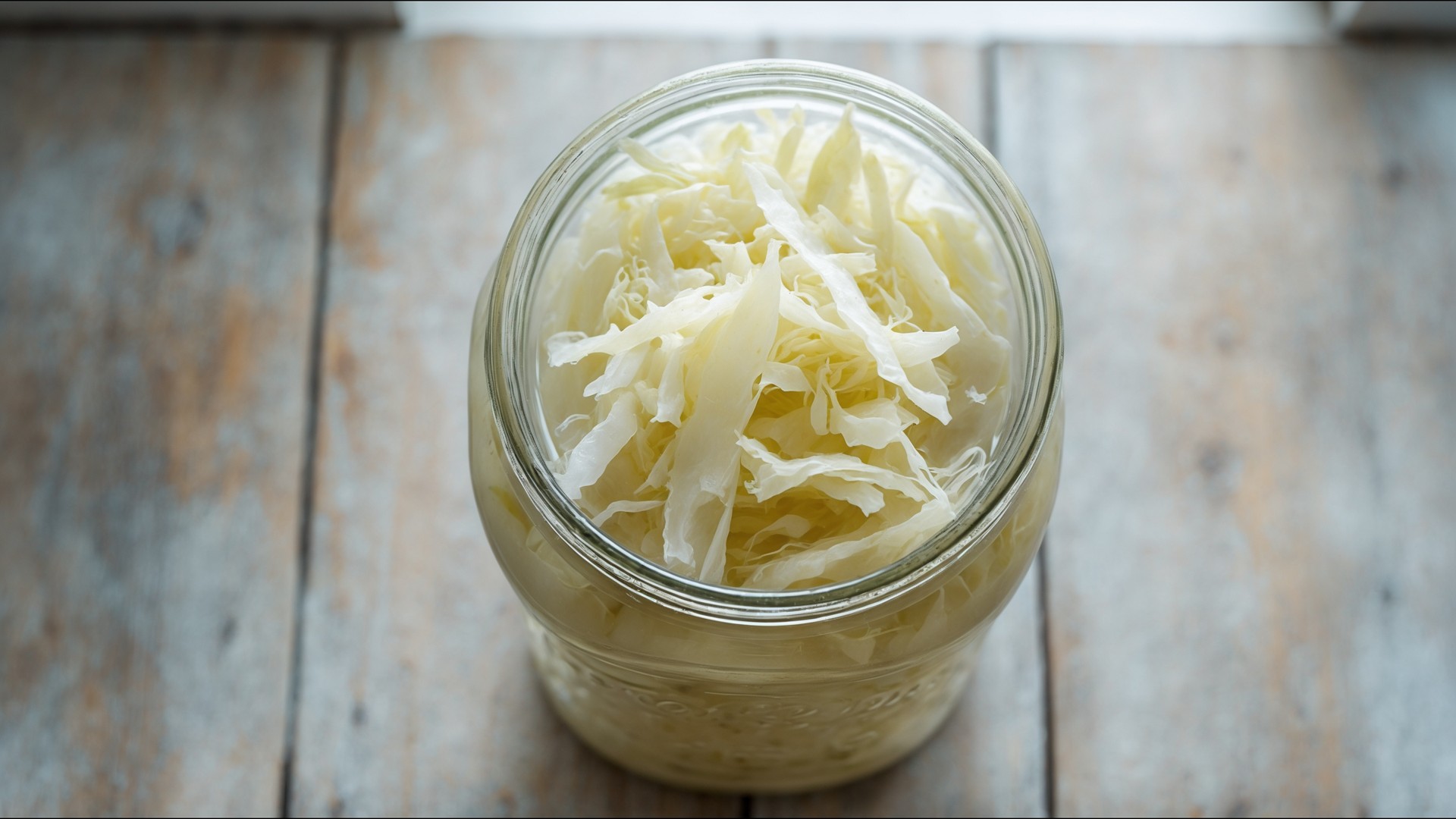
Mushy sauerkraut is almost always caused by too little salt, fermentation that ran too warm, or cabbage that wasn’t packed tightly enough under the brine — all three speed up the breakdown of pectin, the substance that gives cabbage its crunch. It’s usually a texture problem, not spoilage, unless mold or a rotten smell shows up too.
Is Mushy Sauerkraut Always a Problem?
No — soft kraut that still smells sour and tastes clean is a quality defect, not a safety issue. Oregon State University Extension describes soft kraut as “poor quality but safe” as long as the aroma and taste are clean and acidic. This is a different problem from Why Is My Sauerkraut Slimy?, which covers stringy, thick brine — this one is about the cabbage shreds themselves losing their crunch.
Pectin is the structural carbohydrate in cabbage cell walls that keeps a shred stiff and crisp. Fermentation softens pectin gradually as acid builds, which is normal. The texture turns genuinely mushy when something speeds that breakdown up too early — low salt, high heat, or exposed cabbage above the brine line all do that, mainly by letting Leuconostoc mesenteroides and other early-stage bacteria grow faster and longer than they should before the more acid-tolerant Lactiplantibacillus plantarum takes over and the texture stabilizes.
What Actually Causes It?
Work down this list — the first three process causes explain most soft batches.
| Cause | Why it softens the kraut | How to check |
|---|---|---|
| Salt below about 1.7–2% by weight | Low salt lets fermentation run faster and favors the bacteria that soften cabbage early, per Oregon State University Extension | Weigh cabbage and salt instead of eyeballing a sprinkle |
| Fermentation temperature above 75°F (24°C) | Heat speeds up both bacterial activity and the natural breakdown of pectin | Thermometer at the jar, not the room thermostat |
| Cabbage not fully submerged | Shreds above the brine line soften unevenly and are more exposed to air | Check under the weight for any pieces poking above liquid |
| Over-processed or bruised shred | Cabbage run through a food processor instead of a knife or mandoline bruises the cell walls before fermentation even starts | Shreds should hold a ribbon shape, not a mushy pulp, right after cutting |
| Brine topped off with plain water | Diluting with unsalted water drops the effective salt percentage mid-ferment | Use a measured 2% salt brine (1½ Tbsp salt per 2 cups water) to top off, never plain water |
| Mold growth on the surface | Mold secretes pectinase, an enzyme that actively digests pectin — this is a different, genuine problem | Look for fuzzy spots, not just a change in texture |
What to Check Instead of Crunch
Texture alone doesn’t tell you if a batch is safe. These signals do.
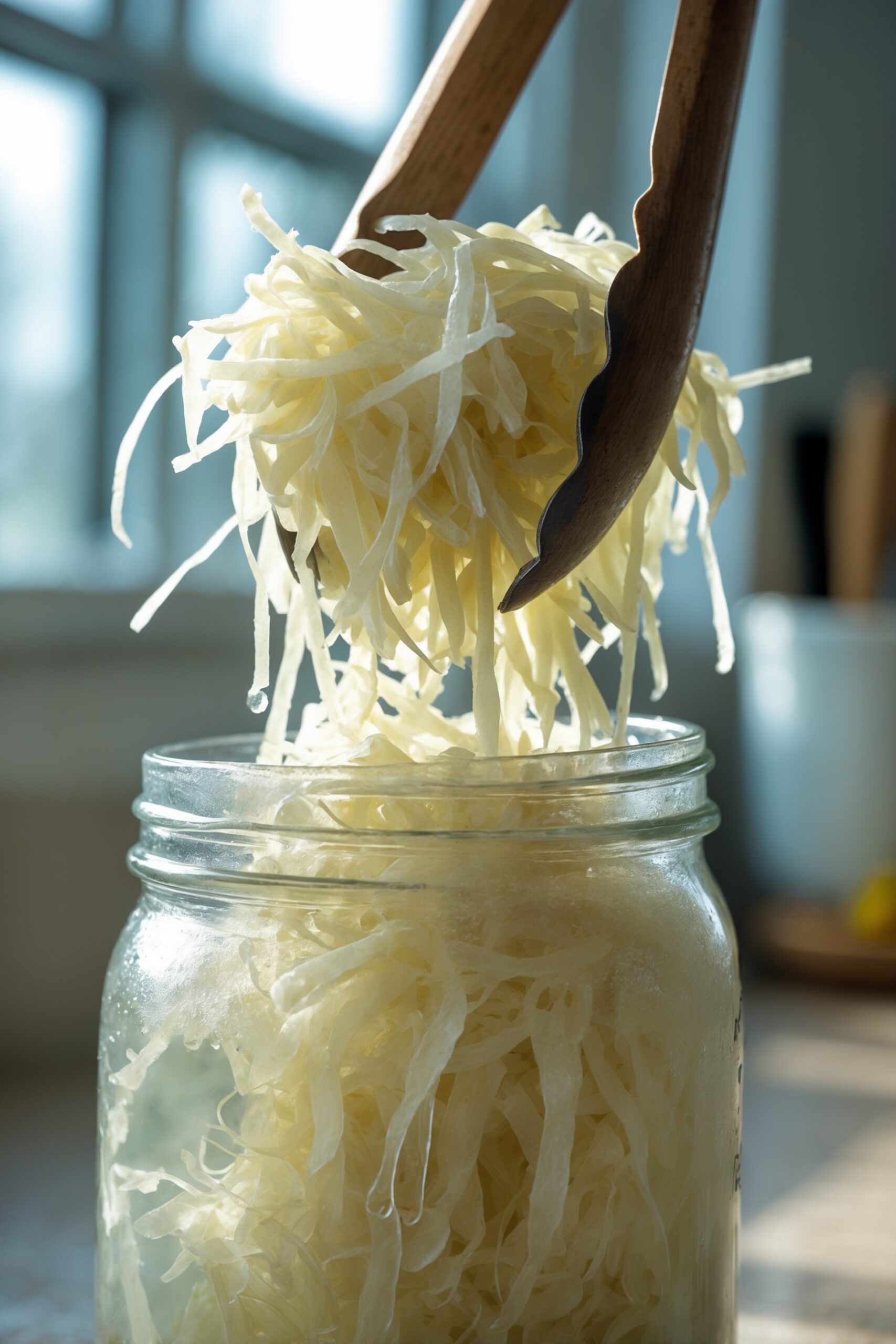
- Smell. Sour and tangy is normal, even on soft kraut. Putrid, sulfurous, or rotten is not — see our guide to spoiled ferments.
- Visible mold. Fuzzy spots in any color mean the batch is compromised, even if the texture elsewhere looks fine.
- Brine clarity. Cloudy white brine is normal and expected. Our slimy sauerkraut guide covers stringy or thick brine specifically.
- Taste. A clean, sour bite from soft kraut is still edible. An off, bitter, or “wrong” taste is the signal to stop, regardless of texture.
How Long Should Fermentation Actually Take?
Rushing the process at the wrong temperature is one of the more common reasons kraut turns out mushy in the first place.
| Temperature | Time to fully ferment |
|---|---|
| 70–75°F (21–24°C) | About 3 to 4 weeks, per Washington State University Extension |
| 60–65°F (16–18°C) | About 5 to 6 weeks — slower, but often firmer |
| Below 60°F (16°C) | Fermentation essentially stalls rather than finishing early |
Once it’s fermented and moved to the fridge, texture holds up far better than most people expect. One documented case tracked refrigerated sauerkraut for four months with no noticeable change in texture — only a milder smell and taste, since fermentation continues slowly in the cold. If a batch is already soft when it goes into the fridge, it stays that way; the fridge doesn’t cause mushiness on its own, and it doesn’t fix it either.
What You’ll Need to Fix It Next Batch
A basic digital kitchen scale (paid link) is the single most useful fix here — it turns “a sprinkle of salt” into an accurate 2% ratio, which is the cause behind more soft batches than any other factor on this list. Weigh the cabbage after shredding, then weigh out 2% of that number in salt, and mix it in thoroughly before packing.
When Is Mushy Sauerkraut Actually a Problem?
When it’s paired with a smell that’s rotten or sulfurous instead of sour, or with visible mold. Soft texture and a clean, tangy aroma can coexist in a perfectly edible batch; soft texture and a bad smell cannot. Our how to tell if your ferment has gone bad guide covers the full checklist. When in doubt, throw it out.
This article summarizes published guidance on fermentation science and troubleshooting. It is not an assessment of any particular batch, and nothing here can tell you what is in your jar. If a ferment looks, smells, or tastes wrong to you, discard it.
FAQ
Can I still eat mushy sauerkraut?
Yes, if it smells sour and tangy with no mold. Soft texture by itself is a quality issue, not a safety one — Oregon State University Extension classifies it as “poor quality but safe” under those conditions.
Does mushy sauerkraut mean it’s over-fermented?
Not usually. Over-fermentation mainly changes flavor, pushing it more sour over time. Mushiness is more often tied to low salt, a warm kitchen, or cabbage that wasn’t kept under the brine — process issues rather than simply “too much time.”
Will a fermentation weight fix mushy sauerkraut?
It helps with one specific cause: keeping cabbage fully submerged so it doesn’t soften unevenly above the brine line. It won’t correct a salt ratio that’s too low or a kitchen that’s running too warm, so pair it with an accurate 2% salt measurement.
Why did my sauerkraut turn mushy only near the top of the jar?
That’s a strong sign some cabbage was sitting above the brine instead of fully submerged. Exposed shreds soften differently from the ones under liquid, which is why a weight that holds everything down matters as much as the salt ratio.
Sources: Oregon State University Extension, Sauerkraut: Problems and Solutions · Washington State University Extension, Sauerkraut Making Directions · MakeSauerkraut, How Much Salt Do I Use to Make Sauerkraut? · MakeSauerkraut, Has Your Sauerkraut Fermentation Gone Bad? Troubleshooting Tips
Related: Why Is My Sauerkraut Slimy? · How to Tell If Your Ferment Has Gone Bad · Sauerkraut Salt Calculator