
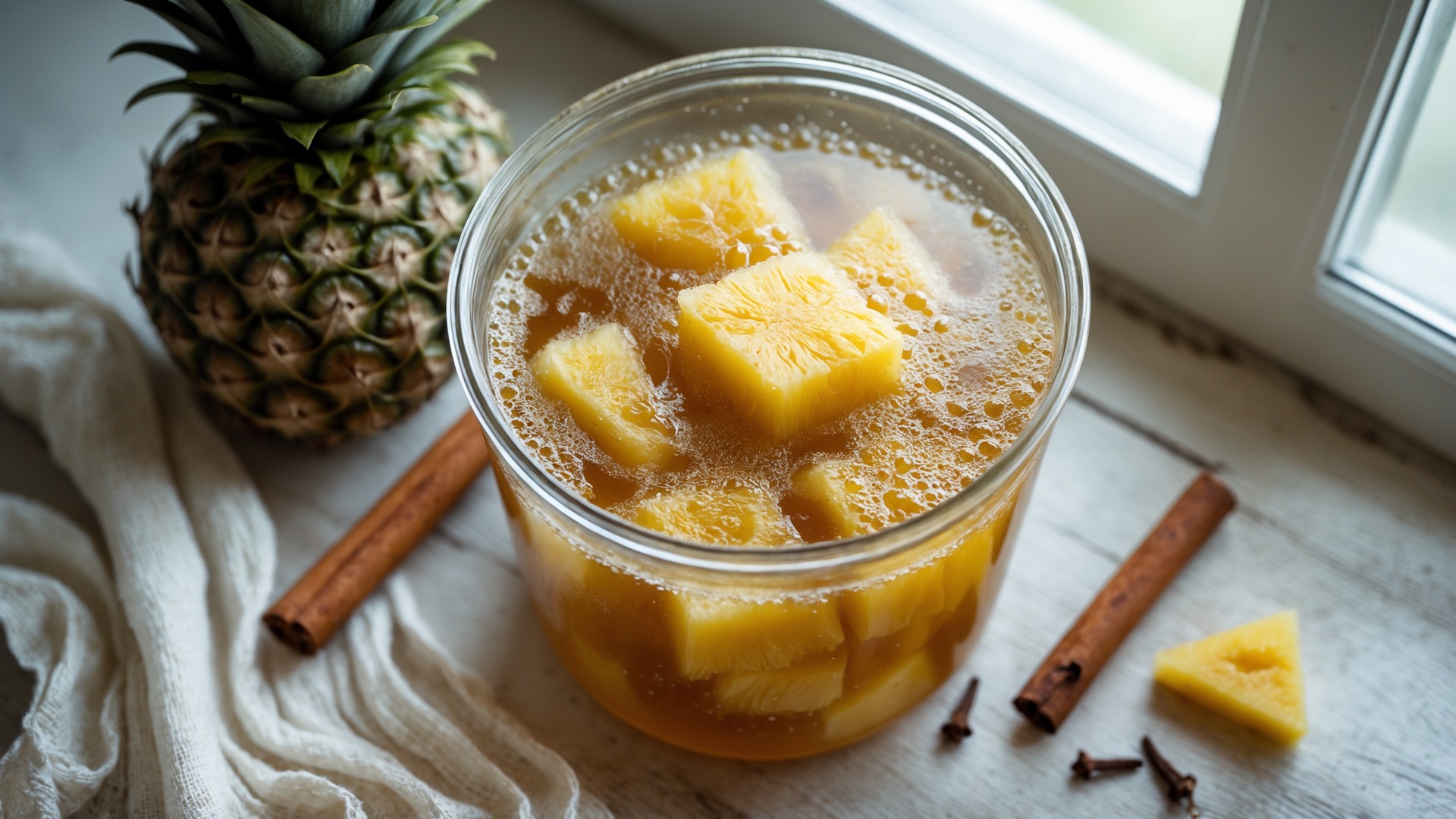
Tepache is a lightly fermented Mexican drink made from pineapple rind and sugar, usually spiced with cinnamon and cloves. It ferments at room temperature for about 2 to 3 days, then gets strained and served cold over ice — and because it’s a real fermentation, it naturally carries a small amount of alcohol, typically around 2–3% ABV.
Tepache uses pineapple rind, core, and a bit of flesh, fermented with piloncillo (or dark brown sugar), cinnamon, and cloves in roughly a 2:1 to 2.5:1 pineapple-to-sugar ratio by weight. Left uncovered under cheesecloth at around 72–74°F, it’s usually ready in 2 to 3 days — look for light foam and a tangy, fruity smell rather than a harsh or rotten one. Strain and refrigerate, or bottle it briefly for extra fizz. It’s naturally mildly alcoholic, and a white film on top is almost always harmless kahm yeast rather than mold.
Ingredients
- 1 ripe pineapple (about 3–4 lbs), scrubbed well — rind and core kept, plus 1–2 cups of the flesh cut into chunks
- 1 cup piloncillo, roughly chopped, or packed dark brown sugar
- 8 cups (2 quarts) filtered or dechlorinated water
- 1 cinnamon stick
- 3–4 whole cloves
- Optional: a slice of jalapeño for a spicier version
Step-by-Step
- Scrub the whole pineapple. The rind ferments right along with everything else, so wash it well under running water first.
- Cut it apart. Trim the rind into large pieces, cube the core, and set aside 1–2 cups of flesh. Put the rind, core, and reserved flesh into a large wide-mouth glass jar (paid link) or crock.
- Add the sugar and spice. Stir in the piloncillo or brown sugar, the cinnamon stick, and the cloves.
- Pour in the water. Stir until the sugar mostly dissolves, and leave at least 2 inches of headspace — this ferment foams.
- Cover loosely. Secure cheesecloth over the opening with a rubber band. Don’t seal it airtight; tepache ferments in open air.
- Ferment at room temperature. Keep it around 72–74°F out of direct sun, stirring once a day with a clean spoon.
- Taste starting on day 2. It’s ready when it smells tangy and fruity, not sour-rotten, usually after 2 to 3 days total.
- Strain and chill. Discard the solids, refrigerate the liquid, and drink within about a week. For extra fizz, bottle it in a swing-top bottle (paid link), leave it at room temperature for 12–24 hours, then refrigerate.
What Is Tepache, and Where Does It Come From?
Tepache is a Mexican fermented drink whose name traces back to the Nahuatl word tepiātl, often translated as “corn drink.” The earliest versions were made from fermented corn rather than fruit, with roots going back to pre-Hispanic central Mexico. Over time the recipe shifted toward pineapple, which is now the base almost everyone associates with tepache.
The modern version stays close to home-fermentation roots: pineapple rind, core, and sometimes flesh, fermented in water with piloncillo and warm spices like cinnamon and cloves. In Mexican cities it’s still commonly sold by street vendors from large jugs or plastic bags with a straw, alongside aguas frescas, and recipes vary from one vendor — or one kitchen — to the next.
How Long Should Tepache Ferment, and at What Temperature?
Most tested recipes land on 2 to 3 days at room temperature, with tasting starting on day 2. America’s Test Kitchen’s version targets roughly 72–74°F and calls for a daily stir so no fruit or spices sit exposed above the liquid. Warmer kitchens and riper pineapple both speed things up, so the clock is a starting point rather than a fixed rule — taste before you stop.
Signs it’s ready: a slightly cloudy, amber color, light bubbles across the surface, and a smell that’s fruity and tangy rather than flat-sweet or sharply sour. If it smells rotten, feels slimy, or looks off in a way that doesn’t match that description, don’t taste it — start over instead.
America’s Test Kitchen’s tepache runs about 700 g of piloncillo against roughly 1,650 g of trimmed pineapple (rind included) — a ratio of roughly 2.4 parts pineapple to 1 part sugar by weight, or about 0.42 g of sugar for every gram of fruit. That’s noticeably more sugar than most vegetable ferments use in salt, which is part of why tepache moves faster: wild yeast has a lot more to work with than a jar of salted cabbage does.
Does Tepache Contain Alcohol?
Yes. Tepache is a genuine fermentation, and wild yeast consuming sugar produces alcohol as a byproduct, not just carbon dioxide. Food writers and cidermakers who’ve measured homemade and small-batch versions put traditional tepache at roughly 2–3% ABV — well under beer strength, but not zero. Some craft producers push it deliberately higher: one cidery’s bottled “tepache especial” runs closer to 7% ABV, styled more like a pineapple wine, and it’s common in Mexico to mix tepache with beer, which raises the alcohol content further.
A home batch fermented for the standard 2–3 days stays mild, but the longer it sits at room temperature past that point, the more alcohol it picks up. If you’re serving tepache to kids, a pregnant guest, or anyone avoiding alcohol entirely, treat it as a mild alcoholic beverage rather than assuming it’s alcohol-free, and keep an eye on how long a batch has been fermenting.
Is the White Film on Top of My Tepache Safe?
A thin white film that isn’t fuzzy and doesn’t grow in round patches is usually kahm yeast — a harmless, common wild yeast that the University of Illinois Extension describes as safe and not a reason to discard a ferment. Actual mold looks different: fuzzy texture, raised patches, and color — black, green, pink, or orange rather than plain white. If you see that, or the tepache smells rotten or turns slimy, the Extension’s guidance is blunt: when in doubt, throw it out. This isn’t medical advice, just a basic food-safety habit worth keeping with any open, uncovered ferment.
How Do You Serve Tepache?
Strained and chilled, tepache is usually served straight over ice. The most common garnish is a rim or dusting of chili-lime seasoning (Tajín is the familiar brand) with a wedge of fresh pineapple, which plays off the drink’s sweet-tangy profile. Some people dilute it slightly with water or club soda; others mix it with beer, closer to how it’s often served by street vendors. In the U.S., bartenders increasingly use tepache as a mixer for cocktails built on mezcal, tequila, or rum.
💬 My Take
The instinct the first time you make tepache is to peel the pineapple cleanly and toss the rind, the way you would for eating. Don’t — the rind is doing most of the work here. It’s where a lot of the wild yeast that drives the fermentation actually lives, and it adds a deeper, slightly tannic edge that pure flesh alone doesn’t give you. If your tepache tastes thin or ferments slowly, the first thing I’d check is whether enough rind made it into the jar, not the water ratio or the room temperature.
- Tepache ferments in 2 to 3 days at room temperature (around 72–74°F) — not weeks like a vegetable ferment.
- The pineapple-to-sugar ratio in tested recipes runs about 2:1 to 2.5:1 by weight.
- It’s naturally mildly alcoholic, typically around 2–3% ABV, more if left to ferment longer.
- A thin white film is usually harmless kahm yeast; fuzzy, colored growth means discard the batch.
- Keep the rind in the jar — it carries most of the wild yeast and a good share of the flavor.
FAQ
Can I use just pineapple flesh instead of the rind?
You can, but it’s not traditional and tends to ferment more slowly, since the rind carries much of the wild yeast that drives tepache. Scrub the pineapple well and use the rind and core along with a little flesh for the best results.
Why isn’t my tepache fizzy?
A cool kitchen is the usual cause — fermentation slows down well below the 72–74°F range that tested recipes target. Give it another day or two, stirring daily, or move the jar somewhere warmer before assuming the batch failed.
How long does tepache keep in the fridge?
About a week once it’s strained and refrigerated. Fermentation continues slowly even in the cold, so flavor and alcohol content both keep shifting a little the longer it sits.
Can kids or pregnant women drink tepache?
Treat it as a mild alcoholic beverage rather than a soda. Homemade tepache typically runs around 2–3% ABV and can climb higher the longer it ferments, so it’s not a safe default for kids, pregnant guests, or anyone avoiding alcohol entirely.
Sources and Further Reading
- America’s Test Kitchen — “Tepache” · americastestkitchen.com · Fermentation time, temperature, and pineapple-to-piloncillo ratio for a tested recipe.
- Punch — “DIY Tepache Is the New ‘It’ Cocktail Ingredient” · punchdrink.com · ABV ranges for traditional and craft tepache, plus its use as a cocktail mixer.
- The Daily Meal — “What Is Tepache And How Is It Typically Served?” · thedailymeal.com · Origin, Nahuatl etymology, and typical serving style.
- University of Illinois Extension — “Fermenting FAQ” · extension.illinois.edu · Guidance on identifying kahm yeast versus spoilage on fermented foods.
Save this recipe on Pinterest for your next batch.
Related: Water Kefir: A Beginner’s Guide · How to Make a Ginger Bug · Beet Kwass