
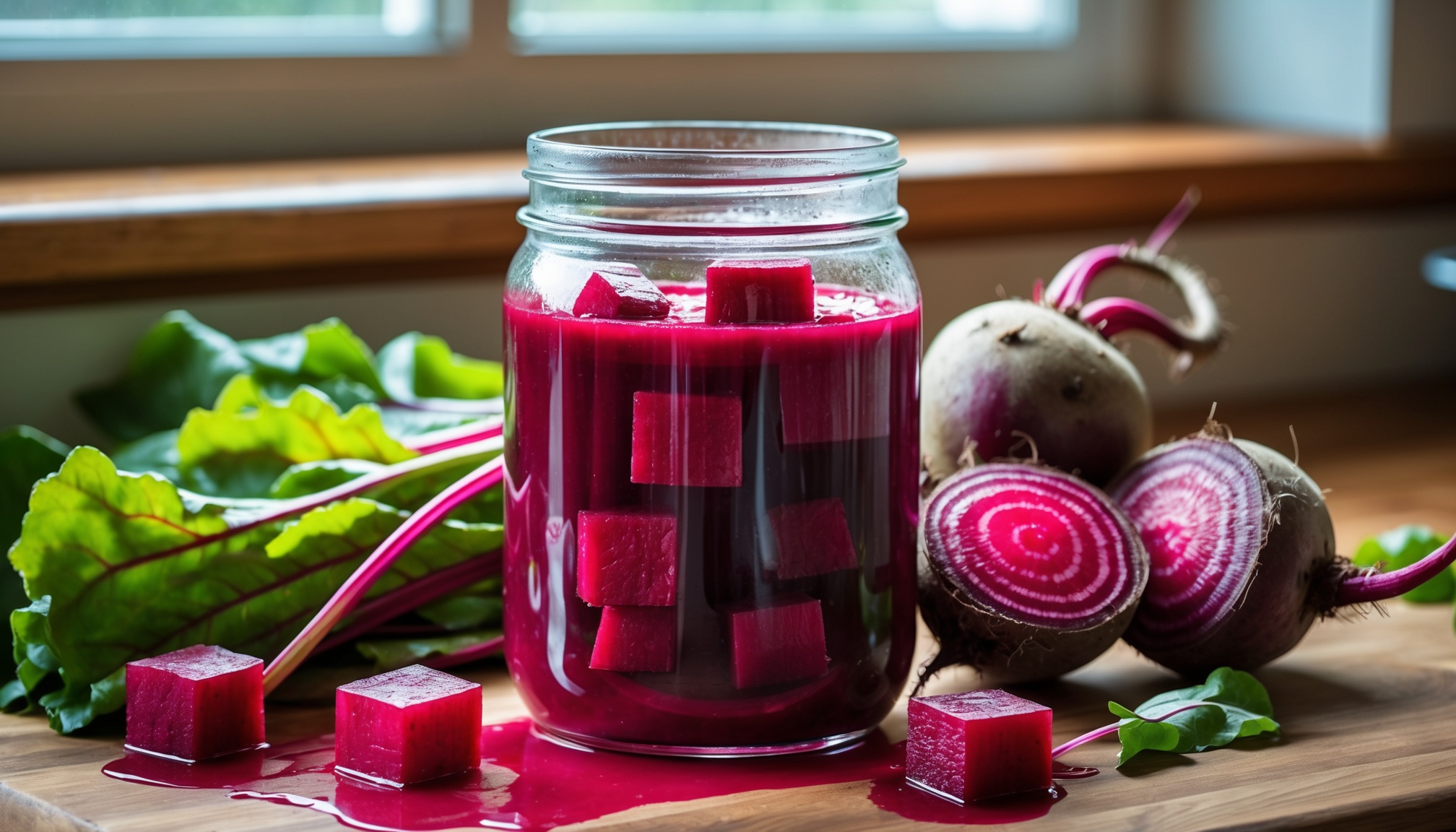
Beet kwass is a traditional Eastern European fermented drink — earthy, tangy, and deeply colored, made from little more than beets, salt, and water. Unlike most of what’s on this site, the point isn’t the vegetable itself but the liquid it ferments into, which is strained off and drunk.
Ingredients
- 2-3 medium beets, peeled and cut into 1/2-inch cubes
- 1 tablespoon fine sea salt
- 4 cups water
Step-by-Step
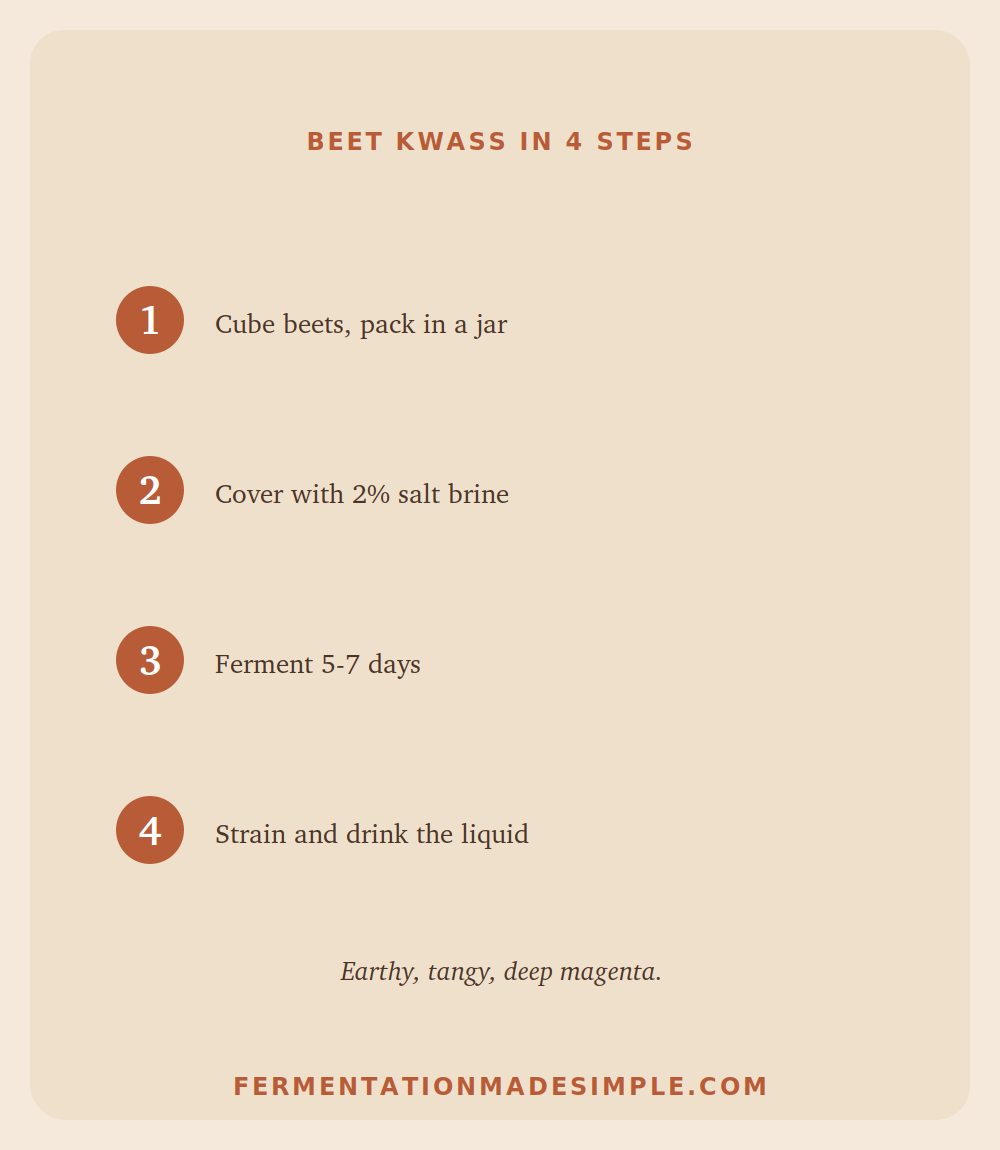
- Pack the beet cubes into a clean jar.
- Dissolve the salt into the water to make a brine, then pour it over the beets until fully covered.
- Weigh the beets down if needed — they tend to float, so fermentation weights (paid link) help keep them submerged.
- Cover and ferment at room temperature for 5-7 days, until the liquid tastes tangy and slightly fizzy.
- Strain out the liquid and refrigerate — that’s your finished kwass. The beets themselves can still be eaten, though they’ll be quite salty.
How to Drink It
Beet kwass is traditionally drunk in small glasses, often as a shot-sized tonic rather than a full glass at once, since the flavor is strong and earthy. It can also be used as a base for borscht or mixed into salad dressings.
FAQ
Why is my beet kwass foaming?
Light foaming or small bubbles are a normal sign of active fermentation. A thick, persistent foam cap or unpleasant smell would be the signs to watch for instead.
Can I reuse the liquid to start a new batch faster?
Yes — saving a small amount of finished kwass to add to your next batch can help it get started a bit faster, similar to backslopping in other ferments.
Save this recipe on Pinterest for your next batch.
Related: Salt & Brine Calculator · How to Make a Ginger Bug