
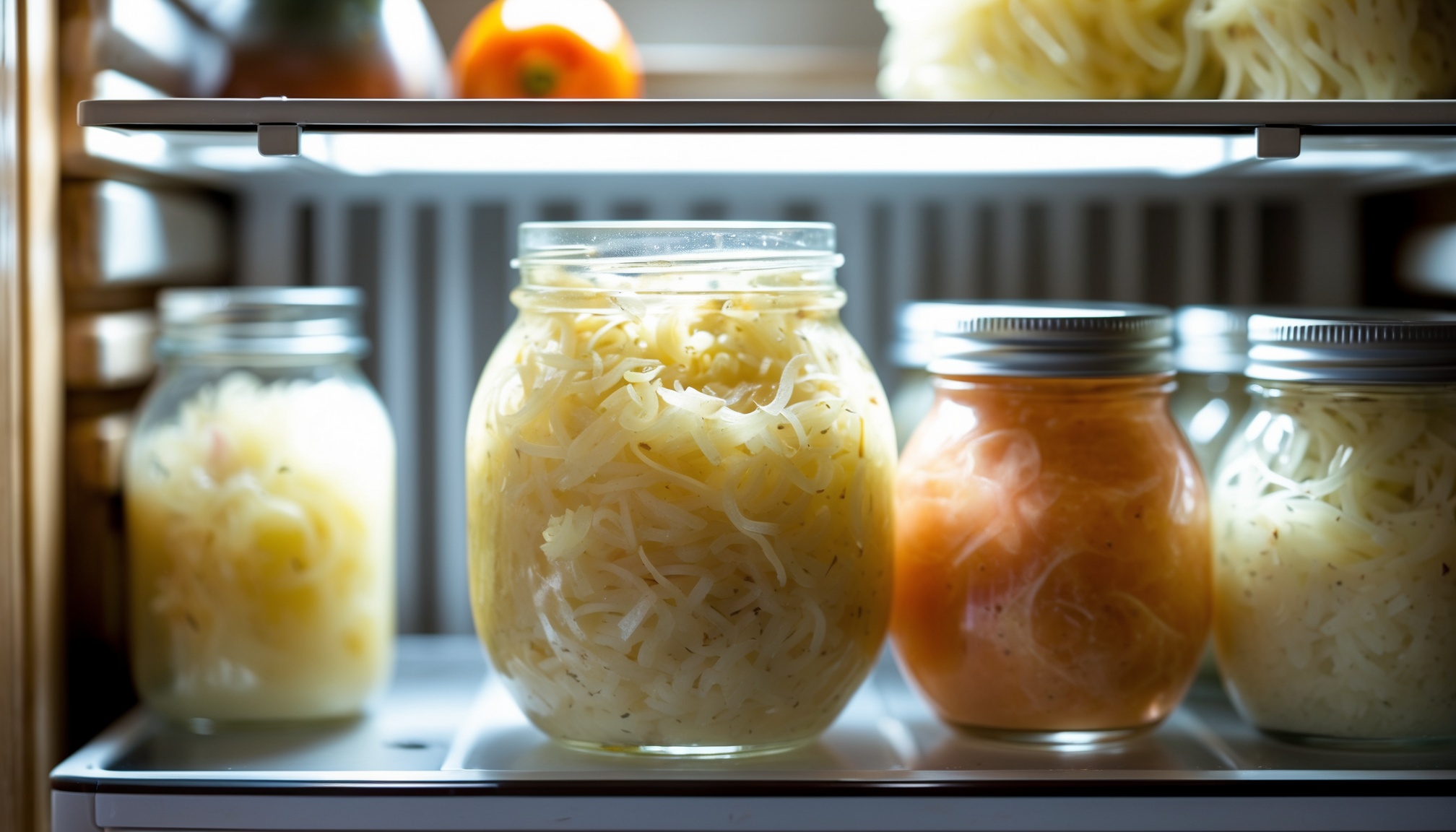
Refrigerated sauerkraut kept fully submerged in its brine holds for several months. NCHFP puts fully fermented kraut at “several months” when tightly covered and chilled. It has no spoilage date the way fresh vegetables do — it simply keeps acidifying and softening, slowly, until it is more sour than you want it.
How Long Does Sauerkraut Keep in the Fridge?
The answer splits by what kind of kraut you have, because pasteurized and raw behave differently in cold storage.
| Type | Typical fridge life | What limits it |
|---|---|---|
| Homemade, raw, submerged in brine | Several months | Texture and sourness, not spoilage |
| Homemade, brine partly drained | Weeks | Exposed cabbage above the liquid line |
| Store-bought raw, opened | Several months | Same as homemade, if kept submerged |
| Store-bought pasteurized, opened | Follow the jar | Heat-treated, so no live culture holding it |
Why Does It Keep So Much Longer Than Fresh Cabbage?
Because of acidity, not cold. Fermentation converts the cabbage’s sugars into lactic acid, and the resulting environment is hostile to most of the organisms that spoil fresh produce. The BC Centre for Disease Control treats pH 4.6 as the critical threshold for fermented vegetables, and specifies below pH 4.4 for unpasteurized products held refrigerated.
A finished kraut sits comfortably under both numbers. The fridge is not doing the preserving; the acid is. Cold simply slows down the bacteria that would otherwise keep pushing it sourer.
What Changes Over the Months
- Weeks 1–4 in the fridge: Very little. Sourness holds roughly where it was when you chilled it.
- Months 2–3: Noticeably sharper. The crunch starts to give. This is the stretch where most people finish a jar.
- Months 4–6: Distinctly sour and soft. Still perfectly usable, but better cooked into something than eaten as a side.
- Beyond 6 months: Colour dulls toward olive, texture goes limp. The flavour is the limiting factor by now.
None of that is deterioration in the spoilage sense. It is the same process that made the kraut in the first place, running at a fraction of its old speed.
How to Make It Last Toward the Long End
- Keep everything under the brine. The single biggest factor. Surface growth happens where vegetables meet air, which is exactly what BCCDC describes for produce that is not submerged.
- Use a clean fork every time. Not the one that was just in your mouth, and not one that has touched raw meat.
- Keep the fridge genuinely cold. A door shelf runs several degrees warmer than the back of a middle shelf, and that difference compounds over months.
- Transfer to a smaller jar as it empties. Less headspace means less exposed surface.
- Do not top up with water. If you need more liquid, a fresh 2 percent salt brine keeps the concentration in range.
Raw Versus Pasteurized: Why the Shelf Differs
Shelf-stable sauerkraut in the centre aisle has usually been heat-treated, which stops fermentation entirely. That is why it keeps unopened at room temperature and why the jar carries its own date. Refrigerated raw kraut, the kind in the chilled section, still has an active culture and behaves like your homemade jar.
A quick tell: if the jar was on a refrigerated shelf in the shop, treat it like homemade. If it sat on an ambient shelf, follow the manufacturer’s instructions after opening.
When to Discard a Jar
Sourness and softness are not reasons to throw kraut out. These are:
- Fuzzy growth in any colour, raised above the surface. BCCDC notes mould appears readily on surfaces where produce is not submerged. This is distinct from the flat white film of kahm yeast — our guide on kahm yeast versus mould shows the difference.
- A slimy, ropy texture in the brine or on the cabbage itself, which BCCDC lists among spoilage indicators.
- A putrid or rotten smell rather than a sharp sour one.
- Anything that simply strikes you as wrong. There is no prize for finishing a doubtful jar.
This article summarises published home-fermentation guidance on storage. It is not an assessment of any particular jar. If a ferment looks, smells, or tastes wrong to you, discard it.
FAQ
How long does sauerkraut last after opening?
For raw kraut kept submerged and chilled, several months, the same as before opening. Pasteurized jars follow the manufacturer’s post-opening instructions, since there is no live culture maintaining the acidity.
Does store-bought sauerkraut keep as long as homemade?
Raw refrigerated store-bought behaves like homemade. Shelf-stable pasteurized kraut is a different product and carries its own dating.
Can you freeze sauerkraut?
Yes, though the texture softens considerably on thawing. Freezing suits kraut destined for cooking far better than kraut you plan to eat cold.
Why did my kraut get softer in the fridge?
Enzymes from the cabbage and the fermentation itself keep working slowly at fridge temperature. Softening over months is expected. Softening within days usually points to a fermentation that ran too warm, above the 20–22°C band BCCDC describes as typical.
Sources: National Center for Home Food Preservation, Sauerkraut · BC Centre for Disease Control, Fermented Vegetables Guidance
Related: How Long Does Sauerkraut Take to Ferment? · Has Your Ferment Gone Bad? · How Long Does Kimchi Last? · Sauerkraut Recipe