
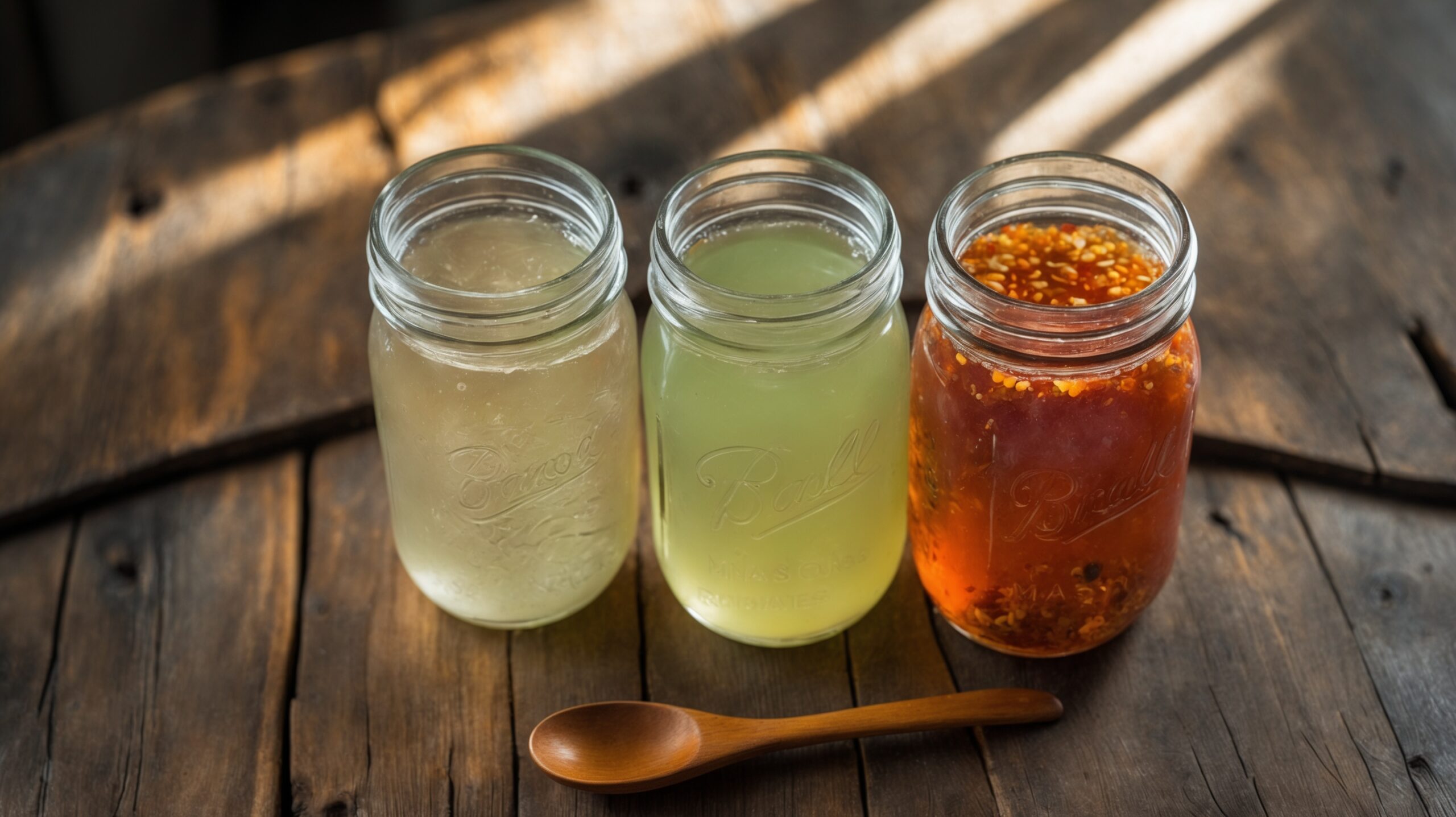
Leftover fermentation brine is not waste. Use it as a salad dressing base, a meat marinade, a soup seasoning, a cocktail mixer, or a starter culture for a faster next batch. It stays usable for one or two more rounds before it turns too weak to work.
Sauerkraut, pickle, and kimchi brine all come from the same process — vegetables fermenting in a salt solution via lactic acid bacteria — so the same reuse rules apply to each. Use leftover brine in salad dressings, marinades, soup, and quick pickles, or as a starter culture at roughly 2 tablespoons per quart jar to speed up a new ferment. Kimchi brine keeps in the fridge for up to 6 months if it still smells sour and clean. Reuse it once or twice before discarding; brine that has turned cloudy, slimy, or foul-smelling belongs in the sink, not the next jar.
Is Leftover Fermentation Brine Safe to Reuse?
Yes, lacto-fermented brine from sauerkraut, pickles, or kimchi is safe to reuse in the kitchen and as a starter culture, as long as it still smells sour and clean. Brine that looks cloudy, slimy, or smells off should be discarded rather than reused.
Lacto-fermented brine forms when vegetables sit in a salt solution, usually 2–5% of the vegetable’s weight, and naturally present lactic acid bacteria convert plant sugars into lactic acid. That process drops the pH to 4.6 or below, the same safety threshold this site’s recipes are built around. The result is a salty, sour, cloudy-to-clear liquid that is distinct from the brine in a jar of grocery-store vinegar pickles, which is heat-processed and shelf-stable once sealed. Everything below is about the lacto-fermented kind — the liquid left in a jar of homemade sauerkraut, dill pickles, or kimchi once the solids are gone.
Garden Betty’s test kitchen, a long-running fermentation and home-canning blog, puts a practical limit on reuse: brine works again “once or twice” before it turns too murky to be worth saving. Each round pulls out some of the salt and acid that made the brine useful in the first place, so a third or fourth reuse is rarely worth the jar space.
Never use leftover fermentation brine to re-can vegetables in a boiling water bath. Its acidity may have dropped below a safe level during the first ferment, and there is no reliable way to test that at home. If you are unsure whether a batch is still good, see our beginner’s safety guide and how to tell if a ferment has gone bad before using it for anything.
How Do You Use Leftover Brine as a Fermentation Starter?
Leftover lacto-fermented brine works as a starter culture for a new batch: add roughly 2 tablespoons of brine per quart-sized jar of fresh vegetables and salt water. The existing lactic acid bacteria give the new ferment a head start instead of waiting on wild bacteria already present on the vegetables.
This cross-works between types. Sauerkraut brine can start a new jar of fermented carrots, and kimchi brine can start a new jar of cucumber pickles — the bacteria doing the work, mainly Lactobacillus species, overlap across vegetable ferments even though the flavor of each brine is different. Add the starter brine along with your usual salt water at the beginning, not partway through, so the culture has the whole fermentation window to establish itself.
Freeze small portions instead of trying to save a whole jar. Leftover brine poured into an ice cube tray, then popped out and bagged once solid, turns into pre-measured flavor bombs — one cube seasons a skillet of fried rice or a pot of soup without watering it down the way a splash of fresh liquid would. A full jar of brine is better kept in the fridge, since repeated freeze-thaw cycles on a large volume break down texture and flavor faster than cold storage alone.
What Are the Best Culinary Uses for Leftover Brine?
Leftover brine works best as a seasoning rather than a main ingredient: a splash in a dressing, a marinade, or a pot of soup does more than drinking it straight. The three brines share a base of salt and acid, but each carries its own vegetable’s flavor into a dish.
- Sauerkraut brine — stirred into a vinaigrette in place of vinegar, splashed into mashed potatoes, or added to a pot of braised cabbage or sausages partway through cooking.
- Pickle brine — used as a marinade base for chicken or pork before grilling, mixed into tuna, potato, or egg salad instead of plain vinegar, or poured into a pot of noodle soup for tang.
- Kimchi brine — stirred into kimchi fried rice or kimchi stew (kimchi jjigae), whisked into a dumpling dipping sauce, or used to loosen a mayonnaise-based dressing.
In each case, start with a tablespoon or two and taste before adding more — leftover brine is saltier and sharper than the fresh vegetable, so a little carries further than it looks like it should.
Can You Drink Leftover Brine or Mix It Into Drinks?
Yes, leftover brine works in a Bloody Mary, a dirty martini, or a pickleback-style shot chased with whiskey, where its salt and acid replace part of the usual mix. Straight brine is sharp enough that most recipes mellow it with tomato juice, vodka, or another liquid rather than serving it alone.
For sauerkraut or kimchi brine specifically, stir a small amount into a Bloody Mary mix in place of some of the hot sauce and lemon juice — the fermented tang does similar work. Pickle brine is the most established cocktail ingredient of the three and is the standard swap for dirty-martini olive brine.
How Long Does Leftover Brine Last, and When Should You Throw It Out?
Kept in an airtight container in the refrigerator, leftover kimchi brine lasts up to 6 months while it still smells sour and clean, according to The Daily Meal’s reporting on home fermenters’ storage practices. Sauerkraut and pickle brine follow the same rough timeline, since all three are salty, acidic liquids stored cold.
Three signs mean it is time to toss a jar of brine instead of reusing it: a sour smell that has turned sharply unpleasant or ammonia-like rather than tangy, visible fuzzy or colored growth on the surface, and a texture that has gone slimy or ropy. None of those are the normal cloudiness of an active ferment — see cloudy brine in your ferment for what counts as normal versus not. When in doubt, the safer move is always to discard the brine rather than cook with it.
Store leftover brine in a container with a tight seal so it does not pick up odors from the rest of the fridge or lose carbonation if it is still mildly active. A glass swing-top bottle (paid link) works well for this, since it seals tighter than a loose jar lid and makes pouring a marinade or a cocktail splash easier than scooping from a wide-mouth jar.
My Take
The common assumption is that a jar is finished once the vegetables are gone. In practice, a jar of sauerkraut or cucumber kimchi often still holds nearly as much brine by volume as it held solids to begin with, and that liquid carries a concentrated dose of exactly the salt, acid, and vegetable flavor the ferment spent days or weeks building. Pouring it down the drain throws away the most seasoned part of the jar. The habit worth building is simple: before rinsing an empty jar, pour the brine into a small container first and decide later whether it becomes a starter culture, a marinade, or an ice cube tray of seasoning cubes. It keeps for months in the fridge, so there is rarely a reason to make that call on the spot.
- Use about 2 tablespoons of leftover brine per quart jar as a starter culture for a new ferment.
- Lacto-fermented brine is safe to reuse once or twice before it turns too weak to work.
- Kimchi brine keeps up to 6 months refrigerated if it still smells sour and clean.
- Never use leftover ferment brine to re-can vegetables in a boiling water bath.
- Freeze small portions in an ice cube tray for pre-measured seasoning instead of saving a whole jar long-term.
FAQ
Is it safe to drink pickle brine straight?
Small amounts are commonly drunk straight or as a “pickleback” chaser, though the salt and acid are sharp on their own. Most people dilute it with another liquid rather than drinking a full glass.
Does the reuse rule differ between vinegar pickles and lacto-fermented pickles?
Yes. This article covers lacto-fermented brine only. Vinegar-based pickle brine from a shelf-stable, heat-processed jar is a different product and does not carry the same live lactic acid bacteria that make reuse as a starter culture work.
Can sauerkraut brine be used the same way as kimchi brine?
Mostly yes — both are lacto-fermented, salty, and acidic, so they work interchangeably as a starter culture or in a dressing. The main difference is flavor: kimchi brine carries chili and garlic, sauerkraut brine does not.
Can leftover brine be frozen?
Small portions freeze well in an ice cube tray for cooking use. A full jar can be frozen too, but repeated freeze-thaw cycles on a large volume degrade texture and flavor faster than simply keeping it cold in the fridge.
Sources: Garden Betty · gardenbetty.com · home-fermentation blog, reuse limits and culinary uses for leftover pickle brine. The Daily Meal · thedailymeal.com · reporting on kimchi brine storage life and reuse risk. Fermenting for Foodies · fermentingforfoodies.com · starter-culture dosage guidance for home ferments. This site · Fermentation Salt Ratios: The Simple Formula · the 2–5% salt range and pH 4.6 threshold used throughout our recipes.
Related: What to Do With Kimchi: Easy Ideas · What to Eat With Sauerkraut: Easy Ideas · Not Enough Brine in Your Sauerkraut? · What Is Lacto-Fermentation? · Fermentation Salt & Brine Calculator