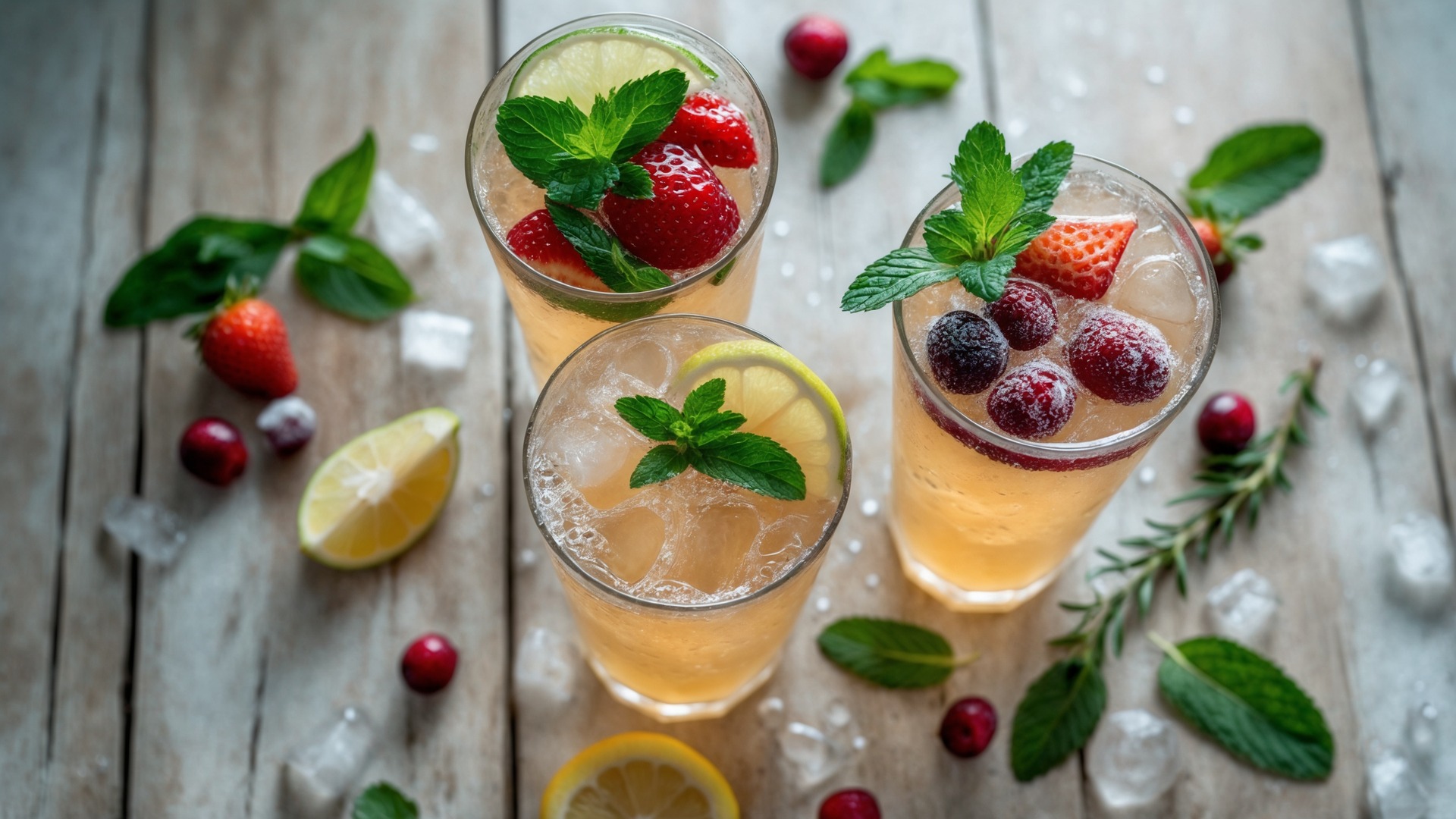
A kombucha mocktail combines finished, already-carbonated kombucha with juice, fresh fruit, or herbs at serving time, with no further fermentation involved. The best versions use a 1:1 to 3:1 ratio of kombucha to mixer and add the kombucha last, over ice, to protect its carbonation.
Kombucha mocktails mix finished kombucha with juice, fruit, or herbs — a serving-time step, not a second fermentation. Ratios across tested recipes range from equal parts kombucha and juice up to 24 oz kombucha with just ½ cup juice, depending on how dominant you want the kombucha flavor. Pour kombucha last, over ice, to keep it fizzy. A plain or lightly flavored kombucha usually mixes better than a strongly flavored one, since the mixer already carries its own flavor. Five tested combinations follow below, along with garnish ideas that hold up in a glass.
What Is a Kombucha Mocktail?
A kombucha mocktail is finished kombucha mixed with non-alcoholic ingredients like juice, fruit, or herbs at the moment of serving. The mixing happens in the glass or pitcher, not in a sealed fermentation vessel, so no additional carbonation or culture activity takes place.
That distinction separates a mocktail from second fermentation flavoring, which is a different process entirely. The Kombucha Second Fermentation: A Beginner’s Guide and Easy Homemade Kombucha Flavors to Try both cover adding fruit or ginger directly into a sealed bottle for 2 to 5 days before drinking, which builds flavor and carbonation into the kombucha itself through continued fermentation. A mocktail skips that wait: the kombucha is already finished and carbonated, and the mixing is purely for serving.
A kombucha mocktail also differs from a kombucha cocktail. A cocktail adds spirits such as gin, rum, or vodka to the kombucha base. A mocktail replaces that role with fruit juice, fresh herbs, bitters, or a non-alcoholic mixer like ginger beer, so the finished drink contains no added alcohol.
How Do You Keep a Kombucha Mocktail Fizzy?
Kombucha mocktails stay fizziest when the kombucha is added last, poured gently over ice that already holds the other ingredients, and served immediately rather than batched ahead of time. Stirring vigorously or pre-mixing a full pitcher releases most of the carbonation before the first glass is poured.
Build the glass in a fixed order: ice first, then muddled fruit or herbs, then juice or syrup, and kombucha only at the very end. A gentle stir — just enough to combine the layers — keeps more dissolved carbon dioxide in the liquid than a vigorous mix would. Chilling every component beforehand, including the juice, also slows the rate at which the drink goes flat once it’s poured.
Acidic juices like grapefruit or lime disturb kombucha’s dissolved CO2 faster than a neutral mixer like plain water or ginger beer does, so citrus-heavy mocktails go flat sooner than berry- or herb-based ones. If a recipe leans heavily on citrus, pour the kombucha in last and serve within a few minutes rather than letting the glass sit on a table during a party.
What Ratio of Kombucha to Mixer Should You Use?
Tested kombucha mocktail recipes range from equal parts kombucha and juice up to 24 oz kombucha with only ½ cup juice, and the right ratio depends on whether the kombucha or the mixer should lead the flavor. A higher kombucha ratio keeps more tartness and fizz; a higher juice or fruit ratio makes a sweeter, fruitier drink.
A grapefruit-ginger mocktail from Skinnytaste uses equal parts: ½ cup fresh grapefruit juice to ½ cup ginger-lemon kombucha, stirred gently over ice. A cranberry-ginger fizz from Nature’s Path goes the opposite direction, using 24 oz of kombucha against just ½ cup of cranberry juice plus muddled fresh ginger, so the kombucha carries almost the entire drink. A strawberry kombucha lemonade sits in the middle but skews toward the mixer: 1 cup frozen strawberries and 2 cups water against 1 cup kombucha, blended with fresh lemon juice.
Start with a 1:1 ratio for a first batch, since it balances kombucha tang against sweetness without either ingredient dominating. From there, add more kombucha for a tarter, fizzier glass or more juice and fruit for a sweeter one.
“Mocktail” implies zero alcohol, but kombucha isn’t automatically 0% ABV. The U.S. Treasury’s Alcohol and Tobacco Tax and Trade Bureau regulates any kombucha at 0.5% ABV or higher as an alcohol beverage, and homemade batches can creep past that if left fermenting too long. If you’re serving a mocktail to a pregnant guest, a minor, or someone avoiding alcohol entirely, use a fresh, short-fermented batch or a commercial kombucha labeled non-alcoholic rather than an older homemade jar.
Which Kombucha Mocktail Recipes Are Easiest to Start With?
Five combinations cover the range from fruity and sweet to herbal and tart, and each uses ingredients most home fermenters already have on hand. All five follow the same build order: ice, solids, liquid mixer, kombucha last.
1. Cranberry Ginger Fizz
Muddle a small piece of fresh ginger in a pitcher, add ½ cup cranberry juice, then top with 24 oz plain or ginger kombucha. Strain over ice and garnish with a few whole fresh cranberries.
2. Grapefruit-Ginger Cooler
Combine equal parts fresh grapefruit juice and ginger-lemon kombucha — ½ cup each — over ice in a tall glass. Stir once, gently, and garnish with a sprig of rosemary.
3. Strawberry Kombucha Lemonade
Blend 1 cup frozen strawberries with 2 cups water and the juice of two lemons, then stir in 1 cup kombucha just before serving. Serve in a sugar-rimmed glass with a lemon wedge.
4. Pineapple-Mint Cooler
Muddle 4 to 5 fresh mint leaves with a squeeze of lime in the bottom of a glass, add ice and a splash of pineapple juice, then top with plain kombucha. The mint and lime echo the mojito pattern used in several tested blackberry and mint kombucha mocktails.
5. Blueberry-Lemon Refresher
Muddle a small handful of fresh blueberries with a squeeze of lemon juice, fill the glass with ice, and top with plain or lightly flavored kombucha. Blueberry or other fruit-flavored kombucha varieties work especially well as the base for this one.
Which Garnishes and Flavor Pairings Work Best?
Fresh herbs, a dash of bitters, and larger ice cubes do more for a kombucha mocktail than additional fruit does, because kombucha’s existing tang already provides most of the flavor complexity a cocktail would otherwise need from a spirit.
Muddled thyme, basil, or mint added before the ice grounds the drink with an herbal note that plain fruit juice doesn’t provide on its own. A dash of grapefruit or orange bitters pairs with most kombucha flavors without adding sweetness, which keeps the drink from tasting like a sugary soda. Large ice cubes or spheres melt slower than standard cubes, so the drink stays colder for longer without diluting as quickly — freezing a few berries or edible flowers inside the cube adds a visual element with no extra prep at serving time. A lightly salted, sugared, or chili-lime rim on the glass adds a final contrast note, especially on citrus-forward builds like the grapefruit-ginger cooler.
Batching a mocktail mix for a group works best if the kombucha itself is added glass-by-glass rather than into the batch. Mixing the juice, muddled fruit, and syrup ahead of time in a sealed bottle such as Otis swing-top bottles (paid link) keeps that base fresh and ready, while the kombucha still gets poured in fresh per glass to protect the fizz.
💬 My Take
The common assumption is that a heavily flavored kombucha makes the best mocktail base, since it does more of the flavor work. In practice, the tested recipes that use plain or only lightly flavored kombucha — ginger-lemon, not a sweet mango-berry blend — come out better balanced. A mixer already brings its own fruit, sugar, and acidity; stacking a second strong flavor from the kombucha on top of that usually clashes or just tastes too sweet. The flavored kombucha varieties earn their place in the simplest builds, like the blueberry-lemon refresher, where there’s no competing juice or syrup to clash with.
- Mocktails mix finished kombucha with juice or fruit at serving time — no second fermentation involved.
- Ratios range from equal parts kombucha and juice up to 24 oz kombucha to just ½ cup juice.
- Build order matters: ice, solids, mixer, then kombucha poured in last to protect carbonation.
- The TTB classifies kombucha at 0.5% ABV or higher as an alcohol beverage — check before serving to guests avoiding alcohol entirely.
- Plain or lightly flavored kombucha mixes more evenly than a heavily flavored one in most recipes.
Frequently Asked Questions About Kombucha Mocktails
Can you make a kombucha mocktail with flavored kombucha?
Yes, but it works best in simple builds without a second strong juice or syrup. Flavored kombucha paired with another dominant fruit flavor tends to clash or taste overly sweet.
Do kombucha mocktails need to be made fresh, or can you batch them?
The juice, fruit, and syrup base can be mixed ahead and chilled, but the kombucha itself should go in per glass right before serving to avoid losing carbonation in a pre-mixed pitcher.
Is a kombucha mocktail actually alcohol-free?
Commercial kombucha sold in the U.S. is regulated to stay under 0.5% ABV to be labeled non-alcoholic. Homemade kombucha can exceed that if it ferments too long, so check the source before serving to someone avoiding alcohol completely.
What’s the best kombucha flavor for a mocktail base?
Plain or lightly flavored varieties like ginger-lemon work best as a base, since they add tang and fizz without competing with the mixer’s fruit flavor.
Sources and Further Reading
- Alcohol and Tobacco Tax and Trade Bureau (TTB.gov) · ttb.gov · Federal guidance classifying kombucha at 0.5% ABV or higher as a regulated alcohol beverage.
- Nature’s Path — “How to Make Your Own Kombucha Mocktails” · naturespath.com · Recipe ratios and build order for several fruit-based kombucha mocktails.
- Skinnytaste — “Grapefruit-Ginger Kombucha Mocktail” · skinnytaste.com · Equal-parts ratio and gentle-stir technique for preserving carbonation.
- 417 Magazine — “Quick Guide: Kombucha Mocktail” · 417mag.com · Garnish, bitters, and ice guidance for serving kombucha mocktails.
Save these recipes on Pinterest for your next get-together.
Related: Easy Homemade Kombucha Flavors to Try · Kombucha Too Sour or Vinegary? · How to Make Kombucha at Home