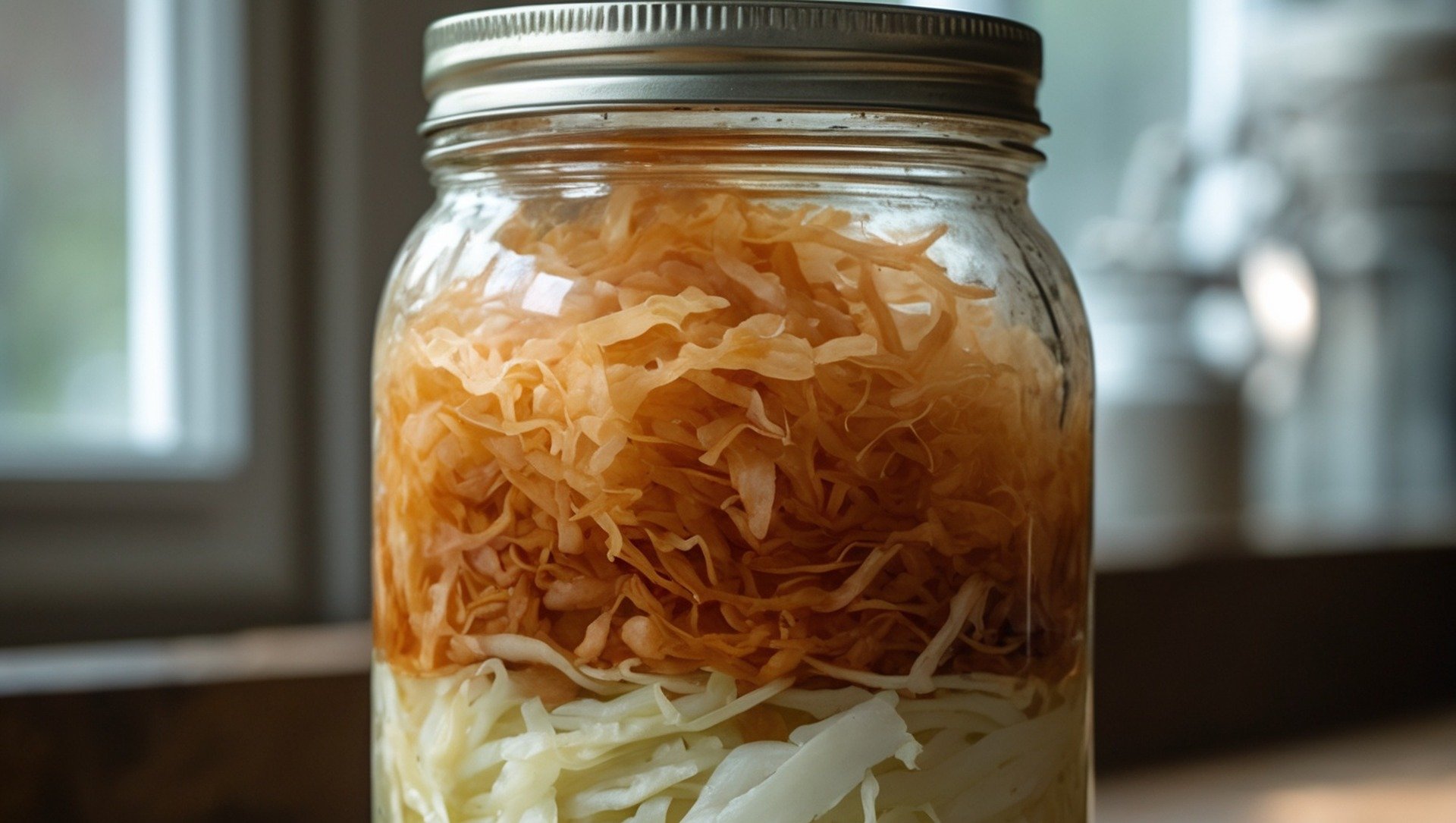
Sauerkraut usually turns brown at the surface because the top layer of cabbage lost contact with the brine and oxidized when exposed to air, the same browning reaction that turns a sliced apple tan. Warm room temperatures speed up that reaction, and the oxidized layer also loses some of its vitamin C. It’s almost always a cosmetic change, not spoilage, as long as the brown color stays limited to the exposed top layer and the rest of the batch still looks, smells, and tastes normal.
A 4-pack of glass fermentation weights (paid link) is the most direct fix, since keeping every shred of cabbage pinned below the brine is what stops the browning reaction from starting in the first place.
What Actually Causes the Brown Layer?
- Cabbage above the brine line: once shredded cabbage loses contact with the liquid, it’s exposed to oxygen and starts to oxidize within hours to a day or two, turning tan, brown, or grayish at the surface.
- Warm fermentation temperatures: at room temperatures above roughly 75°F, both fermentation and oxidation run faster, so browning at the top can show up sooner than in a cooler kitchen.
- A dropped brine level: cabbage releases liquid as it salts down, but the level can recede over 1-3 weeks as gas escapes and the shreds compact, leaving the top inch or two uncovered even in a jar that started fully submerged.
- Brine itself darkening: the liquid can also turn brown, which is the same oxidation process and is separate from mold — it’s most common in warm-weather batches and doesn’t affect the kraut underneath.
Is Brown Sauerkraut Still Safe to Eat?
Yes, in the typical case. Oxidized sauerkraut is a food-quality issue, not a food-safety one: the affected layer usually stays limited to the top half-inch to inch, and the fermentation itself, which keeps the batch safe, isn’t disrupted by exposure to air. Scoop off and discard the browned top layer, and check that what’s underneath still looks pale, tastes tangy, and smells sour rather than off.
That said, brown is not the same as spoiled, and the two get confused. Fuzzy mold in white, blue-green, pink, or black patches, a slimy texture through the whole jar (not just a soft top layer), or a putrid, rotten smell instead of a sour one are signs of an actual spoiled batch, not ordinary oxidation — when in doubt, throw the whole jar out rather than risk it. Our guides to telling if a ferment has gone bad and mold on a ferment cover exactly what those warning signs look like.
How to Stop It From Happening Next Batch
Submersion is the whole fix. Use a properly measured brine so there’s enough liquid to cover the cabbage by at least an inch, then hold everything down with a fermentation weight, a whole outer cabbage leaf tucked over the top, or a water-filled bag pressed into the jar’s neck. Check the jar every few days during the first week, since that’s when the brine level shifts the most as the cabbage compacts and gas bubbles rise through it. Fermenting somewhere in the 65-72°F range instead of a warm spot also slows the oxidation reaction down even if a little cabbage does end up exposed.
FAQ
Can I just scoop off the brown part and eat the rest?
Yes, that’s the standard fix. Discard the oxidized top layer, usually the top half-inch to inch, and eat the kraut underneath as long as it still looks, smells, and tastes normal.
Does brown sauerkraut mean it’s moldy?
Not by itself. Plain browning is oxidation and has a flat, tan or grayish color with no fuzzy texture, while mold shows up as distinct fuzzy or slimy patches, often white, blue-green, pink, or black. If you see fuzz or a rotten smell, treat it as mold, not oxidation.
Why did my sauerkraut brine turn brown even though the cabbage stayed submerged?
Warm fermentation temperatures are the most common cause of brine darkening on its own, even in a jar where the cabbage never surfaced. It’s a color change in the liquid, not a sign of contamination, and doesn’t mean the kraut underneath needs to be discarded.
Save this guide on Pinterest for your next batch.
Related: Why Is My Sauerkraut Slimy? · Sauerkraut Recipe