

Labneh is yogurt strained until it turns thick and spreadable, like soft cream cheese. Stir 1 teaspoon of salt into 4 cups of plain whole-milk yogurt, drain it in cheesecloth for 12 to 24 hours, and you end up with about 1½ cups of labneh.
Labneh is plain yogurt with most of its whey drained off. Four cups of whole-milk yogurt plus 1 teaspoon of salt yield about 1½ cups after 12 to 24 hours in the fridge, roughly 37% of the starting volume. Drain 6 to 12 hours for a soft spread, 12 to 24 hours for a thick dip, and up to 48 hours for firm labneh balls. Covered in the refrigerator, plain labneh keeps about 1 to 2 weeks, and the leftover whey is usable in baking.
Ingredients
- 4 cups (32 oz) plain whole-milk yogurt with live cultures and no added thickeners
- 1 teaspoon fine salt (optional)
- Olive oil, dried herbs, red sumac, or fresh mint for serving (optional)
- Equipment: a sieve or colander, a deep bowl, and cheesecloth (or a clean muslin cloth)
- Making your own base? A yogurt starter culture (paid link) works, and our Homemade Yogurt recipe covers the method
Step-by-Step
- Stir 1 teaspoon of salt into the 4 cups of yogurt until evenly mixed.
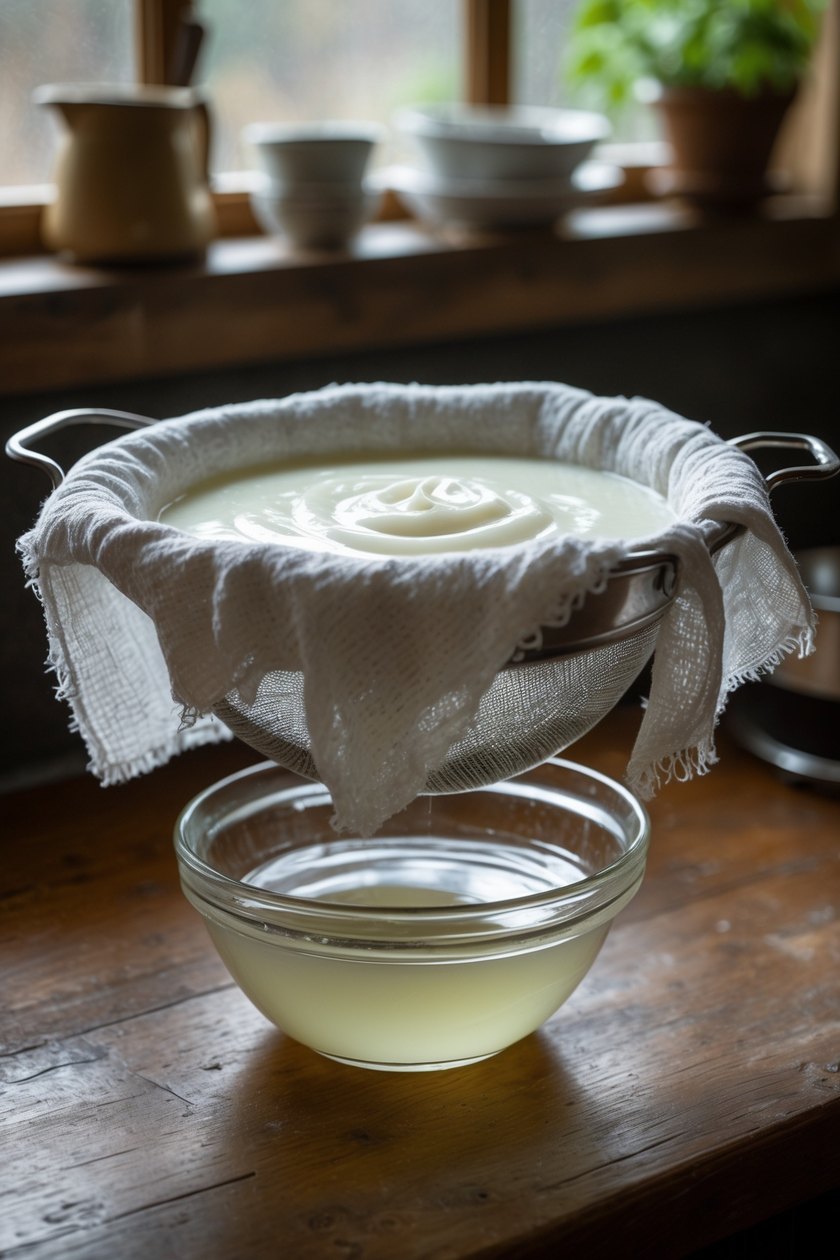
- Line a sieve or colander with cheesecloth and set it over a deep bowl.
- Spoon the yogurt into the cloth and spread it into an even layer, which helps it drain uniformly.
- Cover the whole setup and drain it in the refrigerator for 12 to 24 hours.
- Check the texture at 6 to 12 hours. Stop when it holds a soft spread, or keep draining for a thicker result.
- Scrape the labneh into a clean container, swirl the top, and finish with olive oil and herbs. Keep it covered in the fridge.
How Long Should You Strain Labneh?
Strain labneh for 12 to 24 hours in the refrigerator for a thick, spoonable result. Shorter draining of 6 to 12 hours gives a soft spread, and up to 48 hours gives firm labneh for rolling into balls. More draining removes more whey and makes thicker labneh.
Published guides give slightly different windows, which is why this guide treats them as textures rather than a single rule. We call it the Three-Texture Drain Guide:
| Texture | Drain time | Best for |
|---|---|---|
| Greek-style yogurt (not labneh yet) | 2–4 hours | Thick yogurt that still pours off a spoon slowly |
| Soft, spreadable labneh | 6–12 hours | Toast, sandwiches, spreading like cream cheese |
| Thick, spoonable labneh | 12–24 hours | Dips, mezze bowls, dolloping on warm dishes |
| Firm, rollable labneh | Up to 48 hours in the fridge | Labneh balls that hold their shape |
The longer it drains, the more whey is removed, and the thicker and creamier it gets. Yield follows from that: 4 cups of yogurt give about 1½ cups of labneh, which matches the rule of thumb of 1 cup of yogurt to ⅓ cup.
Use the whey as your timer. From 4 cups of yogurt you are aiming for about 1½ cups of labneh, which means roughly 2½ cups of whey in the bowl underneath. If the bowl holds about 1 cup of whey, the labneh is still soft. If it holds closer to 2½ cups, you have reached the thick dip stage. Measuring the whey is more reliable than watching the clock, because every brand of yogurt starts at a different thickness.
What Is the Difference Between Labneh and Greek Yogurt?
Labneh (also spelled labna) is yogurt strained longer than Greek yogurt. University of Illinois Extension drains Greek-style yogurt for 2 to 4 hours and yogurt cheese for 8 to 24 hours, so labneh lands in the thicker, cream-cheese-like range.
Both start as fermented milk. The fermenting happens when milk turns into yogurt, and straining then removes whey to concentrate what is left. Our Homemade Yogurt guide uses the same straining step to turn ordinary yogurt into Greek-style yogurt.
Which Yogurt Works Best for Labneh?
Plain whole-milk yogurt gives the creamiest labneh. Greek yogurt gives a thicker result, low-fat yogurt works well, and nonfat yogurt is the weakest choice.
Check the label before you buy: you want plain yogurt with live cultures and no added thickeners or flavoring. Sweetened or flavored yogurt changes the taste and is a poor base for savory labneh. If you cook with kefir as well, our Milk Kefir guide covers another everyday dairy ferment.
What Can You Do With the Leftover Whey?
The liquid in the bowl is whey, and it is usable. It can be discarded or used in place of milk or water in some bread, muffin, or cake recipes. Pour it into a clean jar, keep it refrigerated, and use it the way you would use milk or water in a baked recipe.
How Do You Make Labneh Balls?
Drain the yogurt for up to 48 hours in the refrigerator until it is firm enough to hold a shape, then pinch off pieces about the size of a walnut and roll them between your palms.
Roll the finished balls in dried herbs, red sumac, sesame seeds, or crushed chili flakes and serve them on a plate with flatbread.

How Long Does Labneh Keep?
Plain labneh keeps about 1 to 2 weeks covered in the refrigerator. Plan on the shorter figure and treat 2 weeks as the upper limit. Keep it at 40°F or below.
Some recipes keep labneh balls submerged in olive oil for months in a cool, dark place, and some promise up to 3 months. We do not follow that advice. Oregon State University Extension says homemade oil mixtures with garlic or herbs need refrigeration and should be used within 4 days or frozen, because the oil creates an oxygen-free environment where Clostridium botulinum can grow. Labneh balls are often jarred with exactly those additions. Keep labneh refrigerated, and if you serve it under oil with garlic or herbs, make only what you will eat within a few days. This is general food-safety guidance, not medical advice. When in doubt, throw it out.
💬 My Take
Most labneh recipes give one draining time as if it were a fixed setting. Published guides give windows of 6 to 12 hours, 8 to 24 hours, and 12 to 24 hours for what is essentially the same product, which tells you the clock is a weak instrument. The yogurt in your bowl decides the result. A thin supermarket yogurt and a thick Greek-style one need different times to reach the same texture, so I would check the labneh at 6 and 12 hours, trust the texture over the number, and only then commit to a longer drain.
- Plain labneh is yogurt drained in cheesecloth, with 1 teaspoon of salt per 4 cups as an optional extra
- Use the Three-Texture Drain Guide: 6–12 hours for spreadable, 12–24 hours for thick, up to 48 hours for firm balls
- 4 cups of yogurt yield about 1½ cups of labneh, and 1 cup yields about ⅓ cup
- Whole-milk plain yogurt gives the creamiest result, and nonfat yogurt is the weakest choice
- The leftover whey can replace milk or water in some baked goods
- Refrigerate labneh and plan on about 1 week, with 2 weeks as the upper limit; do not store it in oil at room temperature
Frequently Asked Questions About Labneh
Do I have to add salt to labneh?
No. Salt is a flavor choice. Many recipes stir in 1 teaspoon per 4 cups of yogurt, while others add nothing at all. Leave it out for sweet uses such as labneh with honey and fruit.
Can I make labneh without cheesecloth?
Yes. Several layers of sturdy paper towels or coffee filters work as a substitute. Avoid scented paper towels, since the scent can transfer to the labneh.
Why is my labneh still runny?
It needs more time or a thicker starting yogurt. Drain another few hours and check again. Nonfat yogurt also gives a less creamy result than whole-milk or low-fat yogurt.
Can I use Greek yogurt to make labneh?
Yes. Greek yogurt has already lost some whey, so it thickens faster and ends up thicker. Regular whole-milk yogurt still gives the better flavor and creaminess.
How long does homemade labneh last?
Covered in the refrigerator, about 1 to 2 weeks. University of Illinois Extension puts basic yogurt at 14 days at 40°F or below, so plan on the shorter end for labneh.
Is labneh a fermented food?
Labneh starts as yogurt, which is fermented milk. The fermenting happens when milk turns into yogurt; straining then concentrates it by removing whey.
Sources: University of Illinois Extension, Yogurt (guidance on yogurt cheese, Greek-style yogurt, and refrigerated storage) · Oregon State University Extension, Herbs and Vegetables in Oil · Once Upon a Chef, Labneh
Related: Homemade Yogurt · Milk Kefir: A Beginner’s Guide · Fermentation for Beginners: The Complete Guide