
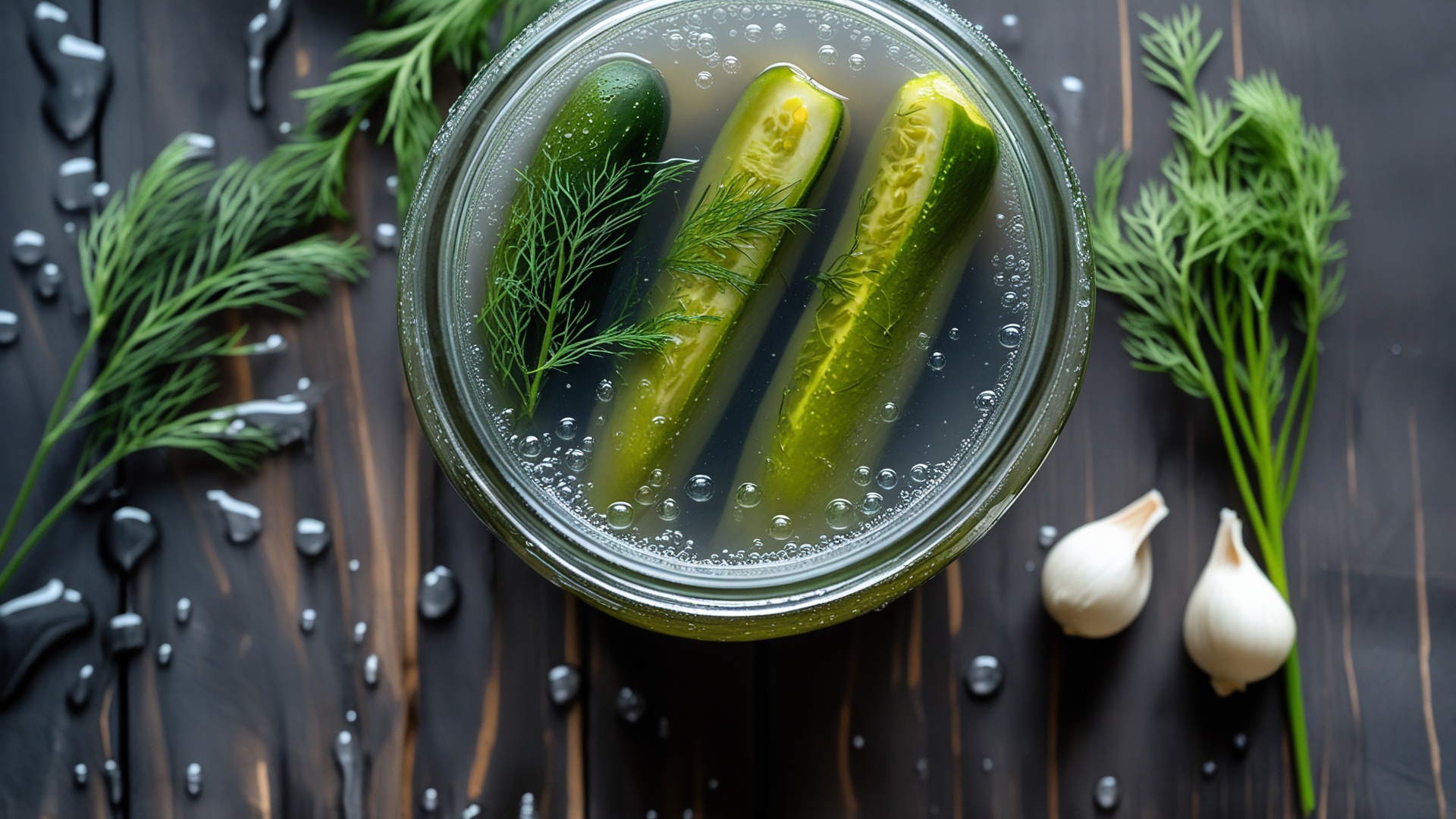
Fully fermented pickles keep for about 4 to 6 months in the fridge as long as they stay submerged in their brine. Colorado State University Extension, Clemson Cooperative Extension, and Oregon State University Extension all land on the same range for long-brined, fully fermented cucumbers — it is acidity doing the preserving, not the cold, so there is no sharp cutoff date the way there is for fresh produce.
How Long Do Fermented Pickles Last in the Fridge?
The answer depends on how the pickles were made and whether they are staying submerged, so it splits into a few cases rather than one number.
| Type | Typical fridge life | What limits it |
|---|---|---|
| Homemade, fully fermented, submerged in brine | 4–6 months | Texture and sourness, not spoilage |
| Homemade, brine level dropped below the pickles | Days to a couple of weeks | Exposed surface grows scum or mold fast |
| Store-bought, refrigerated section, unpasteurized, opened | Several months | Same rule as homemade: stays good while submerged |
| Quick vinegar pickles (not fermented) | A different product — see below | Different method, different safety profile |
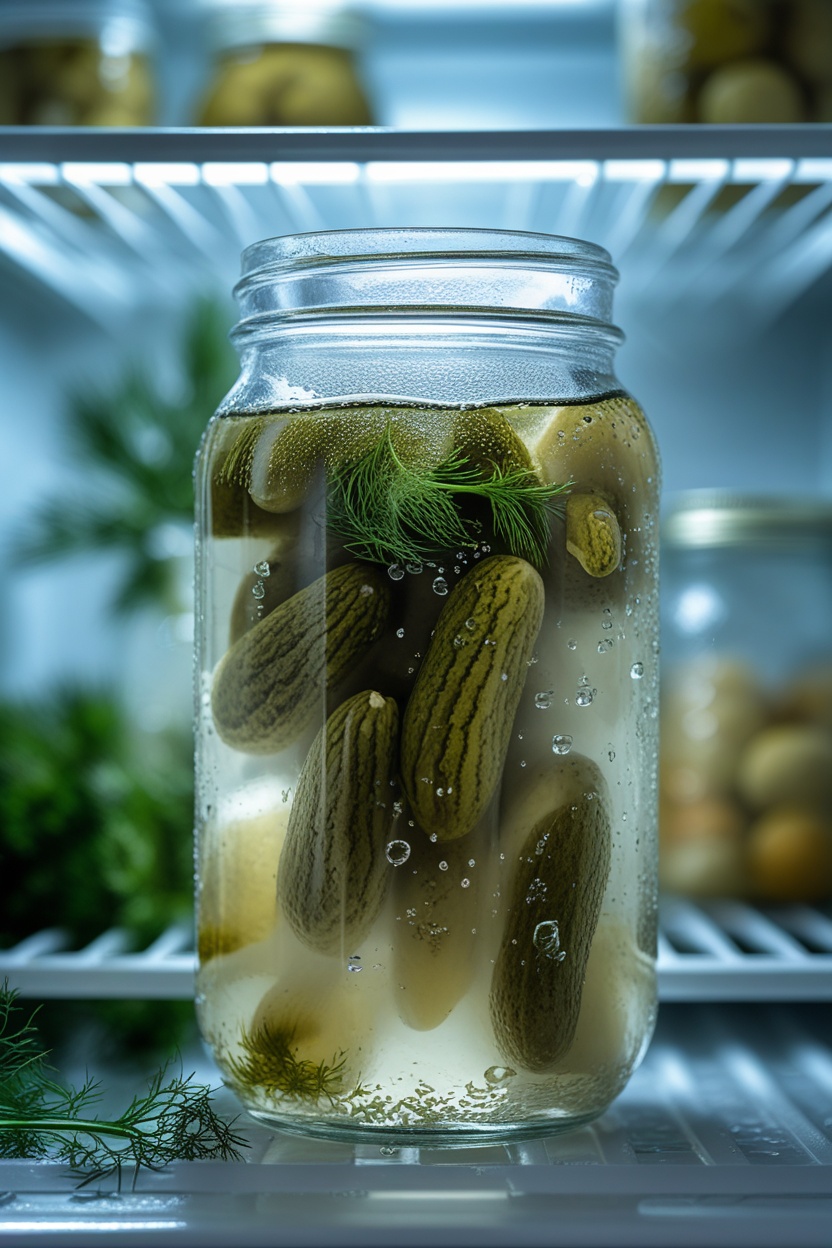
Clemson Cooperative Extension’s guidance is specific: “Fully fermented pickles may be stored in the original container for about 4 to 6 months,” provided they stay refrigerated and any surface scum is skimmed off regularly. Colorado State University Extension frames refrigeration as a “short-term (up to six months) storage method” for fully fermented sauerkraut and long-brined dills, and treats canning as the better move for storage beyond that window.
Why Do Fermented Pickles Keep So Long?
Acidity, not cold. Fermentation converts the sugars in cucumbers into lactic acid, and by the time a jar is fully fermented the brine has dropped well into the range that most spoilage organisms cannot tolerate. The fridge slows the bacteria that would otherwise keep pushing the flavor sourer — it is not what is keeping the jar safe in the first place.
That is also why our own fermented pickle recipe ferments at room temperature before any refrigeration happens: full fermentation needs to finish first. Oregon State University Extension notes that fermented pickles can be held in their brine “for four to six months at temperatures lower than 55 degrees” Fahrenheit, and that many people move the jar to the fridge once peak quality is reached, mainly “to slow fermentation and keep them crisp.”
What Changes Over Those Months
- Weeks 1–4 in the fridge: Flavor holds close to where it was when you chilled it; this is peak crunch.
- Months 2–3: Noticeably more sour, and the crunch starts to soften. Most jars get finished in this stretch.
- Months 4–6: Distinctly tangy and softer still, but by every extension source above this is still the normal, usable range — not a spoilage window.
- Beyond 6 months: Past the range the extension guidance actually tested. Texture keeps softening; this is the point to judge a jar on its own merits (see the discard checklist below) rather than assume it is still fine.
How to Make a Jar Last Toward the Long End
- Keep everything under the brine. This is the single biggest factor in every source above. A set of glass fermentation weights (paid link) keeps cucumbers from floating up once the jar goes in the fridge, too.
- Skim surface scum promptly. Clemson’s guidance calls for checking fermenting jars several times a week and removing scum or mold as soon as it appears, a habit worth keeping up in the fridge as well.
- Use a clean utensil every time. Not one that has touched your mouth or raw meat.
- Keep the fridge genuinely cold. A door shelf runs warmer than the back of a middle shelf, and that gap adds up over months.
- Top up with fresh brine, not plain water, if the level drops. Our pickles brine calculator scales a matching percentage to whatever jar you are using.
Quick Pickles Are a Different Product
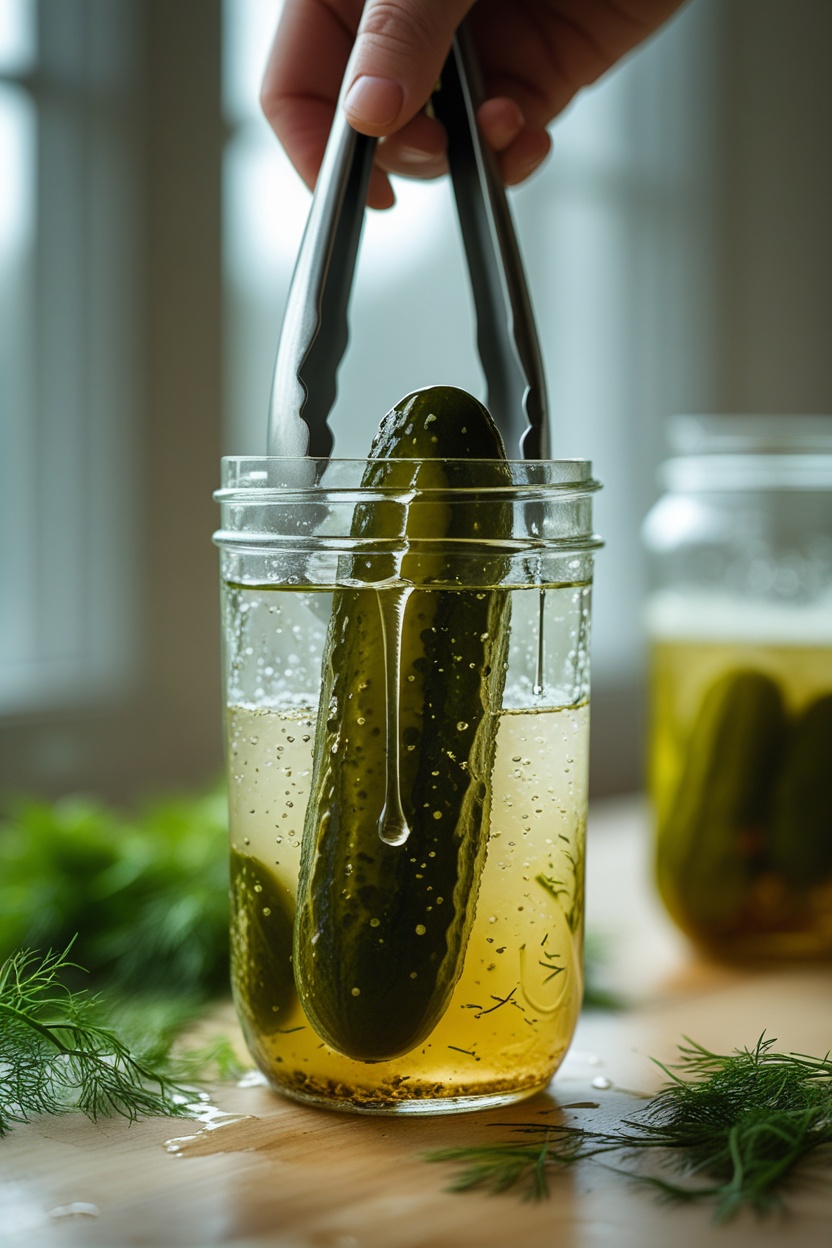
Not every jar labeled “refrigerator pickles” is fully fermented, and the 4–6 month figure above does not transfer to those. Vinegar quick pickles skip fermentation entirely and rely on the vinegar’s acidity from the start, so they follow whatever shelf life their own recipe specifies, usually weeks rather than months.
Oregon State University Extension flags a specific middle case worth knowing about: a short-brine method that ferments cucumbers at room temperature for about a week before refrigerating is treated as a risk for listeria, because that brief window is not enough to drive the pH down the way a full multi-week ferment does. If you are not sure which method a recipe used, the safer read is to treat anything fermented for under two to three weeks as not yet fully fermented, and to keep it refrigerated and eaten sooner rather than stored for months.
When to Discard a Jar
Softness and extra sourness over several months are not spoilage. These signs are:
- Fuzzy growth of any color, raised above the surface of the brine or the pickles themselves.
- Sliminess on the pickles or in the brine — Clemson’s guidance is to discard pickles that “become soft, slimy or develop a disagreeable odor.”
- A putrid or off smell, as opposed to the sharp, sour smell a healthy ferment has throughout.
- Anything that simply looks or smells wrong to you. There is no reason to finish a doubtful jar.
This article summarizes published extension guidance on how long fermented pickles typically keep. It is not a food-safety assessment of any specific jar, and it is not medical advice. If a ferment looks, smells, or tastes wrong, throw it out rather than taste-testing it to find out. Our guide on how to tell if your ferment has gone bad covers the broader checklist across all vegetable ferments, and cloudy brine on its own is covered separately, since it is usually normal rather than a discard sign.
FAQ
How long do fermented pickles last after opening?
The same 4 to 6 months applies after opening as before, as long as the pickles stay submerged in their brine and refrigerated. Opening the jar does not start a new countdown; keeping them covered by liquid does the work either way.
Can you freeze fermented pickles?
You can, but the texture turns soft and watery on thawing because freezing breaks down the cucumber’s cell structure. Freezing suits pickles headed into cooked dishes far better than ones you plan to eat cold and crunchy.
Why did my fermented pickles go soft in the fridge?
Gradual softening over months is expected and matches the extension guidance above. Softening within the first few days usually points to a fermentation that ran warmer than the 70–75°F range, or to cucumbers that were not fresh enough when you started.
Do store-bought fermented pickles last as long as homemade?
Unpasteurized, refrigerated store-bought pickles behave like homemade ones and follow the same submerged-in-brine rule. Shelf-stable, pasteurized jars from the center aisle are a different product entirely — heat stops the live fermentation, so they follow the date on the label instead.
Sources: Colorado State University Extension, Making Pickles (Fact Sheet 9.304) · Clemson Cooperative Extension, Dill Pickles & Sauerkraut · Oregon State University Extension, Ask Extension
Related: How to Make Fermented Pickles · Pickles Brine Calculator · How Long Does Sauerkraut Last in the Fridge? · How Long Does Kimchi Last in the Fridge? · Has Your Ferment Gone Bad?