
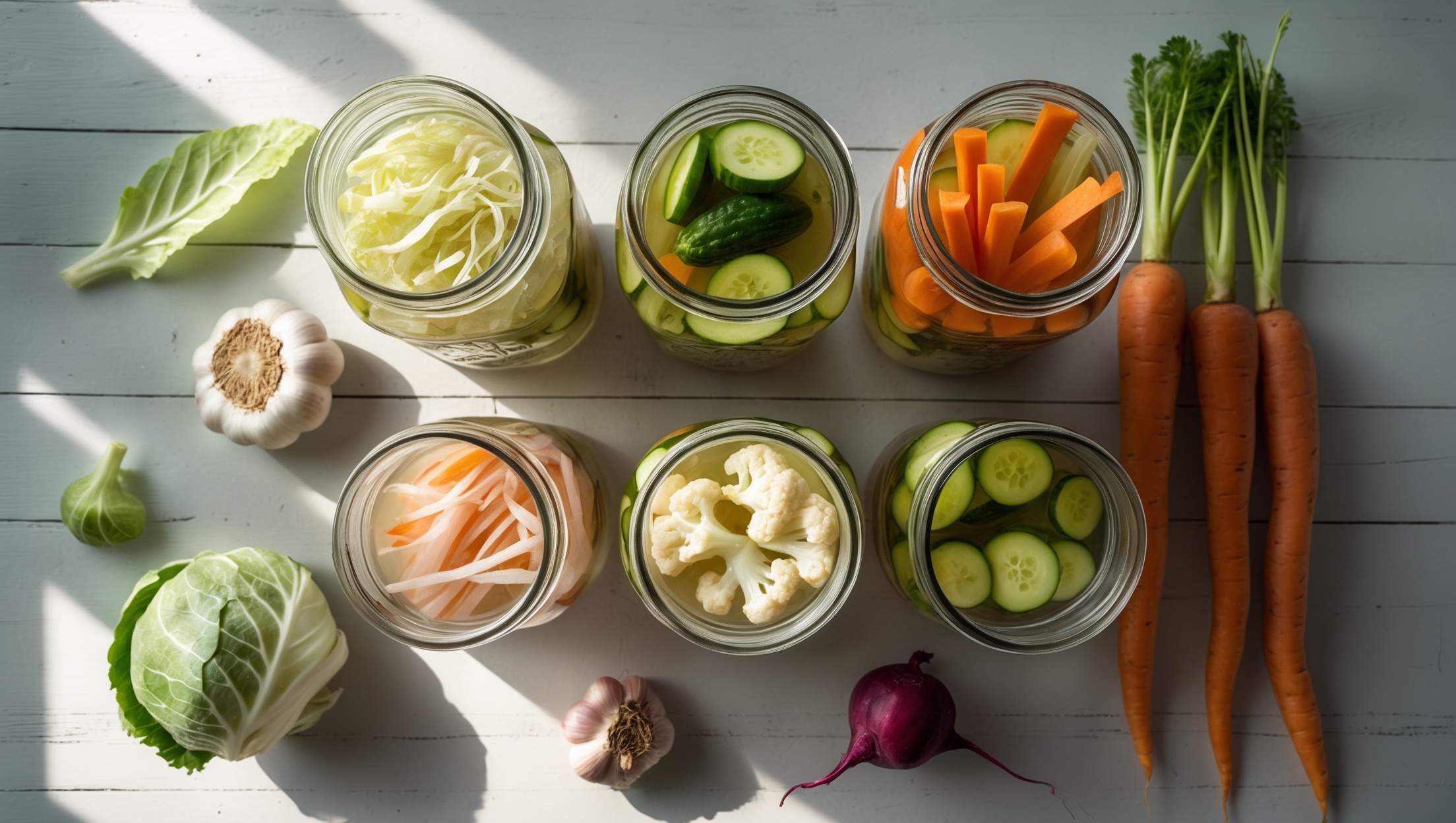
Most vegetables can be lacto-fermented, but firm, low-fat vegetables with a sturdy structure work best for beginners. Cabbage, cucumbers, carrots, cauliflower, radishes, beets, garlic, and green beans hold their texture in brine. Soft, starchy, or fatty vegetables like avocados, potatoes, and lettuce tend to turn mushy or smell off.
Start with fresh, unbruised produce and clean tools. The University of Connecticut Extension notes that no documented food poisoning case has come from raw vegetables that were fermented properly — but damaged or dirty produce introduces the mold and yeast that cause failed batches.
What Makes a Vegetable Good for Fermenting?
A vegetable ferments well when it has a firm cell structure, low fat content, and enough natural sugar to feed lactic acid bacteria. These three traits determine whether a vegetable stays crisp, turns mushy, or ferments too fast to control.
Firmness matters because lactic acid bacteria break down cell walls as they work. Vegetables that start out soft — lettuce, zucchini, ripe tomatoes — have little structure left to lose. Fat content matters because fermentation doesn’t process oils the way it processes sugars; high-fat foods like avocado or nuts turn rancid instead of sour. Sugar content sets the pace: Cultures for Health notes that beets, which are naturally high in sugar, ferment noticeably faster than lower-sugar vegetables like carrots and need closer monitoring to avoid over-souring.
Size and cut also change the outcome. The Virginia Tech Cooperative Extension recommends small pickling cucumbers over large slicing cucumbers for fermented pickles, citing 1½-inch cucumbers for gherkins and 4-inch cucumbers for dills as the standard sizes — larger cucumbers “do not ferment well and do not make a good quality product.” The same extension recommends mature cabbage heads weighing 6 to 15 pounds for sauerkraut, since they carry more of the natural sugars fermentation needs.
Which Vegetables Ferment Best for Beginners?
Eight vegetables are considered reliable starting points: cabbage, cucumbers, carrots, cauliflower, beets, garlic, green beans, and peppers. Each has a firm texture, ferments predictably, and tolerates small mistakes in salt ratio or timing better than delicate vegetables.
- Cabbage — the base for sauerkraut and kimchi. Releases its own water to form a brine and needs a fermentation weight (paid link) to stay submerged. See What Is Lacto-Fermentation? A Simple Explanation for how the process works on cabbage specifically.
- Cucumbers — best fermented small, per the Virginia Tech sizing above. Use the Fermentation Salt & Brine Calculator to get the ratio right before starting.
- Carrots — versatile on their own or mixed into kimchi; holds a crisp bite through a 1–2 week ferment.
- Cauliflower — takes on color well when fermented alongside beets, as in Fermented Cauliflower With a Beet Twist.
- Radishes — ferment quickly and pair naturally with garlic and chili, as in Kkakdugi (Cubed Radish Kimchi).
- Beets — high sugar content speeds fermentation; check daily after day 3 to avoid over-souring.
- Green beans — a good single-jar batch size for a first attempt; stay crisp if kept cold during fermentation.
- Garlic — fermented whole or as a paste; color shifts to blue or green during fermentation, which is a pigment reaction, not spoilage. Black Garlic shows what a longer, heat-driven ferment does to the same vegetable.
Most failed first ferments trace back to one thing: vegetables floating above the brine line and going moldy on top. Dense vegetables like cabbage and cauliflower are the worst offenders because shredded or chopped pieces trap air. A weight that presses the vegetables below the liquid — not just a loosely fitted lid — fixes this more reliably than adding extra salt.
Which Vegetables Are Tricky to Ferment?
Zucchini, lettuce, kale, and bell peppers can be fermented, but each needs a shorter timeline or extra prep to avoid a bad result. These vegetables have less structural fiber or higher water content than the beginner list above.
Zucchini turns very soft during fermentation, according to Revolution Fermentation, which recommends a short 5–10 day ferment with the freshest produce available rather than a standard 2–4 week timeline. Lettuce breaks down even faster: firmer varieties hold up for a maximum of 5 days before turning to purée. Kale’s fibrous texture and bitter taste improve when it’s mixed with milder vegetables rather than fermented alone. Bell peppers are prone to surface mold during fermentation and need closer daily checks than cabbage or carrots do.
Which Vegetables Should You Skip?
Potatoes, avocados, and oily nuts or seeds are poor candidates for lacto-fermentation. Potatoes develop an unpleasant smell and visible oxidation within days; Revolution Fermentation limits potato fermentation to a maximum of 3 days before cooking, well short of the 2–4 weeks typical for cabbage or cucumbers. Avocados and nuts are too high in fat for lactic acid bacteria to process the way they process plant sugars, which leads to rancid rather than sour flavors. Ripe fruit ferments too, but yeasts dominate over lactic acid bacteria in high-sugar fruit, producing an alcoholic result instead of the sour, salty flavor of a vegetable ferment.
How Long Do Different Vegetables Take to Ferment?
Fermentation time depends on the vegetable’s sugar content, cut size, and temperature, and ranges from 3 days to 4 weeks. The UConn Extension puts standard sauerkraut at roughly 3–4 weeks using 3 tablespoons of pickling salt per 5 pounds of shredded cabbage. High-sugar vegetables like beets move faster and need daily tasting after day 3. Delicate vegetables like zucchini and lettuce are done in 5–10 days, and potatoes should never go past 3 days. Room temperature changes these timelines directly — see Fermentation Temperature: The Ideal Range for Vegetables for how a few degrees shift fermentation speed up or down.
Frequently Asked Questions
Can you ferment potatoes?
Potatoes can be fermented but aren’t recommended for beginners. They develop an unpleasant smell and visible oxidation quickly, and should be fermented no longer than 3 days and cooked immediately afterward.
Can you ferment leafy greens like kale or spinach?
Yes, but leafy greens turn soft fast. Kale’s bitterness softens when mixed with milder vegetables; delicate greens like lettuce or spinach hold up for only a few days before breaking down.
Do all vegetables need the same salt ratio?
No. Salt ratio depends on the vegetable’s water content and the fermentation method — whole vegetables in a brine solution use a different ratio than shredded vegetables that release their own liquid, like cabbage. The Fermentation Salt & Brine Calculator adjusts for both.
Which vegetable ferments fastest?
Beets ferment fastest among common vegetables because of their naturally high sugar content, which feeds lactic acid bacteria quickly. Check beet ferments daily starting on day 3 to catch the flavor before it over-sours.
Sources and Further Reading
- Virginia Tech Cooperative Extension, “Vegetable Fermentation” (FST-328) — cucumber and cabbage sizing guidance for home fermentation.
- University of Connecticut Extension, “Fermentation: Preservation with Benefits” — salt ratios, timelines, and food safety record for home-fermented vegetables.
- Revolution Fermentation, “Which Vegetables Are Difficult to Ferment?” — vegetable-by-vegetable troubleshooting for zucchini, lettuce, potatoes, and more.
- Cultures for Health, “8 Best Vegetables to Ferment” — beginner vegetable selection and sugar-content notes.