
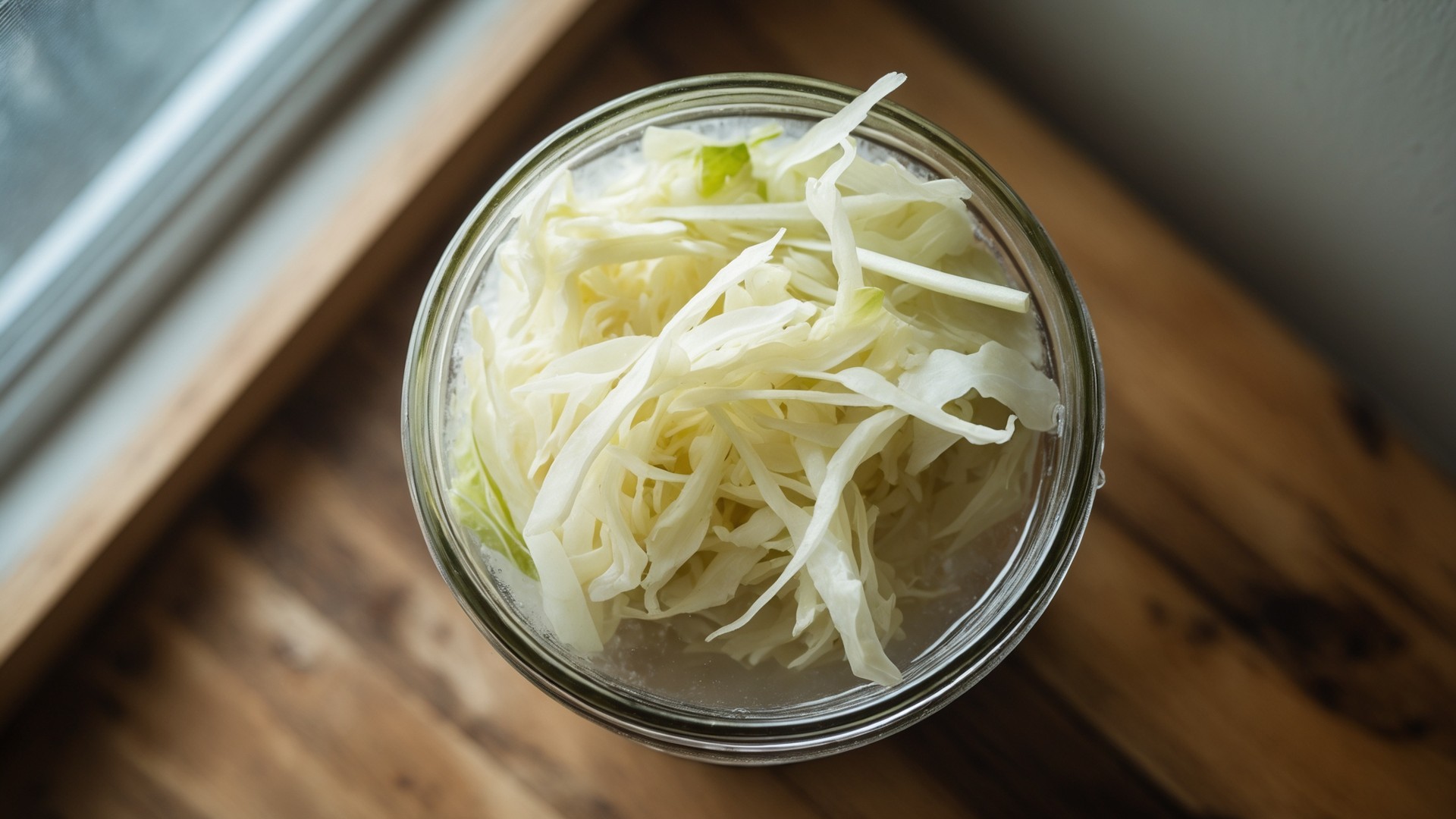
Not enough brine in sauerkraut usually means the cabbage was under-salted, wasn’t massaged long enough to release its own liquid, or lost volume over the first few days as fermentation gas escaped and the shreds settled. The fix is a quick top-up brine — about 1.5 teaspoons of non-iodized salt dissolved in 1 cup of water, a 2% ratio that matches the original ferment — poured in until the cabbage sits at least an inch below the surface. It’s a routine, easily corrected step, not a sign the batch has failed.
A 4-pack of glass fermentation weights (paid link) is worth adding at the same time, since it keeps the cabbage pinned under the new brine — brine that drops again within a day or two almost always means nothing was holding the shreds down in the first place.
Why Did My Sauerkraut Run Short on Brine?
- Not enough salt: salt below the standard 2% ratio by cabbage weight draws out less liquid through osmosis, so even a long massage leaves the jar short on brine.
- Too little massaging: shredded cabbage typically needs 10-15 minutes of firm massaging or pounding to release enough of its own liquid to form a full brine; stopping early is a common cause.
- Gas loss and settling: over the first 3-5 days, active fermentation produces CO2 that pushes brine up and out through the lid or airlock; once that slows, the level can drop by up to an inch as the shreds compact and the gas finishes escaping.
- Too much headspace: cabbage packed loosely into an oversized jar leaves air gaps that let brine settle unevenly instead of pooling in one visible layer at the top.
How to Fix Low Brine Right Now
- Mix a top-up brine: dissolve 1.5 teaspoons (about 9 grams) of non-iodized salt per cup (240 ml) of filtered or dechlorinated water, matching the same roughly 2% ratio as the original batch so the fix doesn’t dilute the salinity that’s keeping it safe.
- Pour it in slowly along the inside of the jar until the cabbage is covered by at least 1 inch of liquid.
- Add a fermentation weight or a water-filled bag pressed into the jar’s neck to hold everything down, then check again in 24 hours, since the level often needs a second small top-up as trapped gas finishes escaping.
- Move to a smaller jar if a large air gap remains even after topping up — less headspace means less brine needed to cover the batch.
Is Sauerkraut With Low Brine Still Safe to Eat?
Usually, yes. Cabbage that sat exposed to air for a day or two before the brine was topped up is typically fine once it’s back under liquid — check that it still looks pale, or only lightly browned at the very top rather than throughout, smells sour rather than off, and has no fuzzy or slimy patches. Our guides to telling if a ferment has gone bad and mold on a ferment cover exactly which signs mean a batch should be discarded instead of fixed.
The longer cabbage sits exposed, the more that check matters: brine loss that goes unnoticed for 3-4 days or more raises the odds of mold enough that a visual and smell check before eating is worth doing every time, not just once. If you see fuzzy or colored growth rather than a dry or slightly discolored top layer, don’t try to save the batch — scooping mold off isn’t enough, since it can send roots down into the ferment that aren’t visible.
FAQ
Can I use tap water for the top-up brine?
Yes, in most cases. Letting tap water sit uncovered for a few hours, or using filtered water, avoids any small risk that heavy chlorination slows the fermentation.
How much brine loss is too much to fix?
As long as the exposed cabbage isn’t dried out or already showing mold, even a batch with an inch or two of exposed cabbage can be topped up and saved — the fix works the same regardless of how much liquid is missing.
Will adding more brine make my sauerkraut too salty?
No. Since the top-up brine matches the same roughly 2% ratio as the original ferment, it maintains the batch’s overall salinity instead of raising it.
Save this guide on Pinterest for your next batch.
Related: Why Is My Sauerkraut Slimy? · Cloudy Brine in Your Ferment · Salt & Brine Calculator