
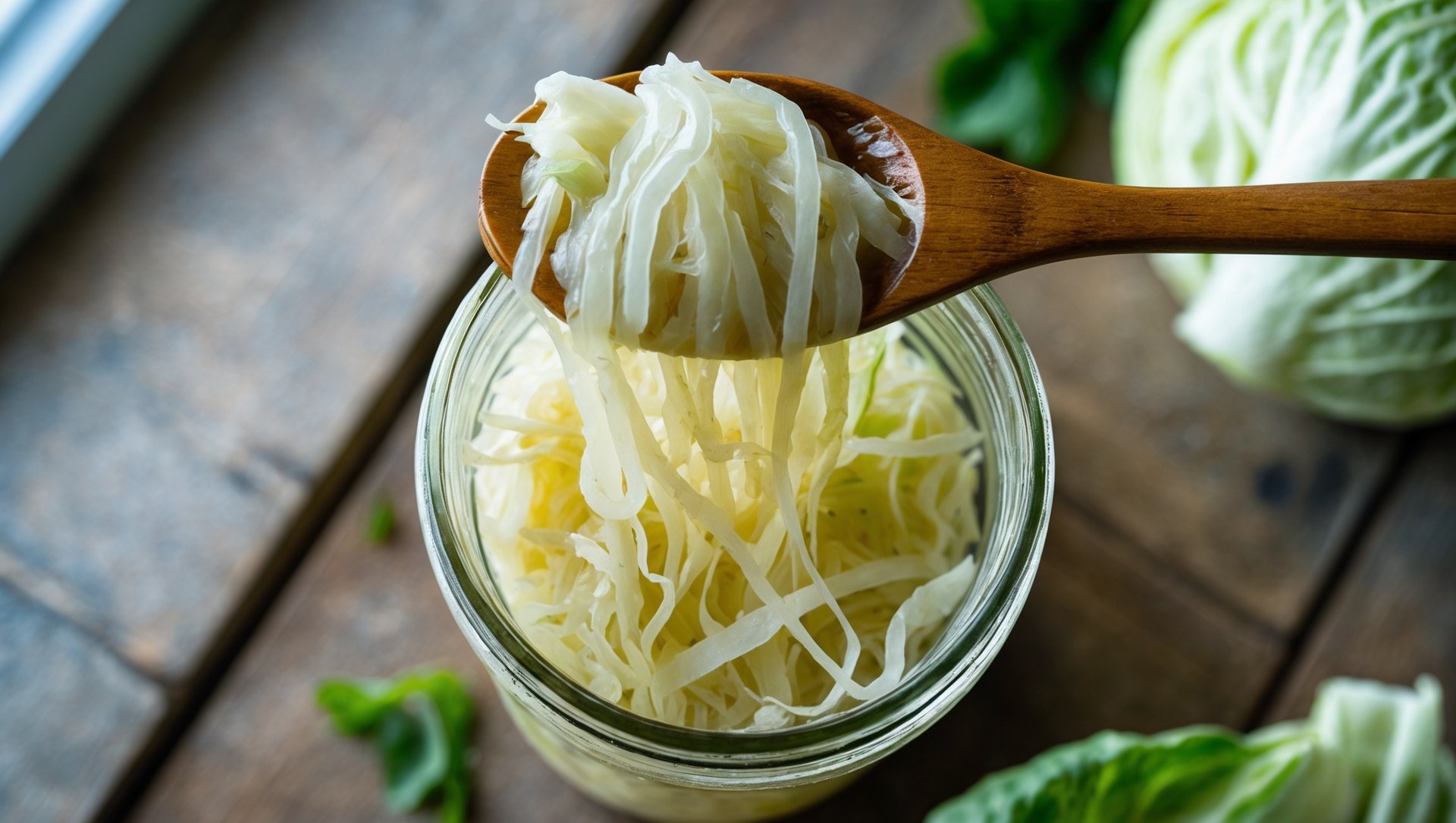
Slimy sauerkraut brine is almost always caused by dextran-producing lactic acid bacteria — mainly Leuconostoc mesenteroides — multiplying quickly early in fermentation, especially in a warm kitchen or with slightly low salt. It’s a textural quirk, not spoilage, and it often clears up on its own within a week or two. If the cabbage itself turns mushy or slimy (not just the liquid), paired with a putrid smell or mold, that’s a different and genuine warning sign — discard that batch.
A basic digital kitchen scale (paid link) makes it easy to hit the 2% salt ratio precisely on the next batch — one of the simplest ways to keep slime from showing up in the first place.
Why the Brine Turns Slimy or Stringy
In the first few days of fermentation, Leuconostoc mesenteroides is typically the dominant bacterium in the jar — it’s the same organism that kicks off sauerkraut fermentation in general. Under certain conditions, mainly warm temperatures (above roughly 75°F) or a salt ratio a little under the usual 2% by weight, some strains produce dextran, a sticky polysaccharide that turns the brine thick and stringy. Watery or slightly sweet cabbage can make it more noticeable.
Slimy Brine vs. Slimy Sauerkraut: The Difference
- Normal: the liquid feels thick or stringy when you lift a spoon out, but the cabbage itself still looks crisp-ish and smells sour and tangy, not off.
- Not normal: the cabbage shreds themselves are mushy or slimy to the touch, or there’s a putrid smell or fuzzy mold — see our guide to spoiled ferments for the full checklist. When in doubt, the safest choice is to discard the batch.
Does the Slime Go Away?
Often, yes. As fermentation continues and the brine gets more acidic, more acid-tolerant Lactobacillus strains take over from the early dextran producers, and the sliminess frequently thins out on its own within a week or two. Moving the jar somewhere cooler can speed that up.
Preventing It Next Batch
Weigh cabbage and salt for an accurate 2% ratio rather than eyeballing it, keep the jar out of direct sun or off the top of a warm appliance, and make sure the cabbage stays fully submerged under the brine. All three make it less likely that dextran-producing bacteria get the upper hand.
FAQ
Is slimy sauerkraut safe to eat?
If it’s just the brine that’s thick or stringy and the cabbage itself still looks and smells normal, it’s typically safe. Mushy or slimy cabbage shreds combined with a putrid smell or mold are the actual warning signs, not stringy liquid alone.
Why did my sauerkraut get slimy in the first few days but not later?
That timing is typical — the dextran-producing bacteria responsible are most active early on and are usually succeeded by more acid-tolerant strains as the brine sours, which is why the sliminess often fades on its own.
Can too much salt also cause sliminess?
Low salt and warm temperatures are the more common triggers, but salt well outside the usual range in either direction can throw off which microbes dominate the jar — which is why sticking to a measured 2% ratio helps more than eyeballing it.
Save this guide on Pinterest for your next batch.
Related: Sauerkraut Recipe · How to Tell If Your Ferment Has Gone Bad