
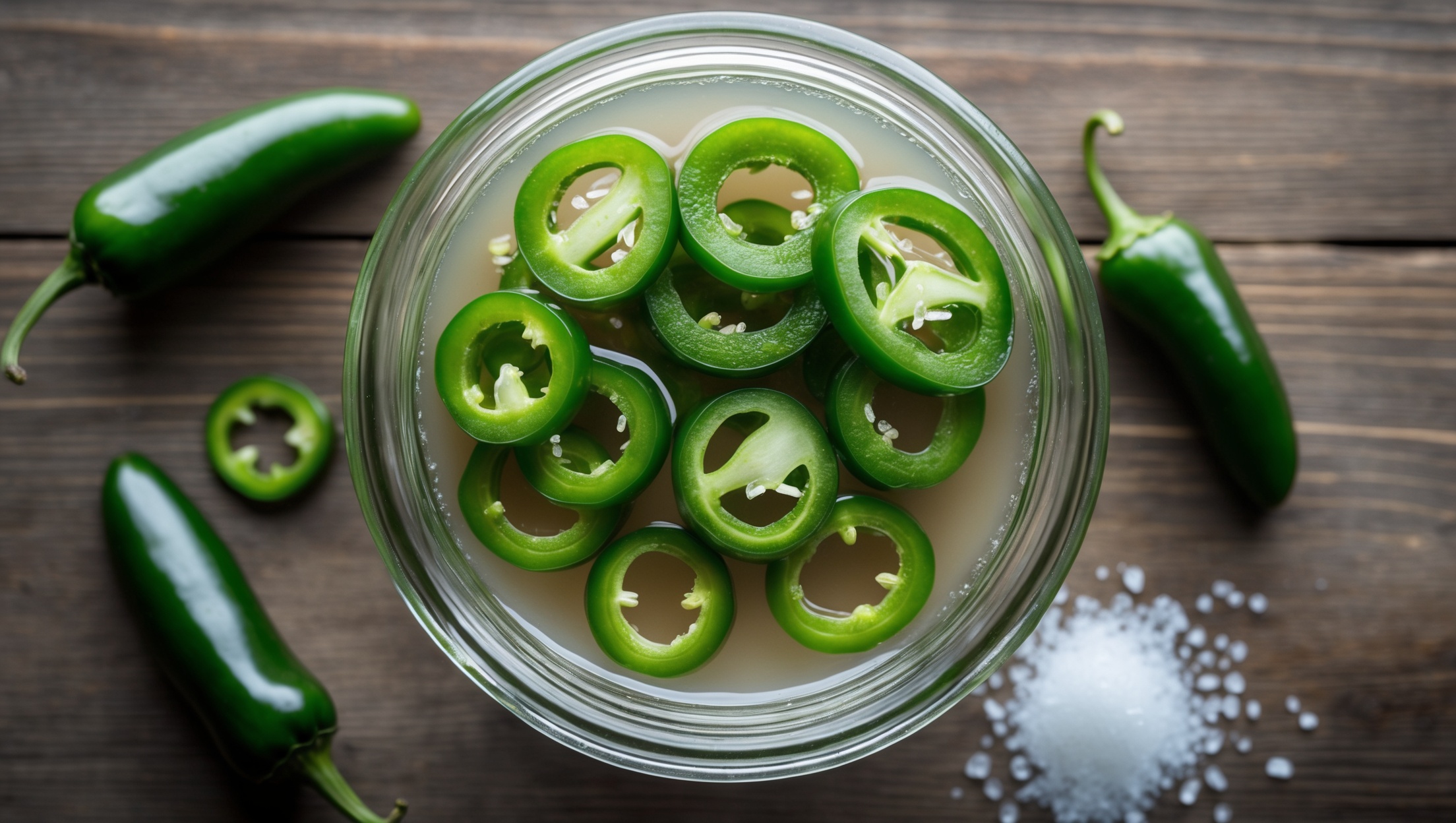
Fermented jalapeños are sliced or whole jalapeño peppers submerged in a 3–5% salt brine for 1 to 2 weeks at room temperature. The lacto-fermentation process softens the peppers’ raw bite, builds a tangy sour flavor, and mellows the heat without any vinegar or cooking.
Fermented jalapeños need a 3–5% salt brine by weight and 7 to 14 days at 60–75°F to turn fully sour. Jalapeños rank 2,000 to 25,000 Scoville Heat Units, and fermentation noticeably mellows that heat over the first week. A safe batch stays below pH 4.6, smells sour (never putrid), and shows no fuzzy green, blue, brown, or black mold. A thin white or grey film (kahm yeast) is common and harmless if skimmed. One 16-ounce jar of sliced jalapeños makes a ready-to-use topping for tacos, eggs, sandwiches, or a base for homemade fermented hot sauce.
Ingredients
- 1 pound fresh jalapeños, sliced into 1/4-inch rings or left whole with a small slit cut in each
- 2–3 garlic cloves, peeled and left whole (kept separate from the jar, see note below)
- 1 tablespoon whole peppercorns or coriander seeds (optional)
- Filtered, unchlorinated water
- Non-iodized salt (fine sea salt or canning/pickling salt)
- 1 clean quart-sized glass jar with a lid
- 1 fermentation weight (glass or ceramic) to keep peppers submerged
Step-by-Step
- Wash the jalapeños and slice into even 1/4-inch rings, or leave whole and pierce once with a knife so brine can enter. Wear gloves if slicing a large batch to avoid capsaicin burn.
- Pack the sliced jalapeños into the jar, leaving about 1.5 inches of headspace. Tuck garlic cloves and optional spices between layers.
- Make a 3.5% brine: dissolve 17.5 grams (about 1 tablespoon) of salt per 500 milliliters (about 2 cups) of water. Weigh the salt on a kitchen scale for an accurate ratio.
- Pour the brine over the peppers until fully submerged, leaving 1 inch of headspace below the jar rim.
- Press a fermentation weight (such as these glass fermentation weights (paid link)) on top of the peppers so no piece floats above the brine line.
- Seal with an airlock lid, or a regular lid loosened slightly and “burped” once a day to release carbon dioxide.
- Set the jar out of direct sunlight at 60–75°F. Check daily that peppers stay fully submerged.
- Taste starting on day 7. A ready batch tastes pleasantly sour with mellowed, rounded heat. Continue fermenting up to day 14 for a more pronounced sour flavor.
- Once fermented to taste, move the jar to the refrigerator. Refrigerated fermented jalapeños keep their best texture and flavor for 4 to 6 months.
Garlic cloves fermented loose in the same brine as peppers often turn blue or green within days — a harmless pigment reaction between garlic’s sulfur compounds and trace copper or acid, but it alarms most beginners. Keep garlic halved and tucked low in the jar rather than floating near the surface, or ferment it in a small separate jar, so it stays out of sight if the color shift happens.
How Much Salt Do You Need for Fermented Jalapeños?
Fermented jalapeños need a brine between 3% and 5% salt by weight, which controls spoilage organisms while still allowing lactic acid bacteria to thrive. This range sits inside the 2–10% window used across vegetable fermentation generally, per the BC Centre for Disease Control’s fermented foods guidance.
Weighing salt and water on a kitchen scale is far more accurate than measuring by volume, since salt crystal size varies between brands. A 3.5% brine — roughly 17.5 grams of salt per 500 milliliters of water — sits in the middle of the recommended range and works well for most home batches. Going below 3% raises the risk of spoilage organisms outcompeting the lactic acid bacteria that make fermentation safe. Going above 5% slows fermentation down and can mute the final flavor.
Non-iodized salt is the standard choice. Iodized table salt can darken ferments and, in some cases, inhibit the fermentation bacteria. Fine sea salt and canning salt both dissolve cleanly and work equally well for a jalapeño brine.
How Long Do Fermented Jalapeños Take to Ferment?
Fermented jalapeños typically need 7 to 14 days at 60–75°F to develop a fully sour flavor. Fermentation Made Simple’s own vegetable fermentation timing chart places peppers for hot sauce in the same 1-to-2-week window, with a cloudy brine and mellowed heat as the key readiness signs.
Warmer kitchens speed up the process; a jar sitting near 75°F may taste pleasantly sour by day 7, while a cooler 60°F kitchen can take the full 14 days. Taste-testing daily after day 5 is the most reliable way to judge readiness, since room temperature varies more than any fixed day count can account for.
Three visible signs confirm active fermentation is underway: small bubbles rising through the brine, a brine color shifting from clear to slightly cloudy, and a gradual softening of the raw pepper smell into a tangier, more rounded aroma.
Do Fermented Jalapeños Get Less Spicy?
Fermented jalapeños taste noticeably milder than fresh jalapeños, even though the capsaicin that creates the heat is not destroyed by fermentation. Jalapeños measure 2,000 to 25,000 Scoville Heat Units fresh, according to Colorado State University Extension, and lacto-fermentation changes how that heat is perceived rather than removing it.
The salt brine draws out some capsaicin-carrying liquid from the pepper flesh into the surrounding brine, diluting the concentration in each bite. At the same time, the sour, acidic flavor produced by fermentation changes how the palate registers heat, making the same pepper taste rounder and less sharp than it did raw. A jar of fermented jalapeños typically tastes milder on day 10 than it did on day 1, even with the same peppers and the same brine.
Removing seeds and the white membrane (placenta) before fermenting reduces heat further, since most of a jalapeño’s capsaicin concentrates there rather than in the outer flesh. Leaving them in produces a hotter, more traditional hot-sauce base.
Is It Normal for the Brine to Turn Cloudy?
Cloudy brine is a normal and expected part of jalapeño fermentation, not a sign of spoilage. The cloudiness comes from lactic acid bacteria multiplying in the brine along with small amounts of released plant starch and natural pepper sediment.
Clear brine on day 1 that gradually turns milky white or pale yellow by day 5–7 is the expected progression. Small bubbles rising through the cloudy brine are a further good sign, since fermentation microbes produce carbon dioxide gas as a normal byproduct of the process.
What is not normal: brine that turns pink, orange, or develops colored streaks beyond the general haze, or a brine surface showing fuzzy, raised growth. Those signs point toward contamination rather than normal fermentation and call for a closer look, covered in the next section.
This article is for food-safety information only, not medical advice. If a batch shows any mold, smells putrid, or you are unsure after checking the signs below, the safest choice is always to discard it rather than taste-test it.
How Do You Know If Fermented Jalapeños Have Gone Bad?
Fermented jalapeños have gone bad if they show fuzzy green, blue, brown, or black mold, or if the batch smells putrid rather than sour. A thin white, grey, or pink surface film is kahm yeast, a separate and generally harmless organism that can be skimmed off.
UC Davis Food Safety draws a clear line between the two: mold is fuzzy and colored green, blue, brown, or black, while kahm yeast forms a smoother, flatter film in white, grey, or pink tones. Kahm yeast can affect flavor slightly but does not make a ferment unsafe on its own — it is typically skimmed from the surface and the batch continued.
A safe ferment stays below pH 4.6, the threshold the BC Centre for Disease Control identifies as the point where harmful bacteria, including botulinum, cannot grow. Properly salted and submerged jalapeños reach this pH naturally within the first 3 to 5 days of fermentation. The National Center for Home Food Preservation is explicit that salt amounts should never be reduced below what a recipe calls for, since salt is what controls the early fermentation window before acidity drops low enough to be self-protecting.
Smell is the fastest field test. A correctly fermented jar smells sharply sour, like a tangy pickle. A putrid, rotten-egg, or otherwise off smell — especially paired with any mold — means the batch should be discarded rather than tasted.
What Can You Do With Fermented Jalapeños?
Fermented jalapeños work as a direct topping on tacos, nachos, eggs, and sandwiches, or as the base ingredient for a homemade fermented hot sauce. Blending the peppers with a portion of their own brine turns this same batch into a pourable sauce in minutes.
Chopped fermented jalapeños also stir well into guacamole, potato salad, or cream cheese for a quick spread. Because the fermentation process has already built sourness and depth, fermented jalapeños need little else added — a drizzle of the reserved brine over roasted vegetables puts that sour, salty liquid to use instead of pouring it down the drain.
💬 My Take
Most beginner guides treat seed and membrane removal as a must-do step for a “safer” or milder result. In practice, the salt-and-time combination does more to tame jalapeño heat than seed removal ever will — a 14-day ferment with seeds left in often tastes milder than a 7-day ferment with seeds removed. If the goal is a traditional, slightly hotter hot-sauce base, leaving the seeds in and fermenting the full 14 days gets there with less prep work, not more.
- Use a 3–5% salt brine by weight — about 17.5 g salt per 500 ml water for a 3.5% middle-ground ratio
- Ferment 7 to 14 days at 60–75°F, tasting daily after day 5
- Jalapeños measure 2,000–25,000 Scoville Heat Units fresh; fermentation measurably mellows that heat
- Cloudy brine and small bubbles are normal signs of active fermentation, not spoilage
- Discard only for fuzzy green, blue, brown, or black mold, or a putrid smell — a thin white or pink film is harmless kahm yeast
- Refrigerate once fermented to taste; keeps its best texture for 4 to 6 months
Frequently Asked Questions About Fermented Jalapeños
These five questions come up regularly around fermented jalapeños, covering specific details beyond the main sections above.
Can you ferment red and green jalapeños together in the same jar?
Yes. Red and green jalapeños are the same pepper at different ripeness stages and ferment identically. Mixing colors only changes the final appearance of the brine and peppers, not the fermentation process or timeline.
Do you need a special fermentation weight, or can you improvise?
A dedicated glass or ceramic fermentation weight works best, but a small, clean glass jar filled with water and set on top of the peppers can substitute. The goal is simply steady downward pressure that keeps every piece under the brine line.
Can you ferment whole jalapeños instead of slicing them?
Yes, whole jalapeños ferment well if pierced once with a knife so brine can reach the interior. Whole peppers take slightly longer to fully sour than sliced rings, since less surface area contacts the brine directly.
How spicy does fermented hot sauce made from jalapeños end up?
Fermented jalapeño hot sauce lands in a mild-to-medium range, since fermentation mellows the raw pepper’s 2,000–25,000 Scoville heat before blending. Adding hotter peppers like serranos or habaneros to the same batch raises the final heat level noticeably.
Can you freeze fermented jalapeños instead of refrigerating them?
Freezing fermented jalapeños stops fermentation and softens their texture considerably once thawed. Refrigeration at 35–40°F is the better choice for both flavor and crunch, keeping the peppers usable for 4 to 6 months.
Sources and Further Reading
These sources provide the safety and factual basis for this article.
- Fermented Foods Guidance — Fermented Vegetables · BC Centre for Disease Control (bccdc.ca) · defines the pH 4.6 safety threshold and the general 2–10% salt range for vegetable fermentation.
- General Information on Fermenting · National Center for Home Food Preservation (nchfp.uga.edu) · stresses that salt amounts in fermentation recipes should never be reduced below what the method calls for.
- Troubleshooting Fermented Fruits and Vegetables · UC Davis Food Safety (ucfoodsafety.ucdavis.edu) · distinguishes kahm yeast (white, grey, or pink film, generally harmless) from true mold (green, blue, brown, black, and fuzzy), and names a putrid smell as a discard signal.
- Scoville Heat Units · Colorado State University Extension, foodsmartcolorado.colostate.edu · places the Scoville range of jalapeño peppers at 2,000 to 25,000 units.