
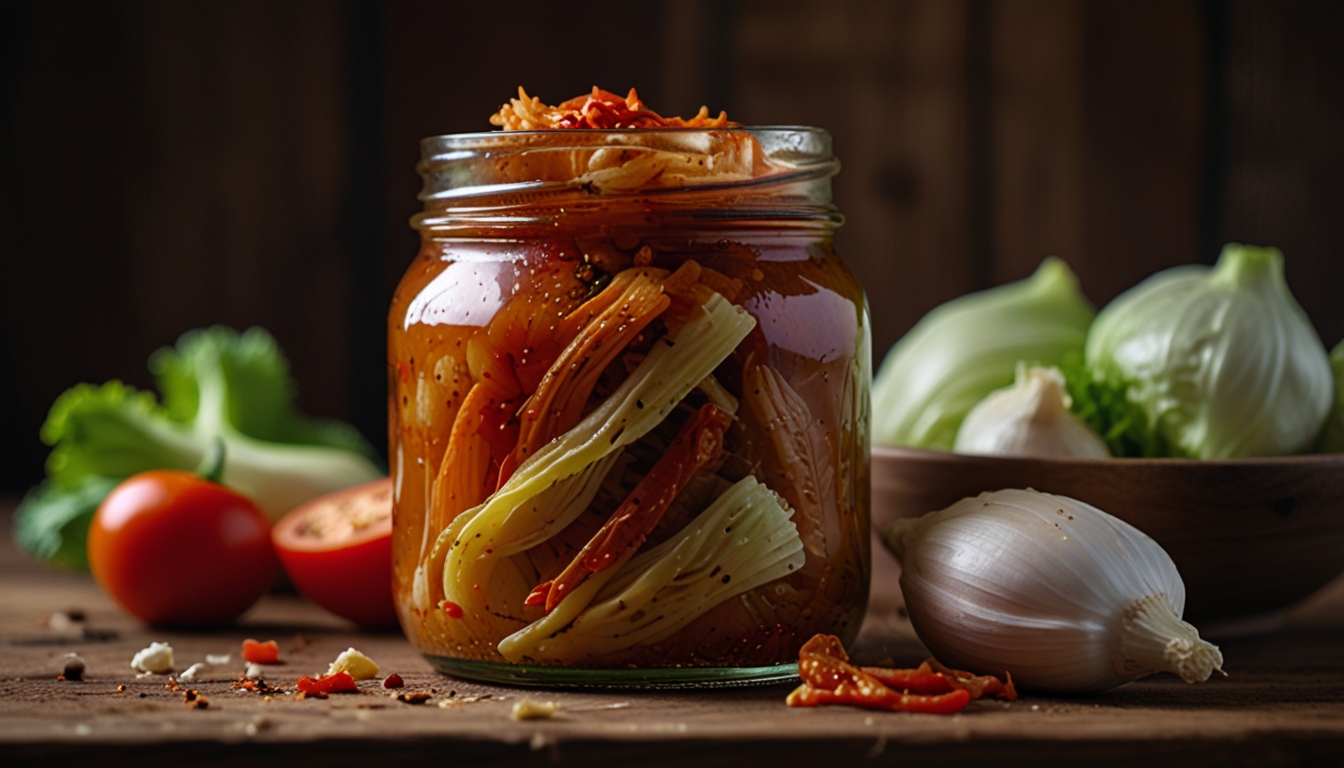
Kimchi looks intimidating, but the beginner version is just salted napa cabbage tossed in a savory-spicy paste and left to ferment. Make it once and you’ll have a jar of tangy, crunchy kimchi to add to almost anything.
New to fermenting? Our beginner basics cover the essentials, and sauerkraut is an even simpler first project.
Not sure how much salt to use? Try our kimchi salt calculator — enter your cabbage weight and get the exact target measurement in grams, ounces, or teaspoons.
Ingredients & Equipment
- 1 medium napa cabbage (about 2 lb / 900 g)
- ¼ cup fine sea salt (for the soak)
- 3 tbsp gochugaru (Korean red pepper flakes)
- 4 garlic cloves and 1 tsp grated ginger
- 1 tbsp fish sauce (or soy sauce / salt for a vegan version)
- 2 green onions, optional grated carrot or daikon
- A large bowl and a clean 1-quart jar (paid link)
Step-by-Step
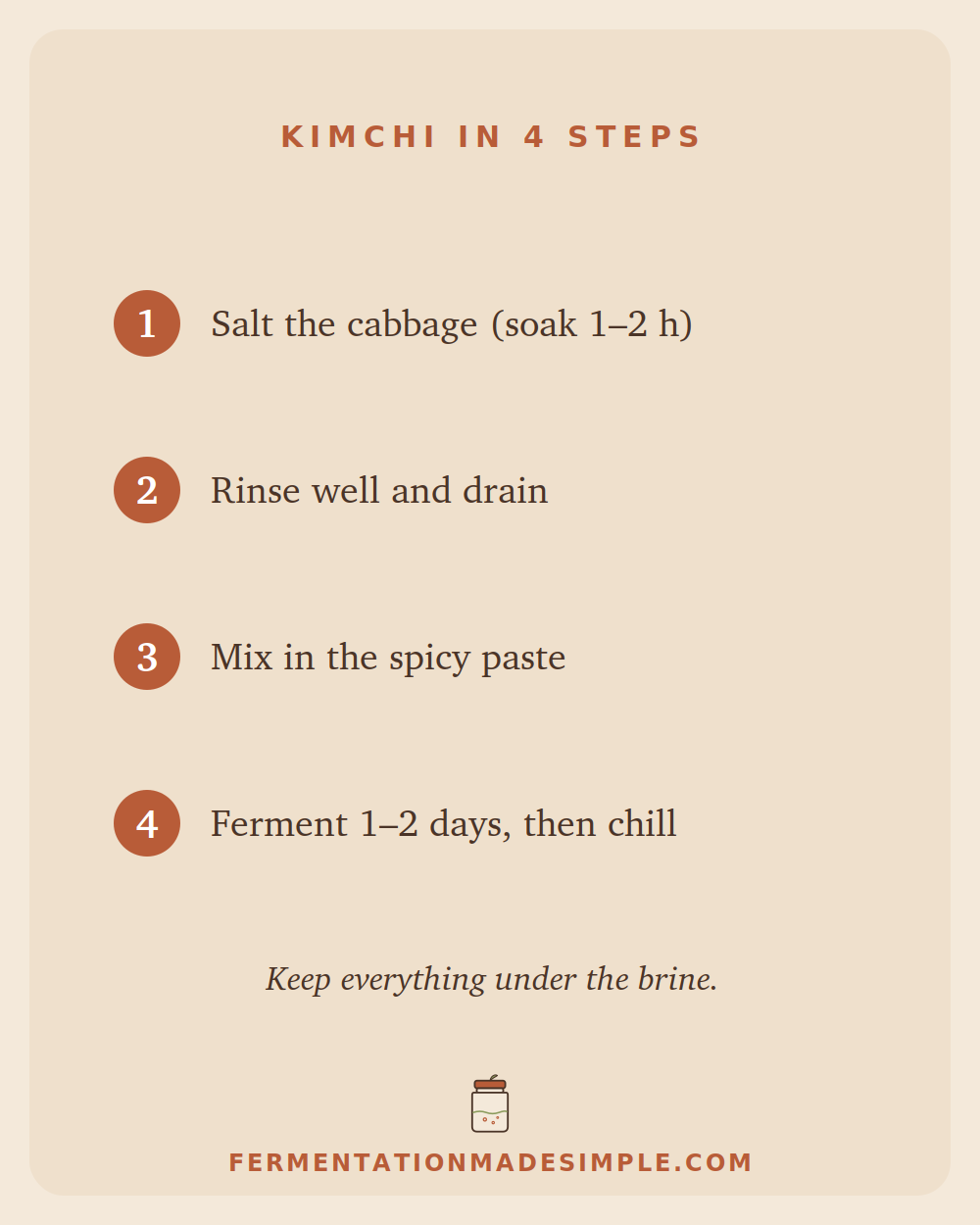
- Salt the cabbage. Chop into bite-size pieces, toss with the salt, and let it sit 1–2 hours until wilted and floppy.
- Rinse and drain. Rinse the cabbage well to remove excess salt, then drain thoroughly.
- Make the paste. Mix gochugaru, garlic, ginger, fish sauce and a splash of water into a loose paste.
- Combine. Toss the cabbage, green onions and any extras with the paste (gloves help).
- Pack the jar. Press firmly so the brine rises, leaving room at the top. Keep everything under the liquid.
How Long It Takes
Leave the jar at room temperature for 1–2 days, pressing the kimchi down once a day. Taste it: when it’s pleasantly sour, move it to the fridge, where it keeps developing flavor slowly.
Storage
Kept cold and under the brine, kimchi lasts for months and only gets tangier. Always use a clean utensil.
Common Mistakes
- Not salting long enough — the cabbage should be fully wilted before rinsing.
- Filling the jar to the brim — kimchi bubbles up and can overflow.
- Leaving it out too long — taste daily so it doesn’t get too sour.
Something look or smell off? Check our troubleshooting guides.
FAQ
How do I make it vegan?
Skip the fish sauce and use soy sauce or a little extra salt. It’s still delicious.
What is gochugaru?
Korean red pepper flakes — mild, fruity heat and the signature color. Find it in Asian markets or online.
Can I use regular cabbage?
Napa is traditional and softer, but green cabbage works in a pinch for a crunchier result.
Making this? Save it on Pinterest for later.
Related recipes: Fermentation for Beginners · How to Make Sauerkraut · Troubleshooting