
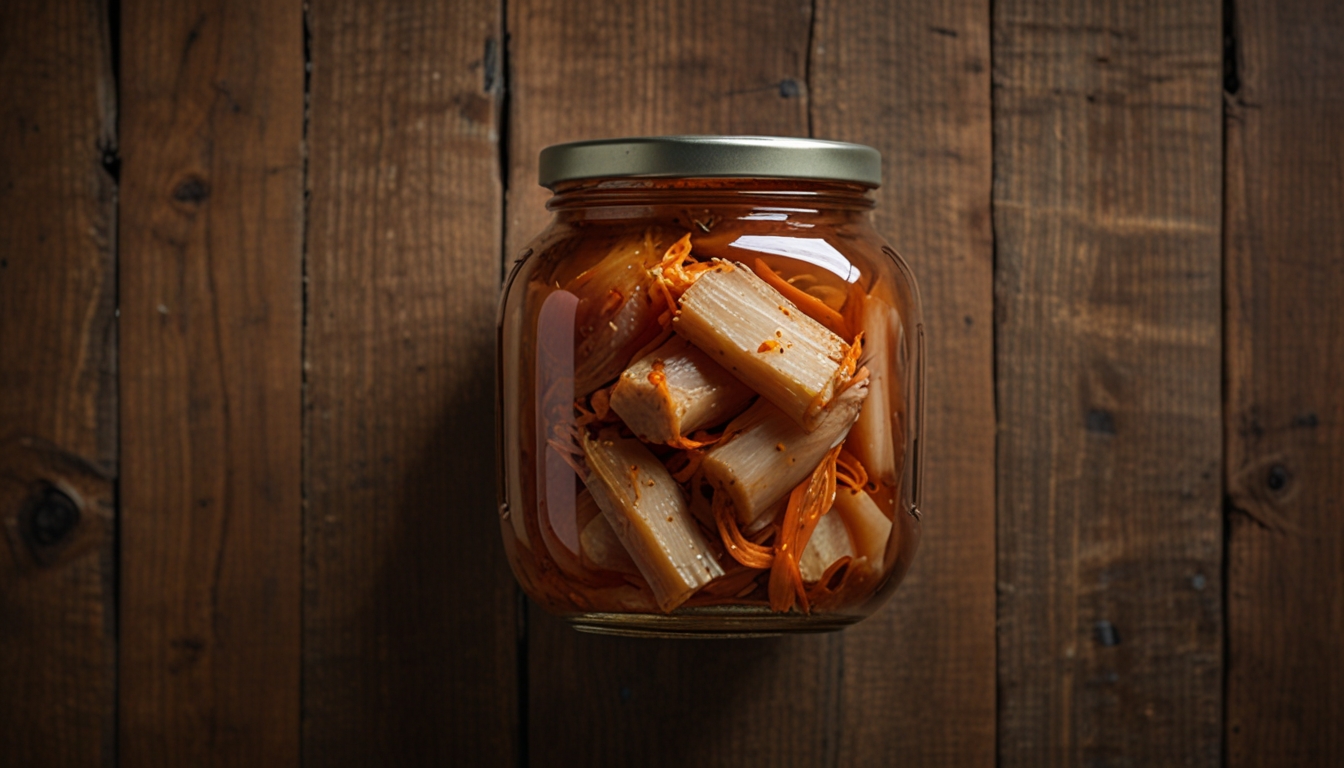
Clemson Extension puts fermented kimchi at up to six months in the refrigerator, and Oregon State Extension gives the same upper figure for one of its methods while noting kimchi is best eaten within about a week if you want it mild. The jar keeps fermenting the whole time — what changes is sourness and texture, not the calendar.
How Long Does Refrigerated Kimchi Actually Keep?
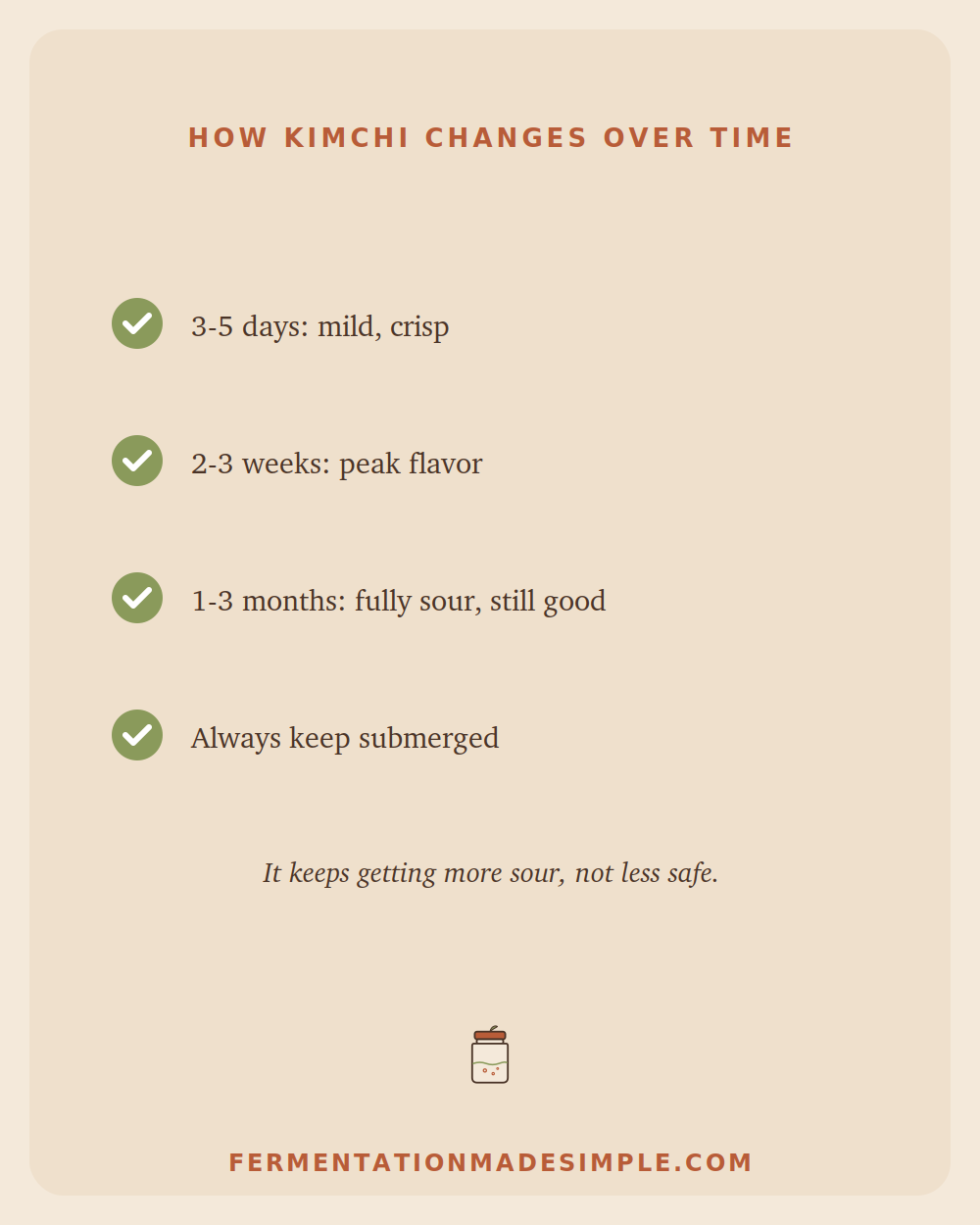
Published guidance gives a range rather than an expiry date, because the answer depends entirely on how sour you want it. Fermented kimchi keeps up to six months in the refrigerator. The six-month figure attaches to the stored method; for a fresher style, quality deteriorates with longer fermentation and kimchi is best eaten within one week.
Both figures are about eating quality. Neither is a countdown after which something happens. Refrigeration does not stop the fermentation, it slows it down, and the jar you open in month five is a different food from the one you closed in week one.
| Stage | Roughly when |
|---|---|
| Room-temperature start | First 1–2 days |
| Early refrigerated | Days 5–7 |
| Acidity established | From week 2 |
| Long keeping | Up to 6 months |
What Is Happening in the Jar Over Those Months?
Lactic acid bacteria are converting the sugars in the cabbage and radish into acid, which is what drives the flavor from fresh and saline toward sharp and sour. Weissella and Lactobacillus species are the organisms doing the work, and the optimum kimchi pH is 4.2. The same arc shows up in time: bubbling in the first two days, a tangier flavor and softer texture by days five to seven, and pH below 4.6 from around week two. The room-temperature stage runs 1 to 5 days at 68–72°F (20–22°C) before the jar goes cold.
Texture follows acidity. As the acid accumulates the cabbage loses structure, which is why long-kept kimchi works better cooked than raw — it is the standard reason Korean kitchens hold back the sour jar for kimchi fried rice and kimchijeon rather than serving it as a side.
What You’ll Need to Store It Well
A dedicated kimchi storage container (paid link) with an inner vacuum lid helps kimchi keep its color and crunch longer by minimizing air exposure, and keeps the smell from spreading through the fridge.
How Do You Make Kimchi Last Longer?
Three things in the published guidance actually move the needle, and none of them is exotic.
- Keep it cold. The specification for refrigerated fermentation is 41°F (5°C) or below. Refrigerating extends the ferment time rather than ending it.
- Keep it submerged. Check daily that the vegetables remain under the brine; a plate with a weight on top does the same job.
- Keep the salt where the recipe put it. The final salt concentration for kimchi is 2 to 5%. Our salt and brine calculator converts that to grams for whatever weight of cabbage you have.
Sanitized equipment matters before the kimchi ever goes in the jar — washed with soap and warm water, then submerged in water at 160°F (71°C) for at least 30 seconds. The same logic applies every time you open the jar afterwards: a clean utensil, not the one that has been in three other dishes.
When Does Published Guidance Say to Stop Eating It?
Sourness is not on the list. The published indicators are three: mold, an off-putting odor distinct from the normal fermented aroma, and unusual texture. Illinois Extension adds sliminess, and states that fermented foods which are slimy or smell spoiled or rotten should be discarded.
That distinction — sour versus rotten — is the one that trips people up, because kimchi is strongly aromatic by design. If what you are looking at is a white film rather than a smell problem, our kahm yeast versus mold guide covers how the two differ in appearance.
This page summarizes the published extension and public-health guidance provides about kimchi fermentation and storage. It is not an assessment of any particular jar. If a batch looks, smells or feels wrong to you, ‘s rule applies: when in doubt, throw it out.
FAQ
How long does homemade kimchi keep in the fridge?
Fermented kimchi keeps up to six months refrigerated, and the stored method is given the same six-month figure. Quality deteriorates with longer fermentation, so kimchi is best eaten within a week if you prefer it mild and crisp.
Does kimchi keep fermenting in the refrigerator?
Yes. Refrigeration gives a longer ferment time rather than stopping fermentation, and refrigerated fermentation at 41°F (5°C) or below is used as a deliberate slow stage. The acid keeps accumulating, just far more slowly than at room temperature.
Is very sour kimchi still usable?
Sourness is a stage of fermentation, not one of the spoilage indicators the published guides list. Those are mold, an off odor distinct from the fermented aroma, unusual texture, and sliminess. Sour, softened kimchi is the type usually kept for cooked dishes.
What temperature should kimchi be stored at?
Refrigerated storage is specified at 41°F (5°C) or below. For the room-temperature stage before it goes in the fridge, the working range is 68–72°F (20–22°C), for 1 to 5 days.
Sources: Clemson Cooperative Extension — Kimchi Basics · Oregon State University Extension — Kimchi Basics · University of Georgia Extension — Homemade Kimchi · Illinois Extension — Fermenting FAQ
Related: Easy Kimchi Recipe for Beginners · Kimchi Fried Rice · Kimchi Pancakes · Kahm Yeast vs. Mold