

Sourdough pizza dough is flour, water, salt, and an active sourdough starter, with no packaged yeast. Mix 450 g of bread flour, 275 g of water, 100 g of starter, and 10 g of salt, ferment it for about 4 hours, chill the dough balls for 24 to 48 hours, and bake at 500°F or higher for 10 to 15 minutes.
This dough uses 100 g of active starter per 500 g of total flour at 65% hydration. Bulk ferment it for about 4 hours at 72–75°F, divide it into four balls, and chill them for 24 to 48 hours. Take the dough out about 2 hours before baking, preheat a baking steel or stone for an hour at 500°F or higher, and bake each pizza for 10 to 15 minutes. One batch makes four 10-inch pizzas or three 12-inch pizzas.
Ingredients
- 450 g (about 3¾ cups) bread flour
- 275 g (about 1⅛ cups) lukewarm water
- 100 g (about ½ cup) active sourdough starter at 100% hydration, bubbly and at its peak
- 10 g (about 1¾ teaspoons) fine salt
- 10 g (2 teaspoons) olive oil, optional
- Semolina or cornmeal for the peel, plus your sauce, cheese, and toppings
- Equipment: a baking steel, pizza stone, or heavy baking sheet, and a basic digital kitchen scale (paid link) for weighing flour and water
Don’t have a starter yet? Our guide to buying a starter is the quick route, and the Sourdough Bread for Beginners guide explains how a starter is built and fed.
Step-by-Step
- Feed the starter. Feed it 4 to 6 hours before you plan to mix, so it is bubbly and domed when you use it.
- Mix. Dissolve the salt in the water, stir in the 100 g of starter, then add the flour and oil. Stir until no dry bits remain, then cover and rest for 10 to 15 minutes.
- Knead. Use a slap-and-fold motion by hand until the dough is smooth and springy, or run a stand mixer with the dough hook on medium-low for about 10 minutes.
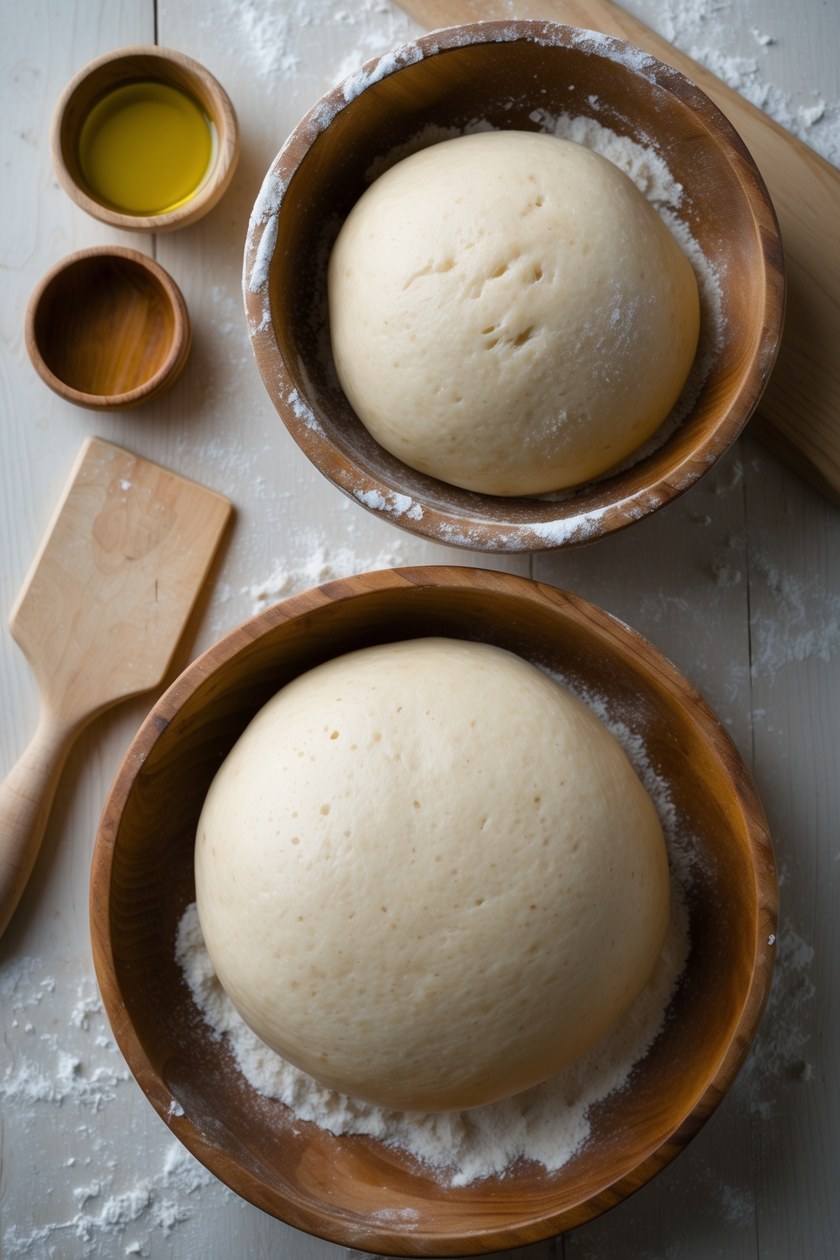
- Bulk ferment. Cover the bowl and leave it at 72–75°F for about 4 hours, until the dough has nearly doubled.
- Divide and chill. Cut the dough into four pieces of about 210 g each and round them into tight balls. Place them in a lightly oiled lidded container or on a covered sheet pan and refrigerate for 24 to 48 hours.
- Warm up. Take the dough out about 2 hours before baking so it comes to room temperature.
- Preheat. About 1 hour before baking, put a baking steel or stone in the top third of the oven and heat it to 500°F, or as high as your oven goes.
- Shape. On a floured surface, press each ball from the center outward until it measures 10 to 12 inches, leaving the rim thicker.
- Top and bake. Move the dough to a semolina-dusted peel, add sauce, cheese, and toppings, and slide it onto the hot steel. Bake for 10 to 15 minutes, until the crust is as dark as you like and the cheese bubbles.
- Rest briefly. Cool the pizza on a wire rack for a minute or two before slicing so the toppings stay put.
How Long Should Sourdough Pizza Dough Ferment?
Sourdough pizza dough needs about 4 hours of bulk fermentation at room temperature, followed by 24 to 48 hours in the refrigerator. King Arthur Baking uses this same two-stage schedule: a bulk rise of about 4 hours until the dough is nearly doubled, then a 24 to 48 hour chill. The whole process stretches over a day or two, but the hands-on work is under an hour.
| Stage | Time | What to look for |
|---|---|---|
| Feed the starter | 4–6 hours before mixing | Bubbly, domed, and at or near its peak |
| Mix and rest | 10–15 minutes | No dry flour left; rough but cohesive dough |
| Bulk ferment | About 4 hours at 72–75°F | Nearly doubled, domed, with bubbles on top |
| Cold ferment | 24–48 hours in the fridge | Puffy dough balls with small bubbles under the surface |
| Warm up | About 2 hours out of the fridge | Soft, relaxed, and easy to stretch |
| Preheat and bake | 1 hour preheat, 10–15 minute bake | Crust dark golden, cheese bubbling |
Temperature drives all of these numbers. Colorado State University Extension puts the comfortable range for a starter at around 70°F, notes that colder temperatures slow fermentation, and warns that very hot temperatures can make it ferment too fast or stall. In a cool kitchen, expect the bulk ferment to run longer than 4 hours.
Judge the bulk ferment by the dough, not the clock. You want it nearly doubled, domed on top, and slightly jiggly when you shake the bowl. The cold ferment is where most of the flavor develops, which is why the recipe gives a 24 to 48 hour window and not a single number: a shorter chill bakes up milder, and a longer chill gives a more pronounced sourdough tang.
What Hydration Works Best for Sourdough Pizza?
This recipe uses 65% hydration, which means the weight of the water is 65% of the weight of the flour. Count the flour and water inside your starter too: 450 g of flour plus the 50 g of flour in 100 g of starter makes 500 g, and 275 g of water plus the 50 g of water in the starter makes 325 g.
Higher hydration gives a more open, airy crumb, but the dough sticks to your hands and is harder to shape. Start at 65%, and nudge the water up by 10 to 15 g once stretching the dough feels easy.

How Do You Get a Crisp, Blistered Crust?
Heat is the answer. Preheat a baking steel or stone for a full hour in the top third of the oven, run it at 500°F or higher, and slide the pizza directly onto the hot surface. Dough that is cold and stiff from the fridge shrinks back when you stretch it, so the 2-hour warm-up matters as much as the oven.
If you like loaded pizzas, parbake the crust for about 5 minutes first, then add the toppings and finish the bake. This keeps the center from staying raw under a heavy layer of cheese and vegetables. Our sourdough bread guide covers the same fermentation, just baked as a loaf.
Flour is a raw agricultural product and should always be cooked before eating, so don’t taste raw dough or raw starter. Colorado State University Extension says fermentation acidifies a starter below pH 4.6, which limits harmful microbes, and that baking kills what remains. Discard any starter that shows fuzzy or colored mold, and clean the container before starting over. Also watch your parchment: most is rated below 500°F, and exposed edges can char between 450°F and 500°F, so trim it close to the dough. This is general food-safety guidance, not medical advice.
💬 My Take
Most sourdough pizza advice talks about the crust, but the real difficulty is scheduling. The hands-on work is about 45 minutes spread over two days, and the rest is waiting. I would feed the starter in the morning, mix the dough that afternoon, put the balls in the fridge before bed, and bake the day after next. Planned like that, the dough takes care of itself and you only have to show up for shaping and baking.
- Use 100 g of active starter per 500 g of total flour at 65% hydration, and weigh everything
- Bulk ferment for about 4 hours at 72–75°F until the dough has nearly doubled
- Chill the dough balls for 24 to 48 hours; longer chilling gives more tang
- Take the dough out about 2 hours before baking so it stretches easily
- Preheat a baking steel or stone for 1 hour at 500°F or higher and bake 10 to 15 minutes
- Never taste raw dough, and trim parchment so the edges do not char
Frequently Asked Questions About Sourdough Pizza Dough
Can I use sourdough discard instead of active starter?
Discard adds flavor, but it has far less leavening power than a ripe starter, so a dough that relies on discard alone usually bakes up flatter and denser. Use active starter at its peak for this recipe and keep the discard for pancakes, crackers, and flatbreads.
Do I need a pizza stone or baking steel?
They help because they hold heat and brown the bottom of the crust quickly. King Arthur Baking preheats a baking steel or stone in the top third of the oven for about an hour. A heavy baking sheet turned upside down is a common substitute.
Why is my sourdough pizza dough so sticky?
Part of the water in this dough comes from the starter, so it feels stickier than a yeast dough at the same hydration. Weigh the ingredients instead of using cups, wet your hands for slap-and-fold kneading, and give the dough its 10 to 15 minute rest before kneading.
Can I skip the cold ferment?
Yes. After the 4-hour bulk ferment you can divide, shape, rest, and bake the same day. Expect a milder flavor, and a softer dough that is harder to stretch than chilled dough.
How long does the dough keep in the fridge?
This recipe calls for 24 to 48 hours. If you will not bake within that window, parbake the crusts for 5 minutes, cool them completely, wrap them well, and freeze them, as King Arthur Baking suggests.
Is sourdough pizza dough a fermented food?
Yes. The wild yeast and lactic acid bacteria in the starter ferment the flour, producing the gas that makes the dough rise and the acids that add tang. It is the same partnership at work in sauerkraut, only fed on flour instead of cabbage.
Sources: King Arthur Baking, Sourdough Pizza Crust (rise times, cold ferment, and bake temperature) · Colorado State University Extension, Sourdough Starter Best Practices · Northwest Sourdough, Sourdough Pizza with a Bubbly Crust
Related: Sourdough Bread for Beginners · Sourdough Starter: Buy One Instead of Building From Scratch · Fermentation for Beginners: The Complete Guide