
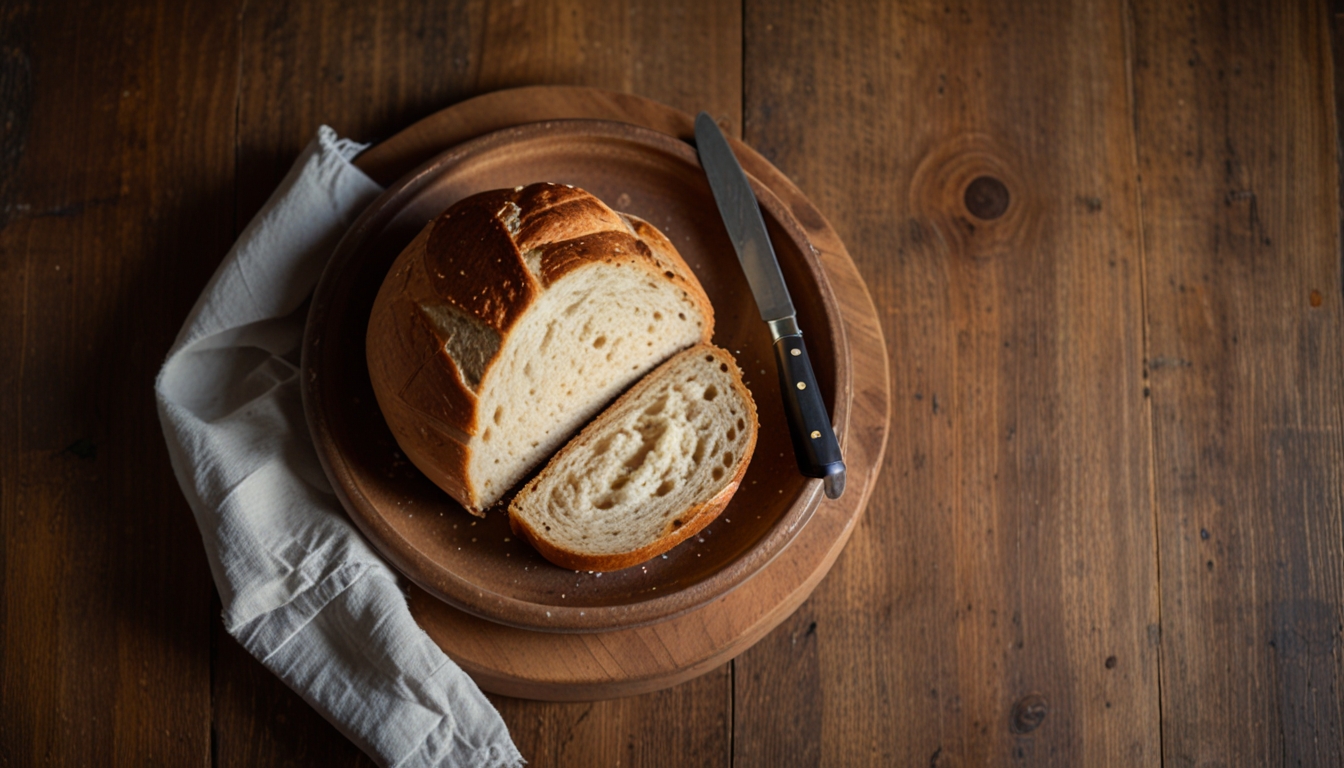
A beginner sourdough loaf is roughly 70 percent hydration — 350g water to 500g flour — bulk fermented at room temperature, rested cold overnight, and baked around 450°F/232°C. Building the starter that leavens it takes longer than most people expect: establishment runs 14 days to a month.
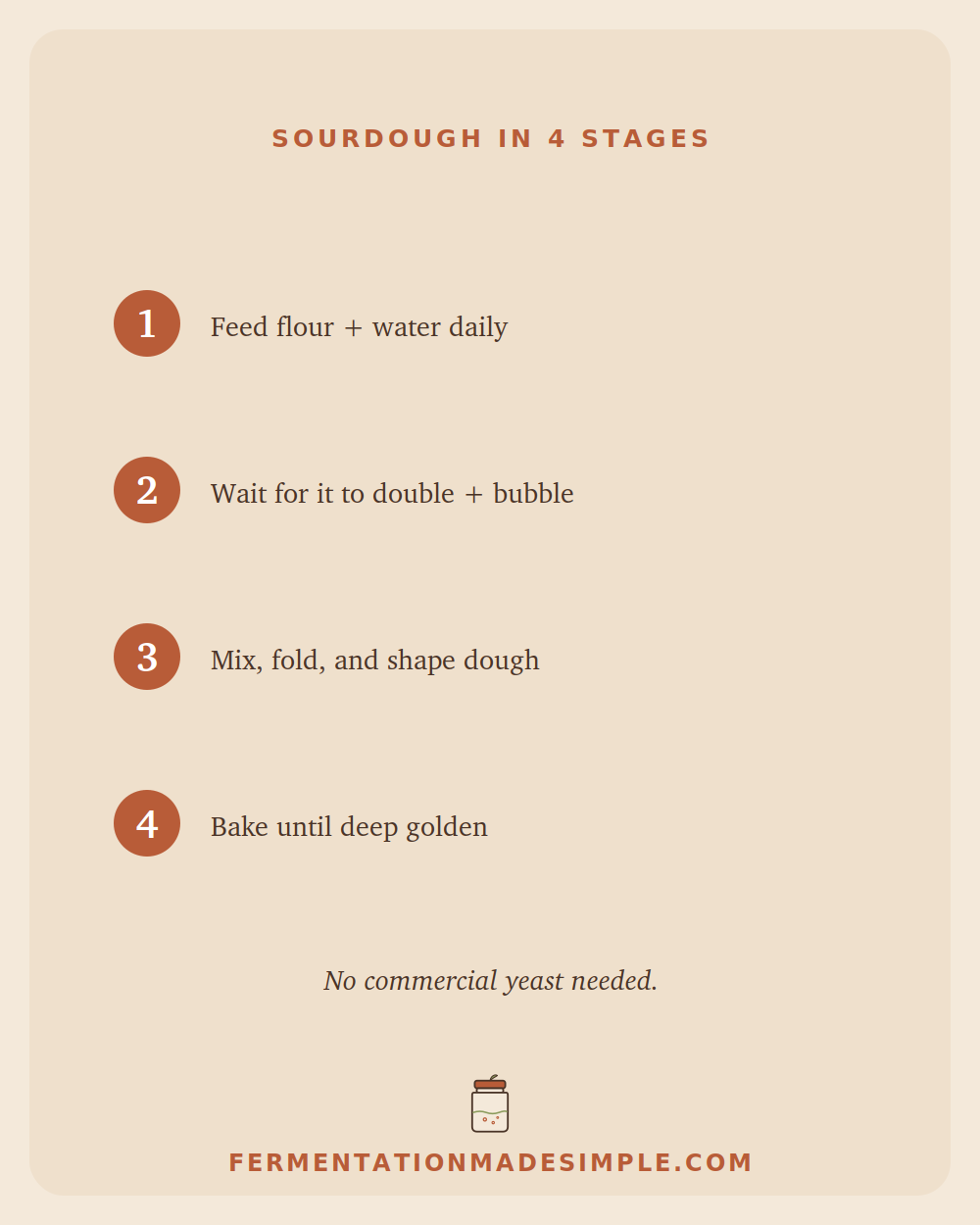
What Actually Makes Sourdough Rise?
Wild yeast and lactic acid bacteria, living together in a flour-and-water culture. The yeast produces the carbon dioxide that inflates the dough; the bacteria — mostly Lactobacillus and its relatives — produce the acids that give the crumb its tang and its keeping quality.
That is the same partnership at work in a jar of sauerkraut, only fed on flour instead of cabbage. If the general idea is new to you, our beginner’s guide to fermentation covers the underlying mechanics.
How Long Does It Take to Build a Starter?
Longer than the seven days most recipes promise. Illinois Extension’s Sourdough Bread 101 gives a range of 14 days to a month before a starter is dependable, and Clemson’s HGIC sourdough guide says it is ready to bake with “after a couple of weeks of routine feeding.” Both feed at a 1:1:1 ratio by weight — equal parts existing starter, flour and water.
| Stage | What you should see |
|---|---|
| Around day 3 | Bubbling, and a yeasty smell |
| Around day 5 | Doubling in volume after a feeding |
| Day 14 to one month | Reliable, repeatable rise; ready to bake |
| After each feeding | Peak activity at 4–6 hours |
Temperature drives all of it. The starter’s working range is 70–82°F (21–28°C). A kitchen at the cold end of that band simply takes longer, which is the single most common reason a starter looks “dead” on day six.
What You’ll Need
- Day 1: Mix 50g whole wheat flour with 50g water in a clean glass jar (paid link). Cover loosely.
- Days 2-6: Once a day, discard about half and feed with 50g flour and 50g water.
- Day 7 onward: The starter should reliably double in size within 4-8 hours of feeding, with a bubbly, domed surface — that’s when it’s ready to bake with.
A kitchen scale (paid link) makes measuring flour and water far more consistent than measuring cups.
If you would rather skip the two-week build entirely, our notes on buying a starter instead of building one cover what you actually get for the money.
What Hydration Should a Beginner Loaf Be?
Hydration is water weight divided by flour weight, written as a percentage. Most sourdough sits in the 70–90 percent band. A good worked example is 350g water to 500g flour — 70 percent — and that is the right end of the range to start at.
Higher hydration gives a more open crumb and a slacker, stickier dough that is genuinely harder to shape. Nothing about an 85 percent dough is beyond a beginner, but the first loaf is not the place to find that out.
How Long Should the Dough Bulk Ferment?
Judge it by rise, not by the clock, and let the room temperature set your target. It works as a sliding scale: the colder the kitchen, the further the dough should rise during bulk before you shape it.
| Room temperature | Rise to aim for during bulk |
|---|---|
| 80°F / 27°C | 30 percent |
| 75°F / 24°C | 50 percent |
| 70°F / 21°C | 75 percent |
| 65°F / 18°C | 100 percent |
The logic is that a warm dough carries far more residual activity into shaping and proofing than a cool one, so it needs to leave the bowl less far along.
How Do You Shape, Proof and Bake It?
- Autolyse. Mix flour and water and rest at least 60 minutes before the starter goes in.
- Add starter and salt, then rest a further 30 minutes.
- Build strength with sets of stretch-and-folds at 20–30 minute intervals through the early part of bulk.
- Bulk ferment to the rise your kitchen temperature calls for in the table above.
- Shape into a round and place seam side up in a floured basket or bowl.
- Cold proof in the fridge: 8–16 hours or longer, and no more than three days.
- Bake at around 450°F/232°C in a preheated covered pot: roughly 30 minutes with the lid on, then 15–30 minutes uncovered.
- Cool at least an hour before cutting. The crumb is still setting.
A countertop proof of 1–4 hours is the alternative to the cold rest if you want to bake the same day, though the cold route is easier to score and handle.
Common Mistakes
- Baking with a starter that has already collapsed. Use it near its 4–6 hour peak, domed and bubbly, not sunken.
- Timing bulk by the recipe instead of the room. Four hours at 80°F and four hours at 65°F are two different doughs.
- Measuring flour by volume. Hydration percentages only mean anything if both numbers are weights.
- Cutting the loaf hot. The crumb reads gummy even when the bake was fine.
Keeping Your Starter Alive
The maintenance schedule is short: feed daily at room temperature, weekly in the refrigerator. If you bake once a week, the fridge is the sane default — pull the jar out, feed it, wait for the peak, mix your dough, and put it back.
Discard is the byproduct of that routine, not waste to feel guilty about. It keeps the ratio of fresh flour to established culture high enough for the yeast to stay vigorous.
This article summarises published extension guidance on sourdough. It is not an assessment of any particular starter or loaf. If a starter develops pink or orange streaks, fuzzy growth, or a smell you would describe as rotten rather than sour, discard it and begin again.
FAQ
Why isn’t my starter rising after a week?
Most often it simply needs more time or more warmth. Full establishment takes 14 days to a month and the working range is 70–82°F (21–28°C), so a week of quiet in a cool kitchen is well inside normal.
What hydration should I use for my first loaf?
Seventy percent — 350g water to 500g flour. It sits at the bottom of the 70–90 percent range and is far easier to shape than a wetter dough.
Can I use all-purpose flour instead of bread flour?
Yes. Bread flour’s higher protein content builds more structure and gives a chewier crumb, but all-purpose flour ferments perfectly well. Expect a slightly softer loaf and a dough that feels a little slacker at the same hydration.
How often do I have to feed a starter I keep in the fridge?
The schedule is once a week refrigerated, against daily at room temperature. A starter that has gone longer than that between feedings usually recovers over two or three consecutive feeds at room temperature.
Sources: University of Illinois Extension, Sourdough Bread: 101 · Clemson HGIC, Sourdough 101
Related: Fermentation for Beginners · Buying a Sourdough Starter · Salt Ratios: The Simple Formula · What Is Lacto-Fermentation?